Egg White and Vegetable Scramble
Egg White and Vegetable Scramble
An egg white and vegetable scramble delivers 26 grams of protein per serving under 170 calories, with fluffy egg whites cooked over sautéed bell peppers, mushrooms, and spinach in under 20 minutes. The key is a nonstick skillet, medium-low heat, and vegetables that are fully dry before the egg whites ever hit the pan.

- 1
Flash-cooking the mushrooms dry over medium-high heat for 90 seconds before adding oil evaporates surface moisture before the cells rupture fully, preventing the watery base that makes egg whites weep and refuse to set into proper curds.
- 2
Whisking a pinch of cream of tartar into the egg whites before cooking stabilises the foam structure and keeps the curds light and fluffy throughout cooking rather than collapsing flat as the protein sets.
- 3
Removing the pan from heat while the curds still look slightly underdone uses residual skillet heat to finish cooking in 20 seconds, stopping just before the ovalbumin proteins over-tighten into a rubbery texture.
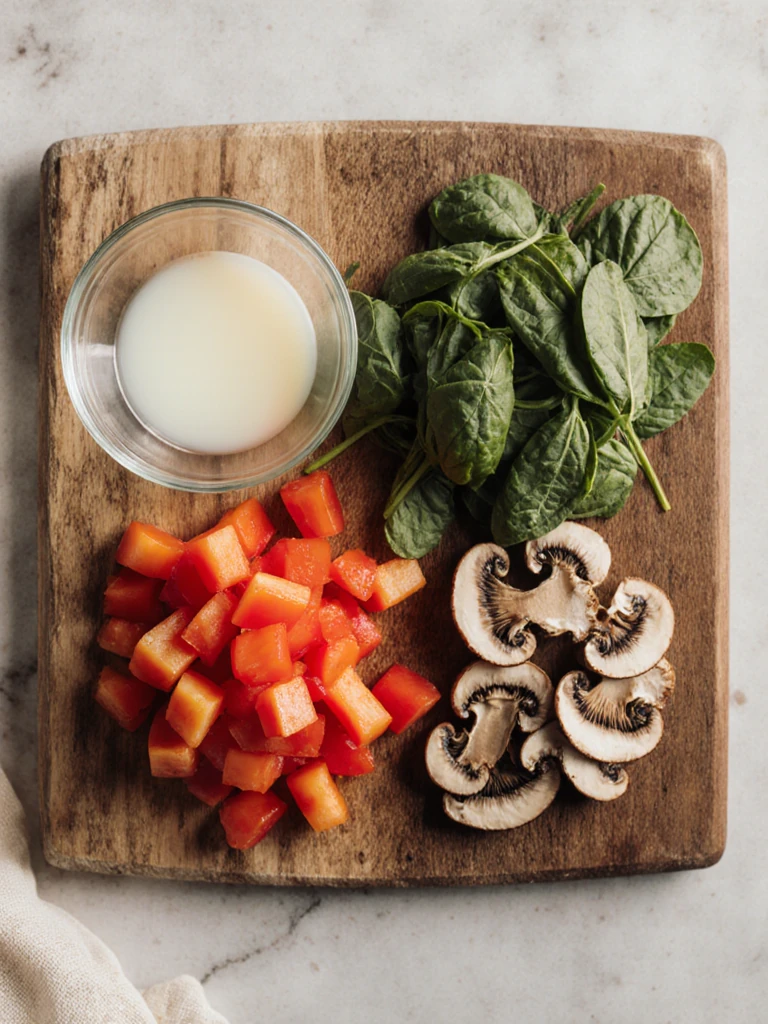
An egg white and vegetable scramble is a high-protein breakfast that uses no whole yolks, keeping fat below 3 grams per serving while delivering 26 grams of protein from egg whites alone. Bell peppers, cremini mushrooms, and baby spinach provide fibre, potassium, and colour in roughly 3 minutes of sauté time. The entire recipe — from cold pan to plated scramble — takes 18 minutes, making it a realistic option on weekday mornings without any shortcuts that sacrifice texture.
Why Egg Whites Scramble Differently Than Whole Eggs
Egg whites set at a higher temperature than whole eggs and contain no fat to slow coagulation, which means they go from glossy to rubbery within 30 seconds if heat is too high or stirring stops.
Whole eggs contain fat-rich yolks that interrupt protein strand formation during cooking, producing a creamier, more forgiving curd. Egg whites are almost entirely water and protein with no such buffer. Ovalbumin, the dominant protein in egg whites, begins to coagulate at around 144°F and is fully set by 149°F — a 5°F window that leaves almost no room for distraction. Medium-low heat (around 275 to 300°F surface temperature on a nonstick skillet) keeps the pan within that window throughout cooking. High heat pushes past 149°F in the first minute, tightening the protein strands into a rubbery, weeping mass that no amount of additional stirring can correct.
Whisking the egg whites vigorously for 30 seconds before adding them to the pan incorporates air and slightly denatures the surface proteins, which produces a lighter, fluffier curd compared to egg whites added straight from the carton. A pinch of cream of tartar (⅛ teaspoon per 6 egg whites) stabilises the foam and keeps the scramble from collapsing flat as it cooks.
Getting the Vegetables Right Before Adding Egg Whites
Vegetables must be fully cooked and any surface moisture must be evaporated before the egg whites go into the pan. Wet vegetables lower the pan temperature instantly and produce a watery scramble that never properly sets.
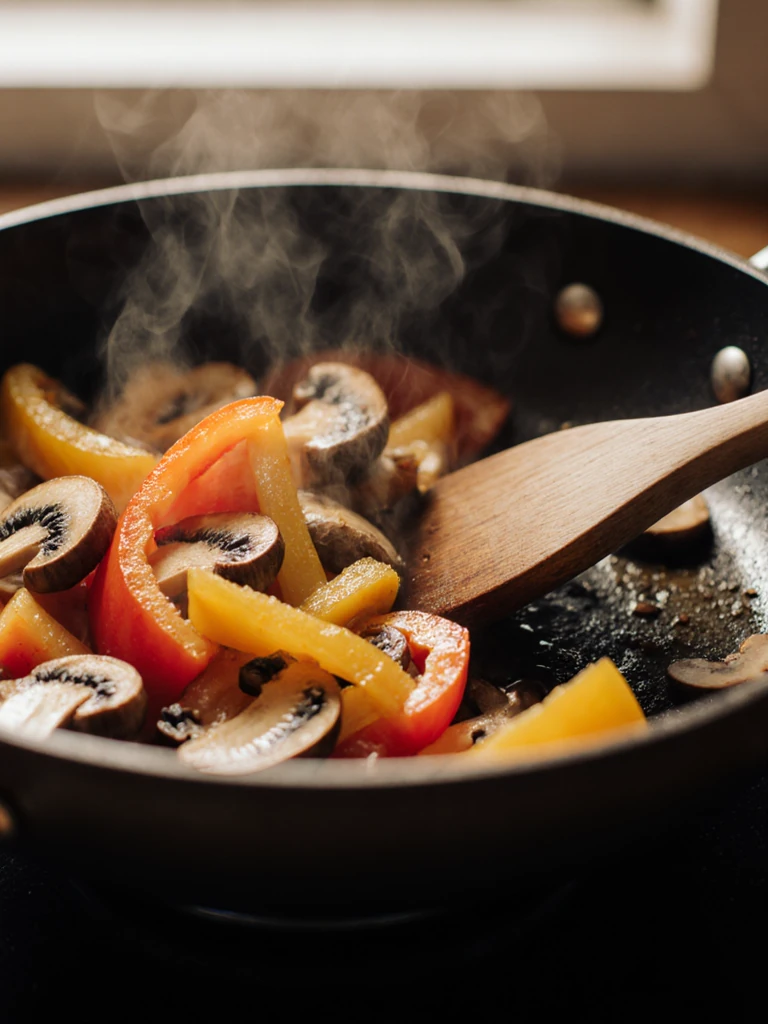
Cremini mushrooms release a significant amount of water as they cook. Add them to the dry, preheated skillet first, without oil, for 90 seconds over medium-high heat. The initial high heat flash-evaporates the surface moisture before the mushroom cells rupture fully. Once the mushrooms begin to brown at the edges, reduce heat to medium, add a small amount of oil, and add the diced bell pepper. Cook for 2 minutes until the pepper softens but retains a faint bite. Add spinach last and stir for 30 seconds until just wilted.
Before adding the egg whites, press the vegetables briefly with the back of a spatula and tilt the pan. Any pooled liquid should be poured off. Spinach in particular holds water in its leaf structure; wilting releases that water directly into the pan. Skipping the draining step is the most common reason home cooks end up with a grey, loose scramble instead of defined, fluffy curds.
Season the vegetables before the egg whites arrive. Salt draws additional moisture from the vegetables during cooking, so salting at this stage — rather than at the end — extracts that moisture while the pan is still hot enough to evaporate it quickly.
The Low-and-Slow Scrambling Method
Pour the whisked egg whites over the vegetables, reduce heat to medium-low immediately, and use a silicone spatula to push large folds from the outer edge toward the centre every 15 to 20 seconds. Do not stir constantly.
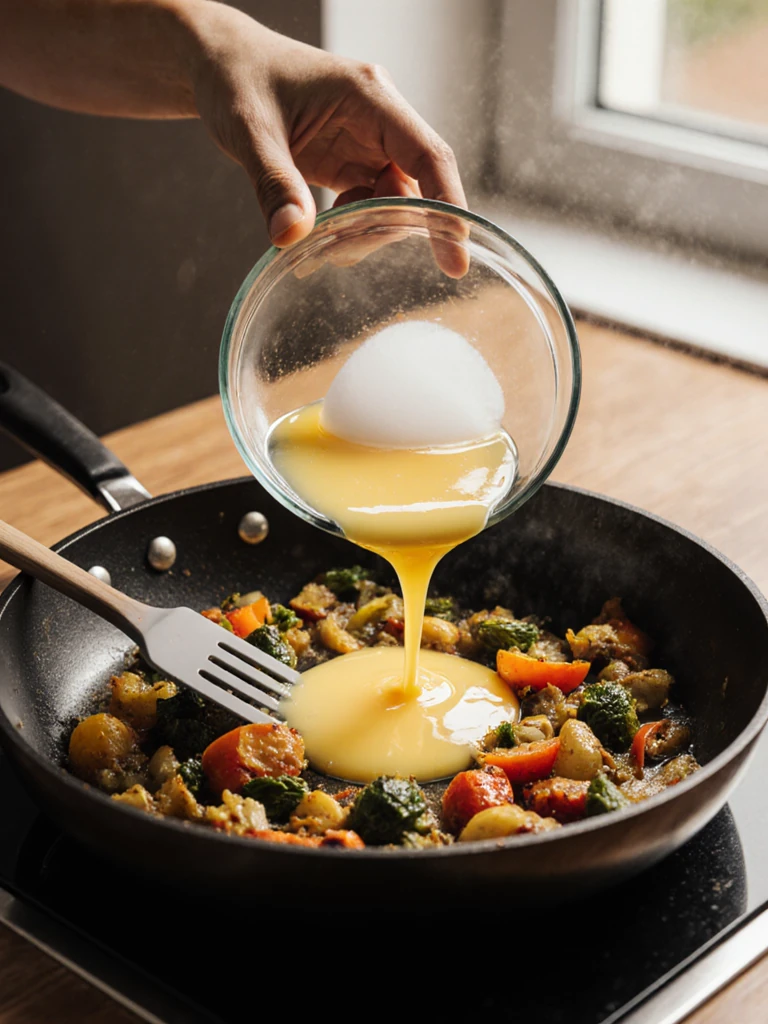
Constant stirring breaks the forming curds into fine grains rather than soft, folded ribbons. Large, infrequent folds allow the base to set partially between each movement, building layers of cooked curd on top of uncooked egg white. The scramble is done when curds appear glossy and moist but no liquid egg white pools on the surface. At that point, remove the pan from heat — residual heat in the skillet will finish cooking the scramble in about 20 seconds without drying it out.
Liquid egg whites from a carton work identically to separated fresh egg whites in this recipe. A carton of 100% liquid egg whites typically contains the equivalent of 12 egg whites. For 2 servings, measure out 1 cup (240ml), which provides the same protein content as 6 large separated egg whites. Carton egg whites are pasteurised, which slightly relaxes the protein structure and can produce a marginally more tender curd compared to fresh-separated whites.
Serving an Egg White and Vegetable Scramble
Serve immediately from the pan onto warmed plates. Egg white scramble loses heat faster than whole-egg scramble due to lower fat content, and drops below an appetising serving temperature within 4 minutes on a cold plate.
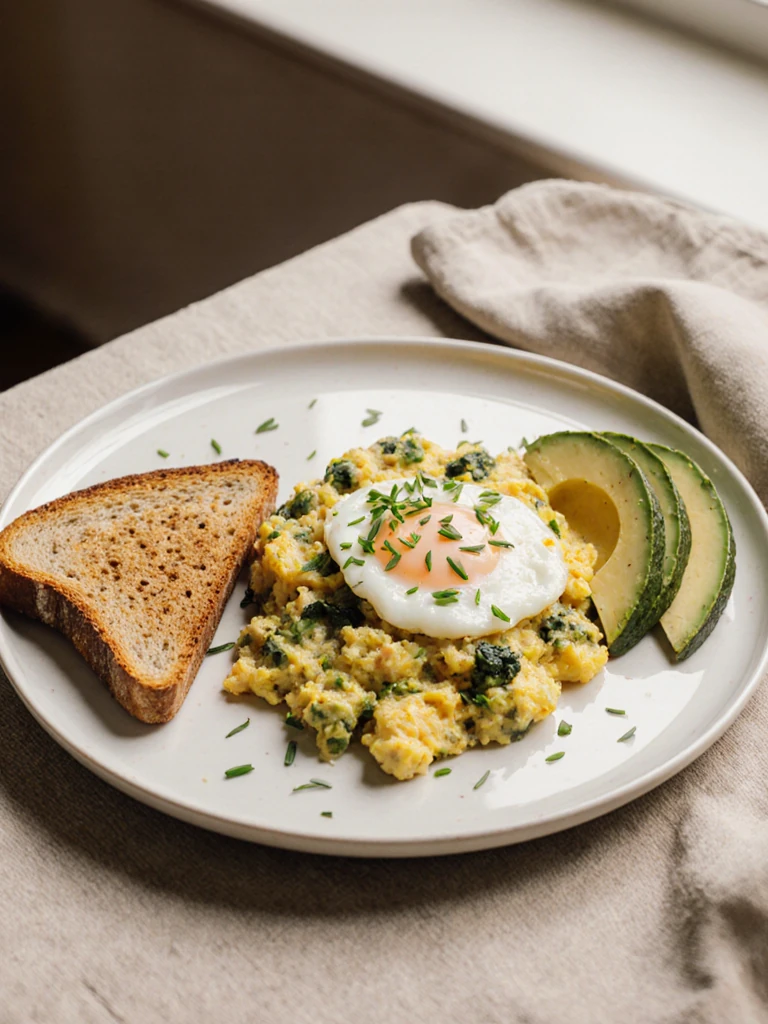
Fan three or four avocado slices alongside the scramble to add monounsaturated fat to the meal, which slows gastric emptying and extends satiety beyond what protein alone provides. A slice of whole grain toast adds resistant starch that feeds beneficial gut bacteria. Fresh chives or flat-leaf parsley scattered over the top provide colour and a mild onion note that complements the mild flavour of the egg whites without overshadowing the vegetables.
For more ideas using lean protein at breakfast, explore the full Recipe Diary breakfast collection.
The Recipe
Egg White and Vegetable Scramble
Ingredients
For the scramble
For the vegetables
To serve
Instructions
- 1
Whisk the egg whites and cream of tartar together in a bowl for 30 seconds until slightly foamy. Season with half the salt and all the black pepper. Set aside.
- 2
Place a nonstick skillet over medium-high heat. Add the mushrooms dry, without oil, and cook undisturbed for 90 seconds until the edges begin to brown. Stir once and cook for a further 30 seconds.
- 3
Reduce heat to medium. Add olive oil and diced bell pepper to the skillet and cook for 2 minutes, stirring occasionally, until the pepper softens slightly.
- 4
Add the minced garlic and cook for 30 seconds until fragrant. Add the spinach and stir for 30 seconds until just wilted. Season the vegetables with the remaining salt.
- 5
Tilt the skillet and pour off any liquid released by the spinach. Press the vegetables lightly with a spatula to check for pooled moisture.
- 6
Pour the whisked egg whites evenly over the vegetables. Reduce heat to medium-low immediately.
- 7
Leave the egg whites undisturbed for 20 seconds until the outer edges begin to set. Use a silicone spatula to fold large sections from the outer edge toward the centre. Repeat every 15 to 20 seconds.
- 8
Remove the skillet from heat when the curds appear glossy and moist with no pooled liquid egg white remaining. The residual heat will finish the scramble in about 20 seconds.
- 9
Divide between two warmed plates. Scatter fresh chives on top and finish with a pinch of smoked paprika. Serve immediately.
Nutrition Facts
Per serving
165 Calories
Light & lean per serving
Macronutrients
* % Daily Value based on a 2,000 calorie diet
Tips & Notes
Heat control is everything: medium-low heat after adding the egg whites is non-negotiable. A surface thermometer on the skillet should read no higher than 300°F. If the whites set too fast in the first 15 seconds, lift the pan off the burner for 10 seconds before continuing. Drain the vegetables: After wilting the spinach, always tilt the skillet and pour off any pooled liquid before adding the egg whites. Even a tablespoon of excess water drops the pan temperature and produces a loose, grey scramble. Cream of tartar: Use exactly ⅛ teaspoon per cup of egg whites. More than that introduces a faintly sour note. If unavailable, a small squeeze of lemon juice (¼ teaspoon) provides the same protein-stabilising acid. Pan size: Use a 10-inch skillet for 2 servings. A 12-inch skillet spreads the egg whites too thin and they set before the folds can build up into proper curds. An 8-inch skillet crowds the vegetables and traps steam. Carton vs fresh: Liquid egg whites from a carton are pasteurised, which relaxes the protein slightly and produces a marginally more tender curd. Both fresh-separated and carton whites work. Measure 3 tablespoons per egg white equivalent if converting from a recipe that uses whole egg counts.
Frequently Asked Questions
Yes. Replace the egg whites with 3 large whole eggs for 2 servings. Whole eggs coagulate at a lower temperature and are more forgiving on heat, but fat and calorie counts increase significantly per serving.
Enjoyed this recipe?
