Caprese Stuffed Portobello Mushrooms
Caprese Stuffed Portobello Mushrooms
Caprese stuffed portobello mushrooms avoid the watery, collapsed result of most recipes by pre-roasting the caps gill-side down for 8 minutes before any filling is added. Garlic butter, fresh mozzarella, halved cherry tomatoes, and basil fill each cavity, then a homemade 6-minute balsamic reduction finishes the plate. Ready in 30 minutes.

- 1
Pre-roasting the portobello caps gill-side down for 8 minutes at 425°F drives out 60 to 70% of the mushroom's water content before the filling is added, eliminating the pooled liquid that causes mozzarella to steam rather than melt in recipes that skip this step.
- 2
Placing 2 to 3 fresh basil leaves under the mozzarella slices before baking transfers the herb's aromatic oils directly into the melting cheese, producing a more integrated, cohesive caprese flavour than basil added only as a garnish after the cap cools.
- 3
Reducing balsamic vinegar with honey over medium heat for 5 to 6 minutes concentrates the grape-derived sugars through evaporation and halves the cook time versus honey-free reduction, producing a syrupy glaze with four times the viscosity and sweetness of the original vinegar.
Caprese stuffed portobello mushrooms combine the classic Italian trio of fresh mozzarella, ripe tomatoes, and basil inside large portobello caps brushed with garlic butter, then roasted at 425°F. The mushrooms pre-roast gill-side down for 8 minutes before the filling goes in — a step no competitor covers — which drives out excess moisture before the cheese is added and prevents the watery, collapsed caps that ruin most home-cooked versions. A homemade balsamic reduction, made from just two ingredients in 6 minutes, finishes each cap with a syrupy, sweet-tart glaze that store-bought balsamic glaze cannot replicate at the same concentration of flavour. Total time is 30 minutes.
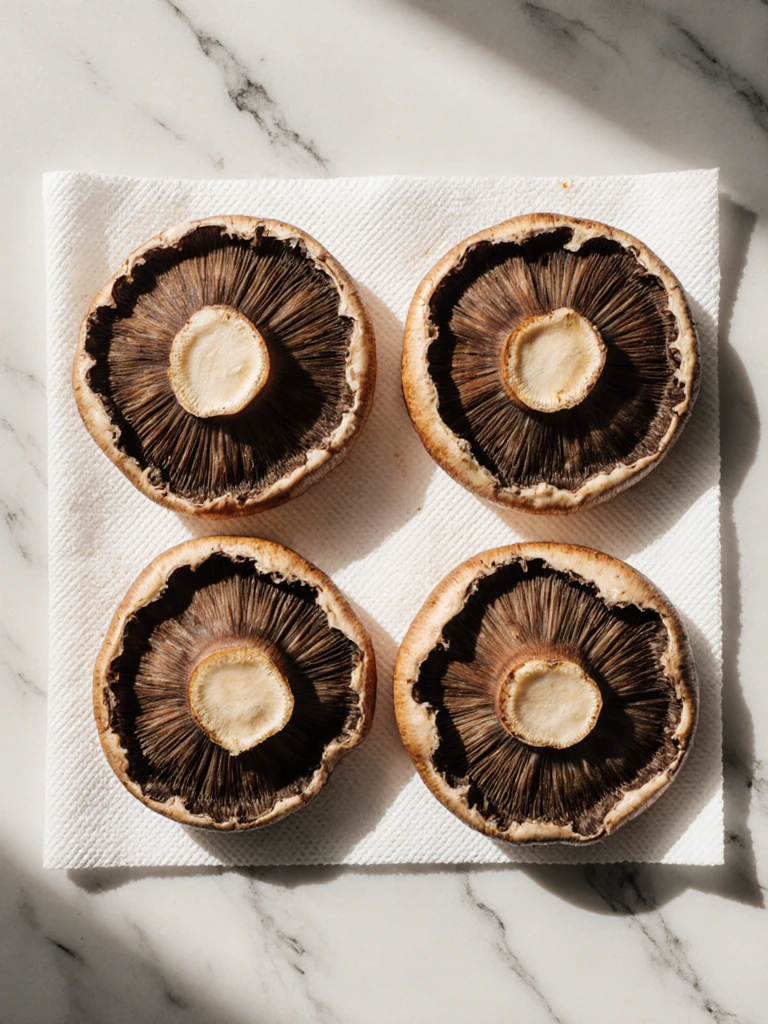
Preparing Portobello Mushrooms to Prevent a Watery Result
Never rinse portobello mushrooms under running water. Wipe each cap with a damp paper towel instead. Portobello caps are highly porous and absorb water on contact; a brief rinse adds enough moisture to produce pooled liquid in the cap during roasting that steams the mozzarella rather than melting it.
Portobello mushrooms are fully mature cremini mushrooms, harvested at 10 to 15cm in diameter. Their large, flat cap makes them the only mushroom variety with enough surface area to serve as an edible bowl for a full filling. The gill structure on the underside — the dark brown, fan-shaped ridges — is edible but releases dark purple-black liquid during cooking that discolours the mozzarella and tomatoes. Scrape the gills out with a small spoon in a single sweeping motion from centre to edge. The spoon needs only light pressure; the gills separate from the flesh easily without gouging the cap.
Remove the stem by grasping it firmly and twisting sharply. Stems snap off cleanly at the point where they meet the cap without tearing the surrounding flesh. Chopped stems can be sautéed and added to the filling or reserved for another use such as pasta sauce or stock. After removing gills and stems, press a dry paper towel firmly into the mushroom cavity and hold for 5 seconds. The towel absorbs surface moisture from the exposed gill area that a simple wipe cannot reach.
The Pre-Roast Step That Eliminates Watery Caps
Brush the portobello caps with garlic butter on both sides, place them gill-side down on a parchment-lined baking sheet, and roast at 425°F for 8 minutes before adding any filling. This pre-roast releases 60 to 70% of the mushroom's internal water content through the gill face, which evaporates directly onto the pan surface below rather than pooling inside the cap.
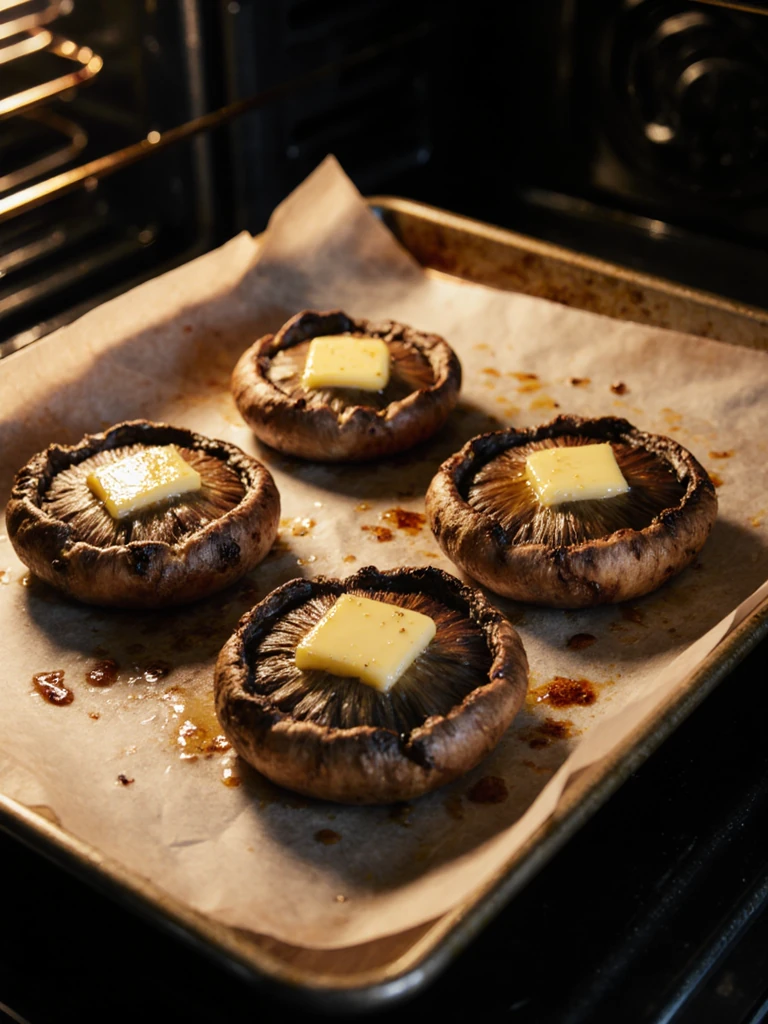
Portobello mushrooms are approximately 92% water by weight. At oven temperatures above 200°F, the cell walls rupture and release this moisture as the mushroom shrinks. A cap roasted gill-side up traps this released water inside the cavity where it accumulates under the filling. A cap roasted gill-side down allows the water to drain away from the cavity, fall directly onto the parchment below, and evaporate in the dry oven heat. The cap that emerges after 8 minutes of gill-side-down roasting is noticeably firmer, drier, and already seasoned by the garlic butter that has penetrated the flesh during this initial roast.
The garlic butter combines 2 tablespoons of unsalted butter melted with 2 cloves of minced garlic and 1 teaspoon of dried Italian herbs. Brush it generously on the gill side first, then flip and brush the rounded exterior. The butter coating on the gill side absorbs into the porous mushroom flesh during the 8-minute pre-roast and seasons the entire cap from the inside out. Butter added only to the exterior stays on the surface and contributes flavour only at the edges.
After the pre-roast, flip the caps gill-side up. The cavity will look dry and slightly shrunken. Any liquid visible on the parchment paper is moisture expelled from the mushroom — not fat — confirming that the pre-roast is working as intended. Pat the inside of each cavity with a paper towel if visible liquid remains before adding the filling.
Building the Caprese Filling
Use fresh mozzarella (fior di latte or buffalo mozzarella packed in water) rather than low-moisture shredded mozzarella. Fresh mozzarella melts into large, creamy pools with distinct stretch; shredded low-moisture mozzarella produces a dry, stringy layer that browns before the mushroom is fully tender.
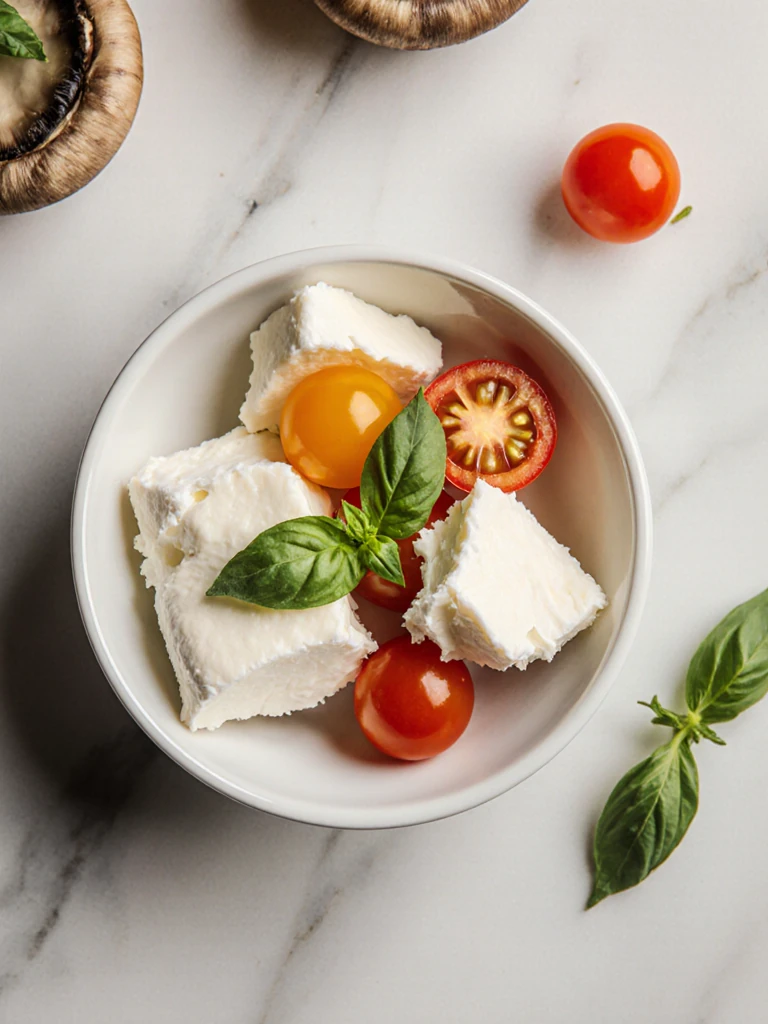
Slice fresh mozzarella into rounds 5mm thick. Thinner slices melt completely and merge into the tomato juices before the bake is done, losing their distinct creamy texture. Thicker slices remain partially solid at the centre. A 5mm slice melts evenly across the surface and retains enough body to pull apart in strings when a fork is pressed into the finished cap.
Halve the cherry tomatoes rather than using whole ones or large slices. Whole cherry tomatoes burst during the bake and release all their juice at once, flooding the cap with liquid. Large tomato slices release too much juice and weigh down the mozzarella. Halved cherry tomatoes release juice gradually during the 10-minute bake, which blends into the melting mozzarella and creates a naturally saucy, integrated filling rather than separate pooled components.
Add fresh basil to the filling before baking rather than only as a garnish after. Two or three small basil leaves placed beneath the mozzarella slices perfume the cheese as it melts. The basil darkens and wilts during the bake but its aromatic oils transfer fully into the warm mozzarella. A second application of fresh basil after baking provides the bright visual contrast that the cooked basil cannot deliver.
Making Balsamic Reduction and Finishing the Dish
Combine ¼ cup of balsamic vinegar with 1 teaspoon of honey in a small saucepan over medium heat. Simmer for 5 to 6 minutes until the liquid reduces by half and coats the back of a spoon. Remove from heat immediately — the reduction continues to thicken as it cools and will become too thick to drizzle if left on the burner.
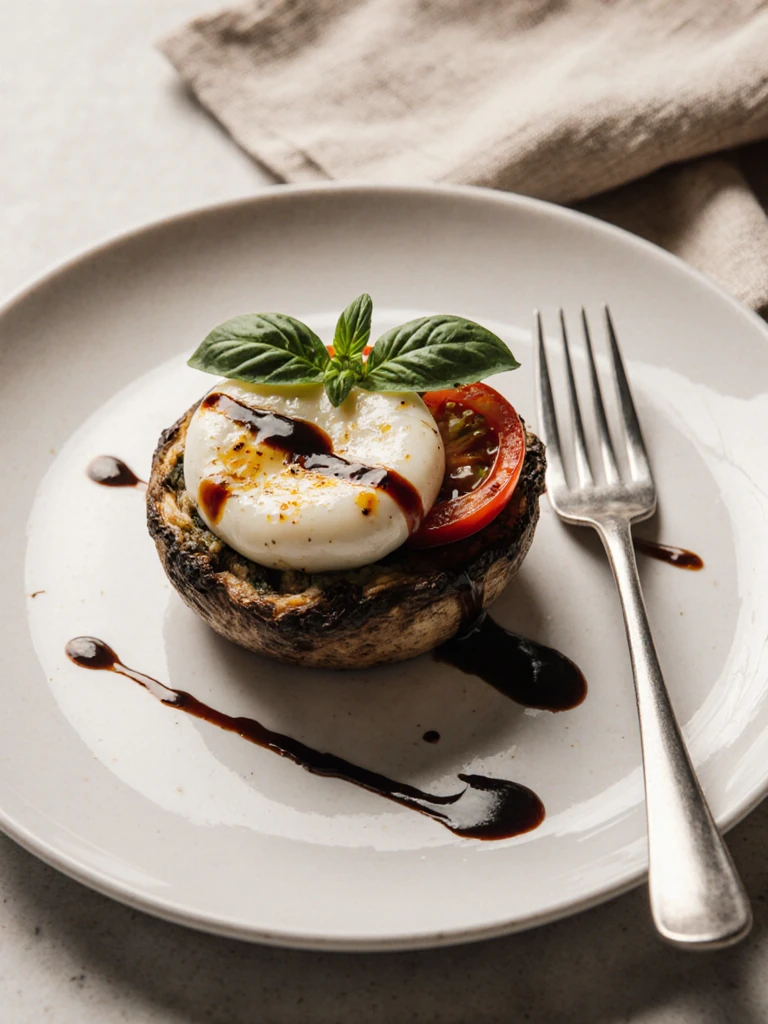
Homemade balsamic reduction concentrates balsamic vinegar to approximately twice the sweetness and four times the viscosity of the original liquid. Store-bought balsamic glaze achieves a similar result but typically contains added sugar, thickeners, and colouring agents. The homemade version uses acetic acid reduction through evaporation, which naturally concentrates the grape-derived sugars in the vinegar and produces a cleaner, more complex flavour. The honey addition lowers the pH threshold for thickening, reducing the simmer time from 10 to 12 minutes (without honey) to 5 to 6 minutes.
Drizzle the balsamic reduction from a spoon held 20cm above the finished caps in a thin, continuous line. The height ensures the glaze falls in a narrow stream rather than pooling. Apply immediately after removing the caps from the oven and adding the fresh basil garnish, while the mozzarella is still visibly molten. The warm cheese holds the drizzle in place on the surface; if the caps are allowed to cool for more than 3 minutes before glazing, the set mozzarella causes the glaze to slide off the sides. For another dish where the timing of a finishing element is critical, the same principle of adding acid off heat applies to the lemon finish in spiced lentil soup, where the squeeze goes in only after the heat is off.
Serve immediately. Explore the full Recipe Diary collection for more Italian-inspired vegetarian mains built on fresh mozzarella and seasonal produce.
The Recipe
Caprese Stuffed Portobello Mushrooms
Ingredients
For the mushrooms
For the caprese filling
For the balsamic reduction
To serve
Instructions
- 1
Preheat the oven to 425°F (220°C). Line a rimmed baking sheet with parchment paper.
- 2
Wipe each portobello cap with a damp paper towel to remove dirt. Remove the stems by twisting firmly. Scrape out the dark gills with a small spoon in a sweeping motion from centre to edge. Pat the inside of each cap dry with a paper towel.
- 3
Melt the butter in a small saucepan over low heat. Add the minced garlic and dried herbs and cook for 60 seconds until fragrant. Remove from heat.
- 4
Brush the garlic butter generously on the gill side of each cap, then flip and brush the rounded exterior as well.
- 5
Place the mushrooms gill-side down on the prepared baking sheet. Roast for 8 minutes. Transfer any liquid that has pooled on the parchment with a paper towel. Pat the inside of each cap dry before filling.
- 6
While the mushrooms pre-roast, combine the balsamic vinegar and honey in a small saucepan over medium heat. Simmer for 5 to 6 minutes until reduced by half and the liquid coats the back of a spoon. Remove from heat immediately and set aside to cool slightly.
- 7
Flip the pre-roasted caps gill-side up. Place 2 to 3 small basil leaves in the base of each cavity. Lay the mozzarella slices over the basil, then distribute the halved cherry tomatoes over the cheese. Season lightly with salt and pepper.
- 8
Return the filled caps to the oven and bake for a further 10 minutes until the mozzarella is melted, golden at the edges, and the tomatoes are softened.
- 9
Remove from the oven. Add fresh basil leaves to each cap immediately. Drizzle the balsamic reduction from a spoon held 20cm above each cap in a thin continuous line.
- 10
Finish with a pinch of flaky sea salt and a drizzle of extra-virgin olive oil. Serve immediately.
Nutrition Facts
Per serving
245 Calories
Moderate energy per serving
Macronutrients
* % Daily Value based on a 2,000 calorie diet
Tips & Notes
Gill scraping technique: use a small teaspoon and apply light pressure from the centre of the cap outward in a single smooth arc. The gills come away cleanly without gouging the flesh. Work over a paper towel to catch the debris. Cap size matters: choose portobello caps that are 10 to 12cm across and as uniformly flat as possible. Caps with deep curved sides trap heat unevenly and produce a filling that is overcooked at the edges and undercooked at the centre. Balsamic watch point: remove the reduction from heat the moment it coats the back of a spoon. It thickens further as it cools; a reduction left on the heat 60 seconds too long will set into a solid toffee-like layer that cannot be drizzled. If it over-reduces, stir in 1 teaspoon of warm water to loosen. Mozzarella moisture: if the fresh mozzarella ball feels very wet when sliced, press the slices between two paper towels for 30 seconds before placing in the caps. Particularly high-moisture mozzarella can still add pooled liquid even after the pre-roast step. Basil timing: fresh basil leaves placed in the cap before baking perfume the mozzarella as it melts but turn dark and limp in the heat. Always add a second set of fresh basil leaves immediately after the caps come out of the oven for the visual contrast the finished plate requires.
Frequently Asked Questions
Wipe each cap with a damp paper towel rather than rinsing under water. Portobello mushrooms are highly porous and absorb water instantly on contact; excess moisture pools inside the cap during roasting and steams the mozzarella instead of melting it.
Enjoyed this recipe?


