Tomato Basil Egg White Frittata
Tomato Basil Egg White Frittata
A tomato basil egg white frittata achieves 22 grams of protein per serving under 150 calories by whisking egg whites with cream of tartar for lift, pre-sautéing tomatoes to remove excess moisture, and using a stovetop-to-broiler method that sets the frittata in 7 minutes without drying the interior. Ready in 25 minutes from a cold pan.

- 1
Whisking the egg whites vigorously for 60 seconds with a pinch of cream of tartar incorporates air and lowers the pH of the mixture, producing a finer, more stable protein foam that sets to a tender, light curd rather than the tight, rubbery sheet that un-whisked whites produce.
- 2
Sautéing the cherry tomatoes cut-face down for 3 to 4 minutes before adding egg whites drives off 40 to 50% of the tomato's internal water through evaporation before it can pool in the egg white base, which has no yolk fat to absorb or emulsify released tomato juice.
- 3
The stovetop-to-broiler method sets the bottom and sides through direct conductive heat in 4 to 5 minutes, leaving only a thin top layer for the broiler to finish in 2 to 3 minutes, producing a fully set frittata without the surface cracking and interior drying that oven-only baking causes in a fat-free egg white base.
A tomato basil egg white frittata delivers 22 grams of protein per serving under 150 calories by replacing whole eggs with egg whites and building flavour through blistered cherry tomatoes, fresh basil folded into the mixture, and a finish under the broiler that sets the top in 2 minutes without drying the interior. The biggest technical challenge with egg white frittatas — the rubbery, grey, flavourless result most home cooks encounter — comes from two solvable problems: egg whites that are not aerated before cooking, and tomatoes that release raw moisture directly into the egg white base. Both are addressed before the skillet goes on the heat.
Why Egg White Frittatas Need Different Treatment Than Whole Egg Frittatas
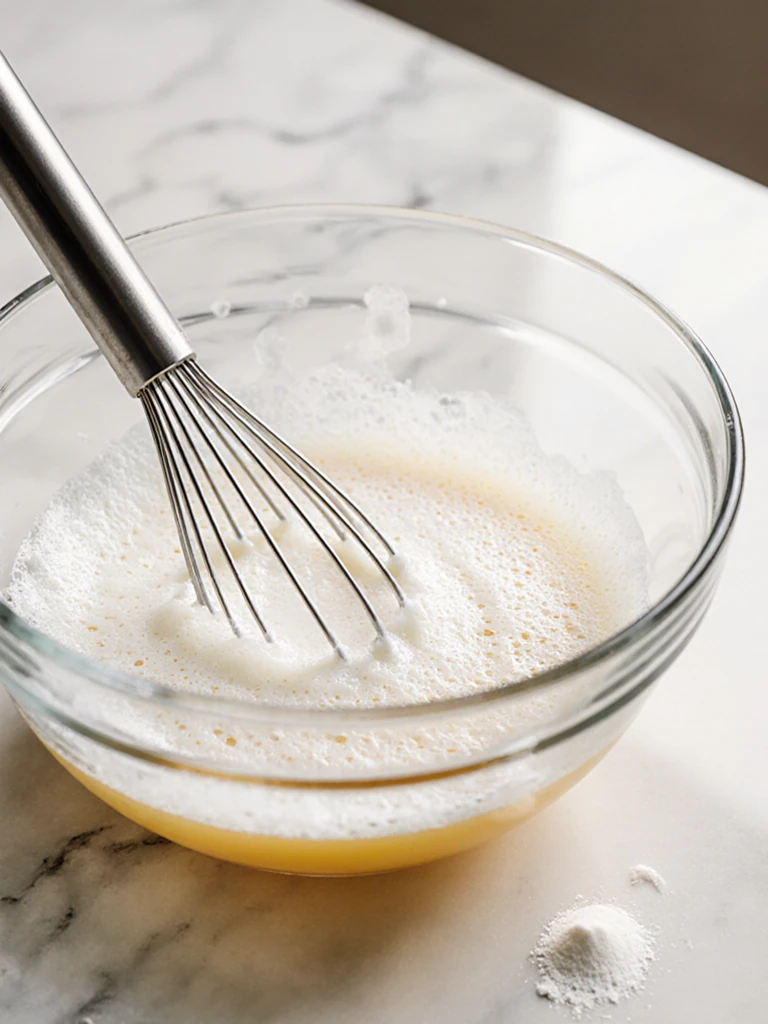
Egg whites contain no fat and set at a higher temperature than whole eggs, producing a firmer, less forgiving texture in a shorter cooking window. Whisking the egg whites vigorously for 60 seconds before cooking and adding a pinch of cream of tartar produces a slightly aerated base that sets to a tender, light curd rather than a tight, rubbery sheet.
The proteins in egg white — primarily ovalbumin, ovotransferrin, and ovomucin — coagulate between 144°F and 149°F. Whole egg yolks contain fat that interrupts protein strand formation and keeps the curd soft and yielding. Egg whites have no such buffer: once the proteins reach 149°F they continue tightening rapidly, and at 160°F the texture has crossed into rubbery territory. A 60-second vigorous whisk incorporates air into the egg white proteins and partially denatures their surface structure, which both lightens the finished texture and narrows the coagulation window slightly — giving a few extra seconds between perfectly set and overdone.
Cream of tartar (potassium bitartrate) is an acid that stabilises the foam structure of whisked egg whites by lowering the pH of the mixture. At a lower pH, the protein strands form a more stable, finer-grained network that holds air bubbles more securely during cooking. Use exactly ⅛ teaspoon per 6 egg whites. More than this introduces a faintly sour taste. The effect is the same as adding a squeeze of lemon juice to egg whites before whipping for meringue — a technique standard in pastry cooking that applies equally to savoury egg white dishes.
Season the egg whites in the bowl before cooking. Salt added to egg whites before they go into the pan draws a small amount of water from the protein structure and actually aids in producing a more tender, less rubbery texture — contrary to the old baking advice to add salt only at the end. For a savoury frittata, the pre-seasoning ensures even salt distribution through the finished slice rather than surface salting after cooking.
Preparing the Tomatoes to Prevent a Watery Frittata
Sauté halved cherry tomatoes cut-face down in a hot ovenproof skillet for 3 to 4 minutes before the egg whites go in. The direct contact between the cut face and the hot pan surface drives out 40 to 50% of the tomato's internal water through evaporation before it reaches the egg white base, preventing the watery, sunken result that raw tomatoes in egg white produce.
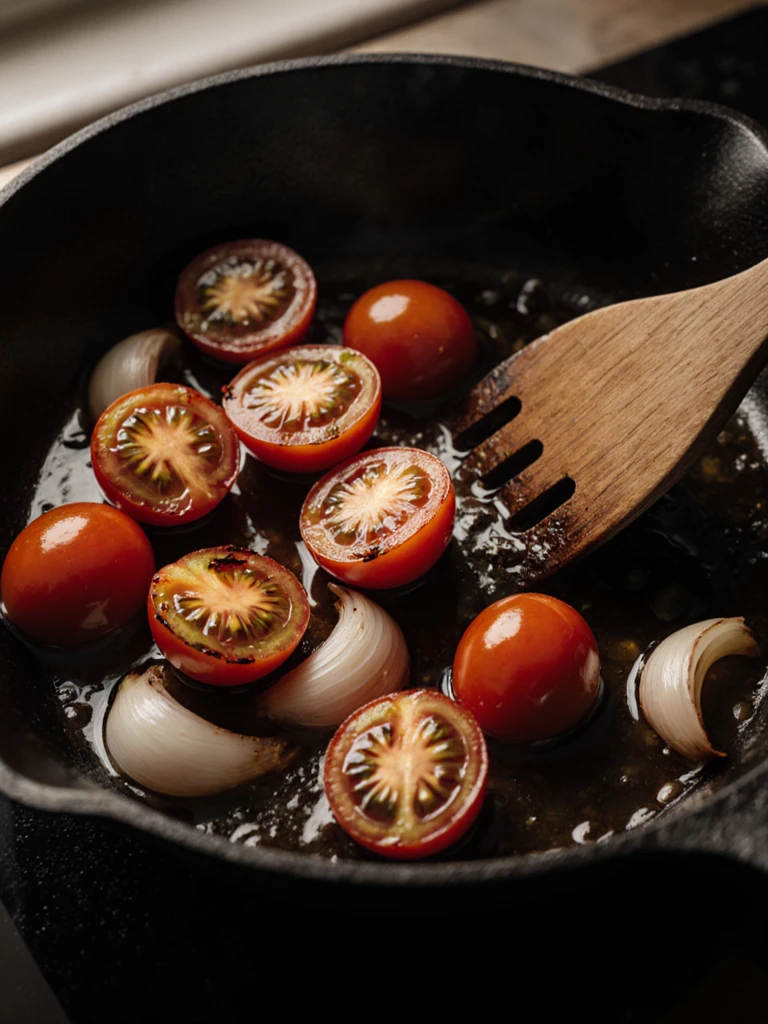
Raw tomatoes added to egg whites release their juice during cooking in a single rapid burst as their cell walls rupture from heat. In a whole-egg frittata this poses a manageable problem because the yolk fat helps emulsify the released liquid. In an egg white frittata there is no fat to absorb or emulsify the tomato juice, so it pools at the base of the skillet and produces a wet, sunken area in the finished frittata that never fully sets.
Sautéing the tomatoes first also concentrates their flavour significantly. The 3 to 4 minutes of direct pan contact caramelises the natural sugars on the cut face and reduces the acidic malic and citric acid content through evaporation, producing a sweeter, more complex tomato note than raw tomatoes provide. Remove the sautéed tomatoes from the pan to a plate after the sauté step, wipe the pan clean, and return the pan to heat. Starting with a clean, re-oiled pan ensures the egg whites do not stick to any caramelised tomato residue on the pan surface.
A shallot sautéed alongside the tomatoes adds depth without the assertive bite of raw onion in a mild egg white base. Shallots are lower in pungent sulphur compounds (allicin and related thiosulfinates) than yellow or white onions, and 3 to 4 minutes of sautéing mellows their flavour further to a gentle sweetness that frames the tomato without competing with the basil.
The Stovetop-to-Broiler Frittata Method
Cook the egg white frittata on the stovetop over medium-low heat for 4 to 5 minutes until the edges are fully set and the centre is still visibly liquid, then transfer to a broiler set to high for 2 to 3 minutes to set the top. This two-stage method produces a frittata that is set through without the rubbery top and dry interior that oven-only baking produces in an egg white frittata.
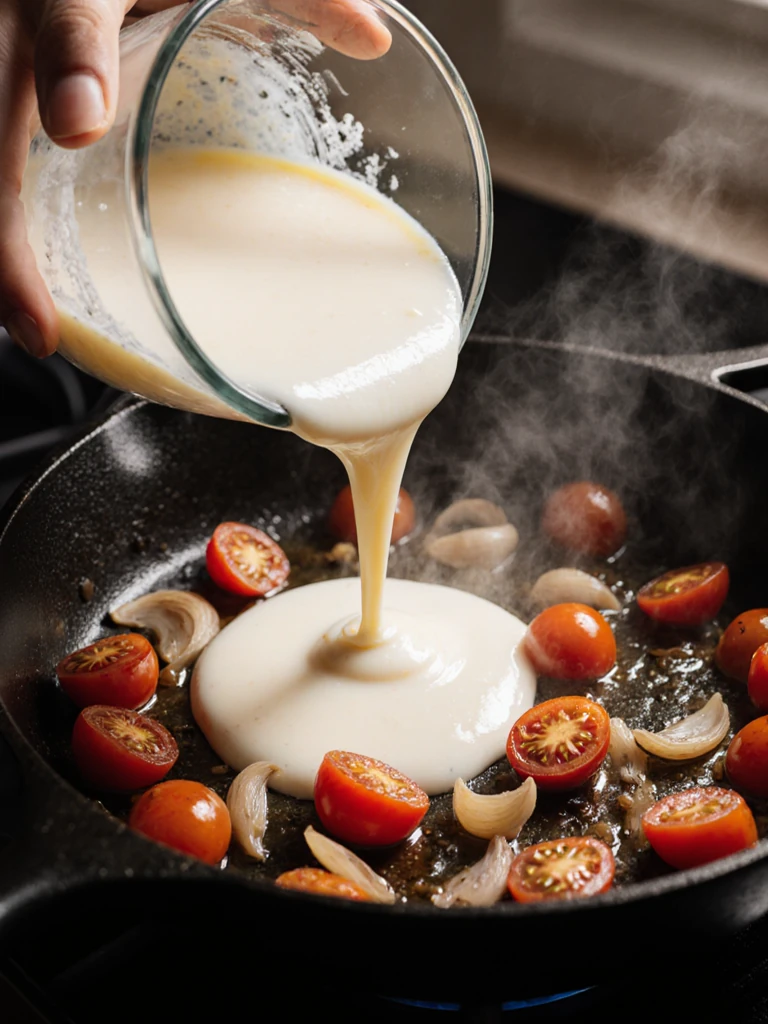
An egg white frittata baked from raw in a 375°F oven for 20 to 25 minutes (the standard whole-egg frittata method) dries the exterior protein layers significantly before the heat reaches the centre. The stovetop phase sets the bottom and sides rapidly through direct conductive heat from the hot pan, leaving only the top 1 to 1.5cm of the frittata unset when it goes under the broiler. The broiler's direct radiant heat then sets this thin surface layer in 2 to 3 minutes with minimal over-drying.
Use a 10-inch oven-safe skillet for 6 egg whites and 4 servings. A 10-inch pan produces a frittata approximately 2cm thick at the centre — the optimal depth for the stovetop phase to set the bottom and sides fully in 4 to 5 minutes without the centre cooking through. A 12-inch skillet spreads the egg whites too thin (approximately 1cm) and the entire frittata sets before the broiler step is needed, producing a flat, overcooked result. An 8-inch skillet produces a thicker frittata (3cm) that the broiler cannot set to the centre without burning the surface.
Check the frittata at 2 minutes under the broiler. The surface should look matte and opaque with no shiny liquid spots visible. A slight puff at the centre is normal and desirable — it indicates steam pressure building inside the set protein structure. The puff deflates slightly as the frittata cools, which is also normal. Remove immediately when the surface is matte; leaving it under the broiler after this point causes the surface proteins to tighten and crack.
Finishing and Serving the Tomato Basil Egg White Frittata
Add fresh basil in two stages: fold half into the egg white mixture before pouring into the skillet, and press the remaining leaves gently onto the surface after removing from the broiler. Basil cooked inside the frittata transfers its aromatic oils into the egg white protein network as it sets; basil added only as a garnish provides colour but almost no flavour to the interior of each slice.
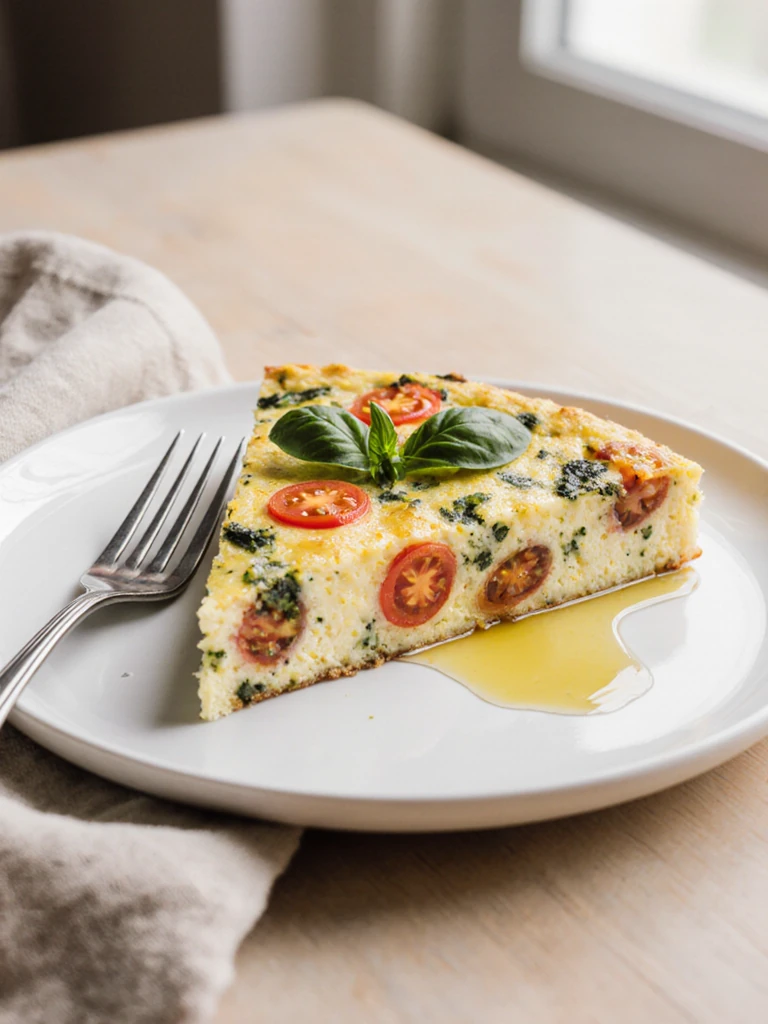
Allow the frittata to rest in the skillet for 3 minutes before slicing. Resting allows the internal steam pressure to equalise and the protein network to firm slightly, making the frittata easier to cut into clean wedges without the centre collapsing or tearing. Run a silicone spatula around the edge of the skillet before cutting to release the frittata from the pan wall. Cut into four wedges using a sharp knife rather than a spatula edge, which compresses the light egg white structure. Finish each wedge with a thin drizzle of extra-virgin olive oil, which provides a fat note that the egg white base lacks and rounds the flavour in the same way a yolk would in a whole-egg frittata. For another high-protein, low-fat egg white breakfast with detailed technique guidance, the aeration and heat control principles here build directly on those covered in the egg white and vegetable scramble article. Explore the full Recipe Diary breakfast collection for more egg white recipes built on stovetop technique rather than oven convenience.
The Recipe
Tomato Basil Egg White Frittata
Ingredients
For the egg white base
For the filling
To finish
Instructions
- 1
Preheat the broiler to high and position the oven rack 15cm from the heating element.
- 2
Heat olive oil in a 10-inch oven-safe skillet (cast iron or nonstick) over medium-high heat. Add the shallot and cook for 2 minutes until slightly softened.
- 3
Add the cherry tomatoes cut-face down. Cook without stirring for 3 to 4 minutes until the cut faces are lightly caramelised and the tomatoes have released and evaporated most of their visible juice. Add the minced garlic and dried oregano and cook for 30 seconds. Transfer the tomatoes and shallot to a plate. Wipe the skillet clean with a paper towel.
- 4
Whisk the egg whites and cream of tartar vigorously in a bowl for 60 seconds until slightly foamy and opaque. Season with salt and pepper. Fold in half of the chopped fresh basil.
- 5
Return the clean skillet to medium-low heat and add a thin drizzle of olive oil. Pour in the egg white mixture. Arrange the sautéed tomatoes and shallot evenly across the surface, pressing them gently into the egg whites.
- 6
Cook on the stovetop for 4 to 5 minutes without stirring until the edges are fully set and opaque and the centre is still visibly liquid.
- 7
Transfer the skillet to the broiler and cook for 2 to 3 minutes until the surface is matte and opaque with no shiny liquid spots. Watch closely from 2 minutes onward.
- 8
Remove from the broiler and rest in the skillet for 3 minutes. Run a silicone spatula around the edge to release the frittata from the pan wall.
- 9
Scatter fresh basil leaves over the surface. Finish with a pinch of flaky sea salt and a thin drizzle of extra-virgin olive oil. Cut into four wedges and serve from the skillet or slide onto a board.
Nutrition Facts
Per serving
145 Calories
Light & lean per serving
Macronutrients
* % Daily Value based on a 2,000 calorie diet
Tips & Notes
Cream of tartar quantity: use exactly ⅛ teaspoon per 6 egg whites. More than this introduces a faint sour taste that competes with the basil. If unavailable, a squeeze of ¼ teaspoon of lemon juice provides the same acid-stabilisation effect. Tomato moisture: the pre-sauté step is non-negotiable for a non-watery result. Even 3 minutes of cut-face-down sautéing removes enough moisture to keep the egg white base dry during cooking. Cherry tomatoes and grape tomatoes both work; larger tomatoes should be quartered and sautéed for 5 minutes. Broiler vigilance: stay at the oven during the broiler phase. The difference between perfectly set and burned is under 60 seconds under a high broiler. Check at 2 minutes and every 30 seconds after. Pan material: cast iron retains heat evenly and produces a more consistent set around the edge of the frittata. Nonstick skillets work equally well and make releasing easier. Avoid thin stainless steel pans, which develop hot spots that set the egg whites unevenly on the stovetop. Basil in two stages: always fold half the basil into the egg white mixture before cooking. Basil added only on top of the finished frittata provides colour but no flavour to the interior of each slice. The heat from the cooking egg whites transfers the volatile aromatic oils from the folded basil directly into the protein network as it sets.
Frequently Asked Questions
Whisk the egg whites vigorously for 60 seconds until slightly foamy and add a pinch of cream of tartar before cooking. Use a stovetop-to-broiler method rather than oven-only baking. Sauté the tomatoes first to remove excess moisture that would pool inside the egg white base.
Enjoyed this recipe?
