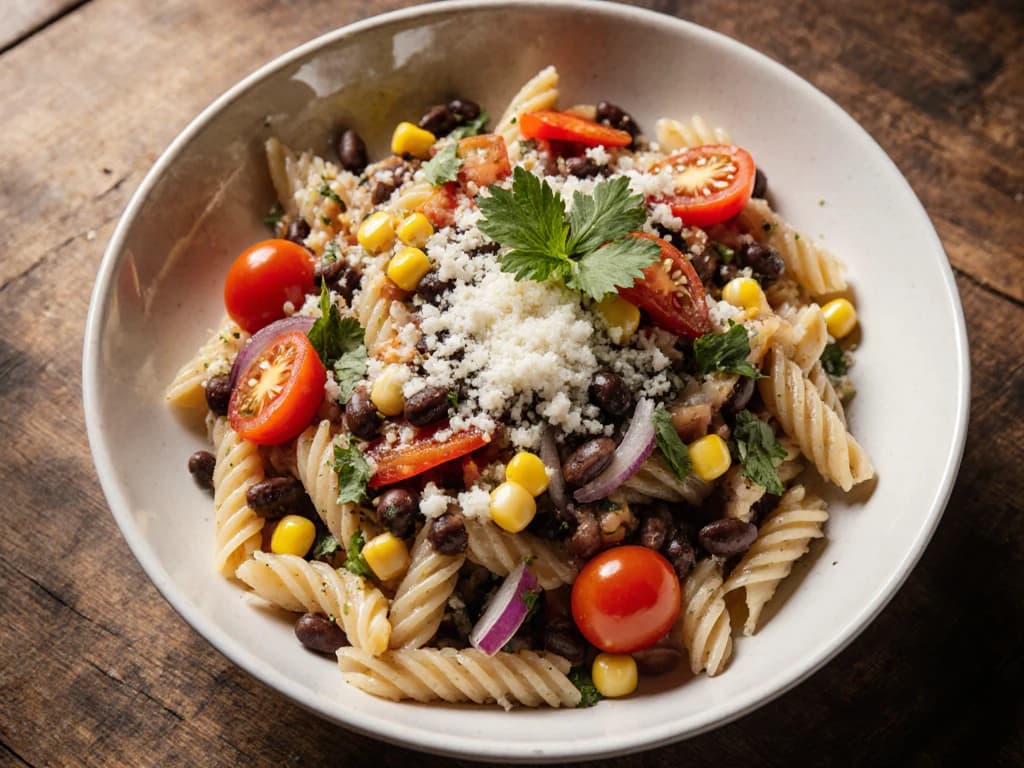
Sesame Cucumber Noodle Salad with Chicken
Sesame Cucumber Noodle Salad with Chicken
Sesame cucumber noodle salad with chicken pairs spiralized cucumber noodles and chilled soba with poached shredded chicken in a soy-ginger-peanut dressing. Salting the cucumber noodles for 10 minutes before assembly draws out excess moisture and keeps the dressing glossy rather than watered down. Ready in 30 minutes, meal-prep friendly for up to two days.

- 1
Salting spiralized cucumber noodles for 10 minutes before assembly uses osmotic pressure to draw water from the cucumber cells to the surface before it enters the bowl, preventing the released water from diluting the sesame dressing within minutes of serving.
- 2
Starting the chicken in cold water and raising it slowly to 160°F allows the exterior and interior to reach temperature at the same rate, producing evenly cooked, easy-to-shred meat without the chalky exterior that boiling water produces.
- 3
Tossing the shredded chicken with 1 tablespoon of dressing while still warm allows the warm protein fibres to absorb both the fat-soluble aromatic compounds in the sesame oil and the water-soluble flavour compounds in the soy sauce simultaneously, building flavour from within rather than coating only the surface.
Sesame cucumber noodle salad with chicken combines spiralized cucumber noodles and chilled soba noodles in a soy-ginger-sesame dressing that takes 3 minutes to whisk together. The cucumber noodles are salted for 10 minutes before assembly to extract the surface moisture that would otherwise dilute the dressing and leave the bowl watery within minutes of serving. Poached chicken breast, shredded while still warm, absorbs the sesame dressing more readily than sliced or cold-shredded chicken, producing a more integrated flavour in every bite. The salad holds well for up to two days in the fridge when the cucumber noodles, noodles, and dressing are stored separately and combined just before eating.
Making Cucumber Noodles That Stay Crisp and Don't Water Down the Dressing
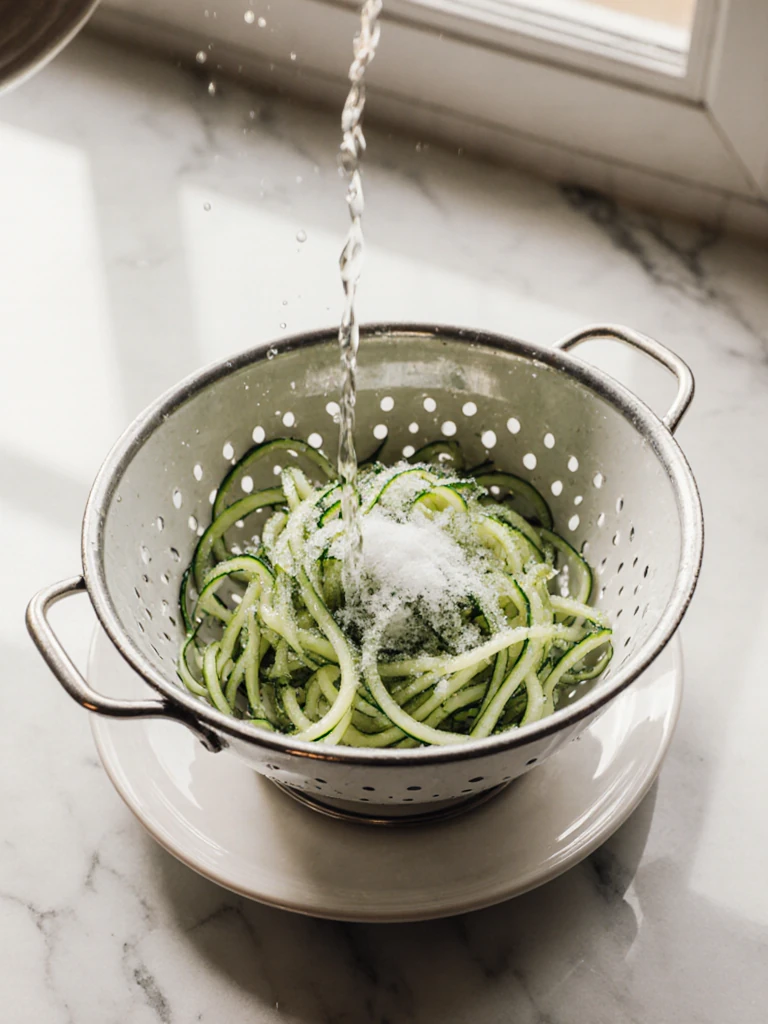
Salt the spiralized cucumber noodles immediately after cutting, toss to distribute the salt, and leave in a colander set over a bowl for 10 minutes. The osmotic pressure created by the salt draws water from the cucumber cells to the surface, where it drips away rather than releasing into the dressing once the salad is assembled.
Cucumbers are approximately 96% water by weight, making them one of the highest-water vegetables used as noodle substitutes. A spiralizer with a 3mm blade produces the closest approximation to thin soba noodles in both diameter and curl. A julienne peeler produces flat, ribbon-like strands closer to fettuccine width. A standard vegetable peeler produces wide, flat sheets closer to pappardelle. All three work for this salad; the spiralizer version provides the most consistent tangle that mixes readily with the soba noodles, while the ribbon versions produce a more layered, textural result.
Use ½ teaspoon of fine salt per medium cucumber (approximately 200g). More salt draws out so much moisture that the cucumber loses its structural crunch and becomes limp. Less salt leaves too much residual water. After 10 minutes, spread the cucumber noodles on a clean kitchen towel and pat thoroughly dry. The towel removes both the surface water and the excess salt deposited on the outside of the strands. Taste a strand before adding to the bowl; it should taste lightly seasoned but not salty, and it should snap when bent rather than bend limply.
The Sesame-Ginger Dressing
Whisk together soy sauce, toasted sesame oil, rice vinegar, natural peanut butter, grated fresh ginger, and honey until the peanut butter is fully incorporated and the dressing is smooth and glossy. The peanut butter acts as an emulsifier, binding the oil and water-based components into a stable, coating dressing rather than a separated vinaigrette.
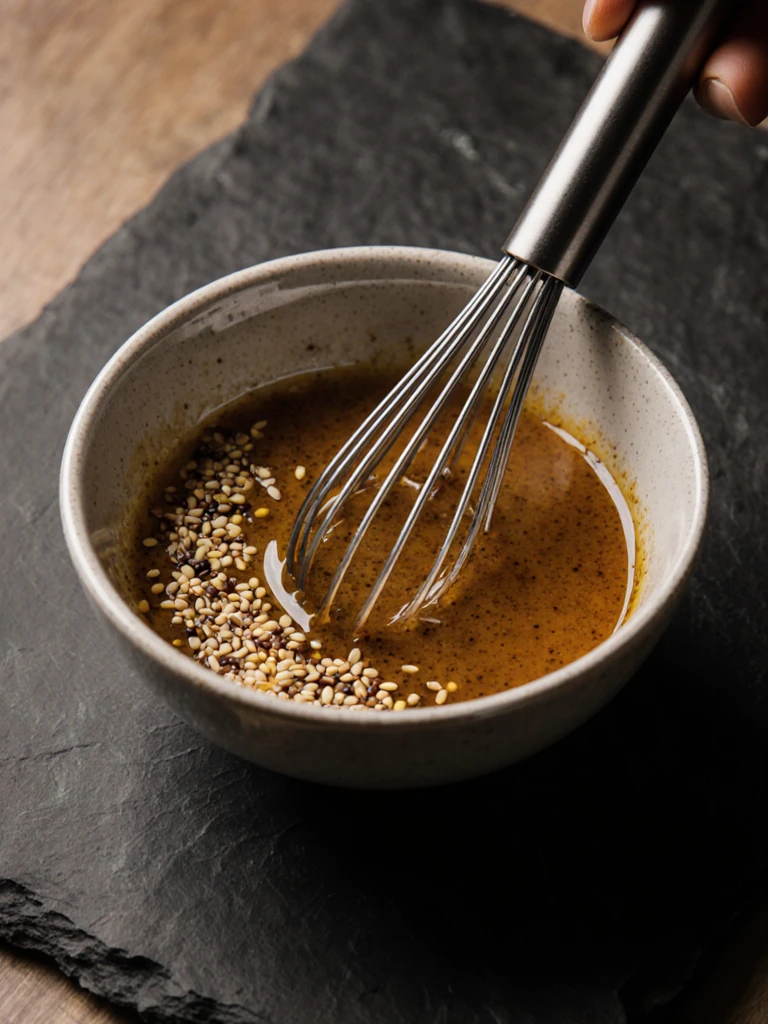
Natural peanut butter (100% peanuts, no added emulsifiers) works better in this dressing than stabilised commercial peanut butter. Natural peanut butter disperses more readily into the acidic rice vinegar and soy sauce because it lacks the hydrogenated oil additives that make commercial peanut butter stable at room temperature. Stir the natural peanut butter jar before measuring to ensure the oil and solids are fully combined. If the dressing appears too thick to pour, whisk in 1 to 2 teaspoons of warm water, 1 teaspoon at a time, until it reaches a consistency that coats the back of a spoon and drizzles slowly.
Toasted sesame oil is the aromatic backbone of this dressing and cannot be substituted with regular (untoasted) sesame oil. Toasted sesame oil is made from sesame seeds that are roasted before pressing, which develops the nutty, deep aromatic compounds responsible for its distinctive character. Untoasted sesame oil is a neutral cooking oil with almost no flavour. Use 1 tablespoon of toasted sesame oil per 4 servings; more than this makes the dressing heavy and one-dimensional. Add 1 teaspoon of chilli oil or ½ teaspoon of sriracha to the dressing for a gentle heat that complements the peanut and ginger without overpowering the fresh cucumber.
Grate the ginger on a microplane rather than mincing it. Microplane-grated ginger releases juice and pulp simultaneously, dispersing the flavour evenly through the dressing in a way that minced ginger, which leaves visible fibrous pieces, cannot match. A 1.5cm piece of fresh ginger, grated, yields approximately 1 teaspoon of paste. The dressing can be made up to 5 days ahead and stored in a sealed jar in the fridge; whisk again before using as the components separate slightly during storage.
Poaching and Shredding Chicken for Maximum Dressing Absorption
Place boneless chicken breasts in a pot, cover with cold water, add aromatics (a smashed garlic clove, two slices of ginger, and a pinch of salt), and bring slowly to 160°F over medium heat. Turn off the heat, cover the pot, and leave for 15 minutes. The residual heat brings the chicken to 165°F without the aggressive boiling that tightens protein fibres and produces dry, stringy meat.
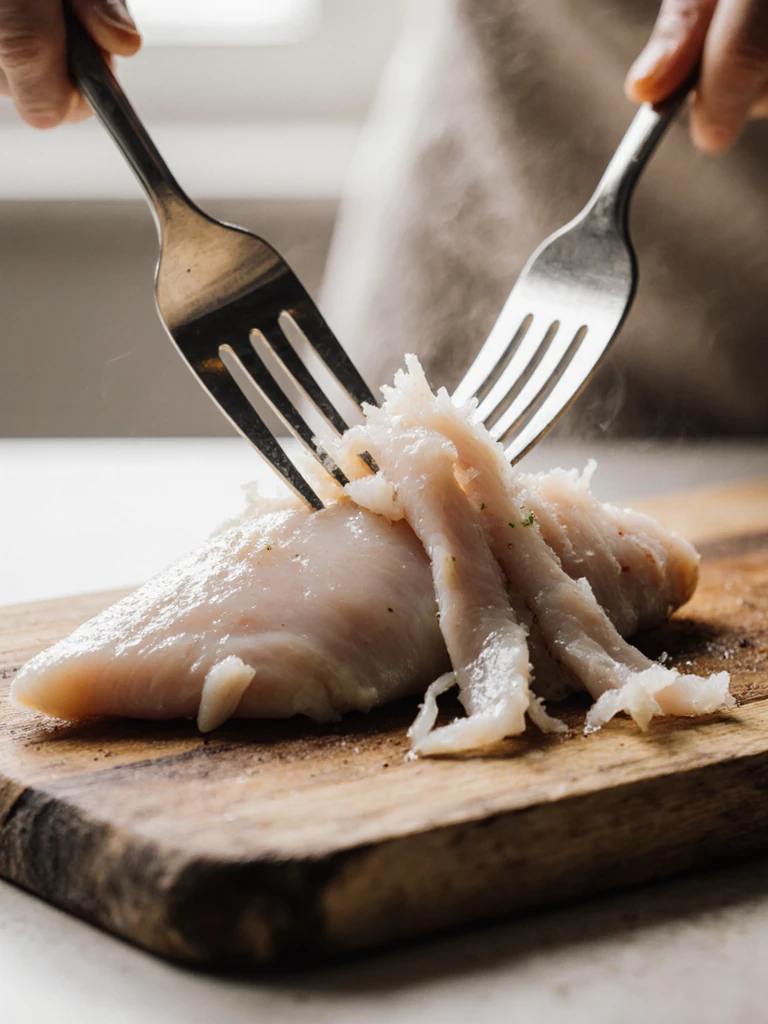
Starting the chicken in cold water rather than boiling water produces more evenly cooked meat. Cold water allows the exterior and interior of the breast to rise in temperature at the same rate. Boiling water cooks the outer layer of protein to over 180°F in the first minute of contact while the centre is still cold, producing a two-zone texture: chalky exterior, undercooked centre.
Shred the chicken while still warm, pulling it apart along its natural muscle grain using two forks or fingers. Warm chicken fibres separate easily and cleanly; cold chicken fibres are bound together by gelled collagen and require more force, producing thick, uneven chunks rather than fine, feathery strands. Immediately toss the warm shredded chicken with 1 tablespoon of the sesame dressing. The warm protein absorbs the fat-soluble aromatic compounds in the sesame oil and the water-soluble flavour compounds in the soy sauce simultaneously, building flavour from within the meat rather than coating only the surface.
Rotisserie chicken or any leftover cooked chicken serves as a direct substitute. Warm cold cooked chicken in a microwave for 30 seconds before shredding to soften the collagen bonds and produce finer strands. Season the warmed shredded chicken with 1 tablespoon of dressing immediately and allow 5 minutes for the flavour to absorb before assembling the salad.
Assembling and Serving Sesame Cucumber Noodle Salad with Chicken
Combine the chilled soba noodles, dried cucumber noodles, and two-thirds of the dressing in a large bowl and toss until every strand is coated. Add the shredded chicken, julienned red pepper, and green onions and toss once more. Reserve the final third of the dressing to drizzle over individual bowls at the table, where it provides a fresh hit of flavour against the dressed noodles.
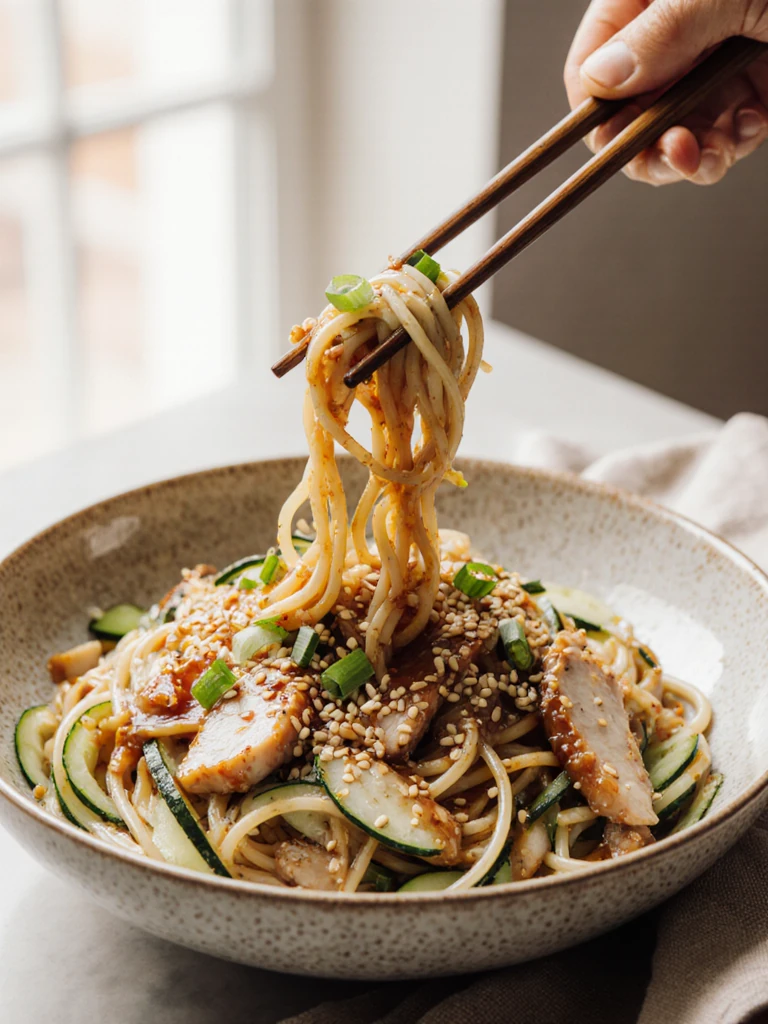
Soba noodles absorb dressing continuously after tossing, so dress the salad no more than 10 minutes before serving for a dressed-but-not-soggy result. For meal prep or make-ahead situations, store the noodles, cucumber, and chicken separately in the fridge and toss with dressing only when ready to eat. Finish each bowl with toasted sesame seeds and roughly crushed roasted peanuts. The peanuts provide a textural counterpoint to the soft noodles and tender chicken that sesame seeds alone cannot deliver. For another salad built around bold Asian-inspired dressing and crisp textures, the lemon-oregano vinaigrette technique from grilled chicken greek salad applies the same principle of reserving dressing for individual portions at the table. Explore the full Recipe Diary collection for more chilled noodle salads and meal-prep friendly weeknight dishes.
The Recipe
Sesame Cucumber Noodle Salad with Chicken
Ingredients
For the poached chicken
For the cucumber noodles
For the soba noodles
For the sesame-ginger dressing
For assembly
Instructions
- 1
Place the chicken breasts in a saucepan and cover with cold water. Add the smashed garlic, ginger slices, and salt. Bring slowly to 160°F over medium heat (about 12 minutes). Turn off the heat, cover the pot, and leave the chicken to rest in the hot water for 15 minutes.
- 2
While the chicken poaches, spiralize the cucumbers using a 3mm blade. Place the cucumber noodles in a colander set over a bowl. Toss with the fine salt and leave for 10 minutes.
- 3
Cook the soba noodles according to packet instructions. Drain and rinse thoroughly under cold running water until the water runs clear. This removes excess starch and prevents clumping. Toss with 1 teaspoon of sesame oil and refrigerate.
- 4
Whisk together all dressing ingredients in a small bowl until the peanut butter is fully incorporated and the dressing is smooth. Set aside.
- 5
After 10 minutes, spread the cucumber noodles on a clean kitchen towel and pat firmly dry. Taste one strand; it should snap when bent and taste lightly seasoned.
- 6
Remove the chicken from the poaching liquid. Shred while still warm using two forks, pulling along the grain of the muscle fibres. Immediately toss the warm shredded chicken with 1 tablespoon of the sesame dressing.
- 7
In a large wide bowl, combine the chilled soba noodles and dried cucumber noodles. Pour over two-thirds of the dressing and toss until every strand is coated.
- 8
Add the dressed chicken, julienned red pepper, and most of the green onions. Toss gently once more.
- 9
Divide into bowls. Drizzle with the reserved dressing. Top with toasted sesame seeds, crushed peanuts, remaining green onions, and coriander if using. Serve immediately.
Nutrition Facts
Per serving
385 Calories
Moderate energy per serving
Macronutrients
* % Daily Value based on a 2,000 calorie diet
Tips & Notes
Salt the cucumber noodles without skipping: even 5 minutes of salting makes a measurable difference. 10 minutes is the target. If short on time, press the cucumber noodles firmly in a clean kitchen towel for 60 seconds as an accelerated alternative that removes surface moisture but not as much internal water. Cold water poaching: always start the chicken in cold water. Hot water shocks the exterior proteins and produces a chalky, tough surface before the interior cooks through. Cold water allows the temperature to rise gradually from edge to centre. Soba noodle rinse: rinse cooked soba under cold water until the water runs completely clear. Soba releases a large amount of surface starch during cooking; insufficient rinsing leaves a gluey coating that prevents the dressing from adhering to the noodles and makes strands clump. Dressing consistency: the dressing should pour slowly from a spoon, not drip freely like water. If it is too thick, add warm water 1 teaspoon at a time. If it is too thin (natural peanut butter varies in consistency), add half a teaspoon more peanut butter and whisk again. Reserve dressing: always hold back a third of the dressing for individual serving. Soba noodles absorb dressing continuously; the reserved portion keeps the finished bowls glossy and flavourful rather than dry.
Frequently Asked Questions
A spiralizer with a 3mm blade produces thin strands closest to noodle width. A julienne peeler works well for flat ribbon strands. A regular vegetable peeler creates wide pappardelle-style sheets. All three work; the spiralizer version mixes most evenly with the soba noodles.
Enjoyed this recipe?