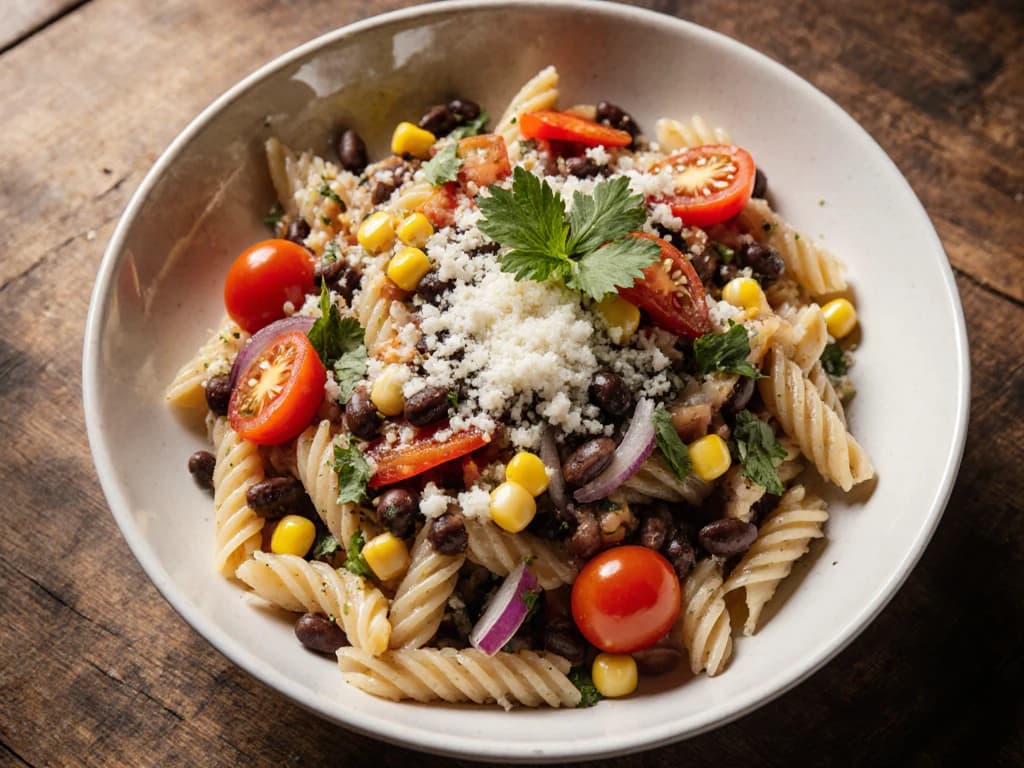
Grilled Chicken Greek Salad
Grilled Chicken Greek Salad

Grilled chicken greek salad combines oregano-and-lemon marinated chicken breast with crisp romaine, cucumber, cherry tomatoes, kalamata olives, red onion, and block feta, all dressed in a sharp red wine vinaigrette. The marinade doubles as the base for the dressing, cutting prep time and keeping every component tightly integrated in flavour.

- 1
Using the same marinade base as the salad dressing means the chicken and vegetables share the same olive oil, lemon, vinegar, and oregano profile, producing a cohesive bowl where every component tastes like it belongs together rather than assembled from separate recipes.
- 2
Patting the marinated chicken surface dry before grilling removes excess acidic liquid that would create steam on contact with the hot grate, allowing the Maillard reaction to produce defined grill marks and a savoury crust within the first 3 minutes of cooking.
- 3
Pulling the chicken at 160°F internal temperature and resting for 5 minutes uses carryover cooking to reach the safe 165°F endpoint while preserving the moisture that would be driven out by 5 additional minutes on the grill.
Grilled chicken greek salad starts with one marinade that does double duty: it flavours the chicken for at least 30 minutes before grilling and forms the backbone of the red wine vinaigrette that dresses the salad. Olive oil, lemon juice, red wine vinegar, dried oregano, and garlic are the five shared ingredients between both components, which means the chicken and the salad taste like they were designed together rather than assembled from separate recipes. The chicken grills at medium-high heat for 5 to 6 minutes per side and rests for 5 minutes before slicing, producing juicy, lightly charred slices that hold their own against the bold feta and briny olives underneath.
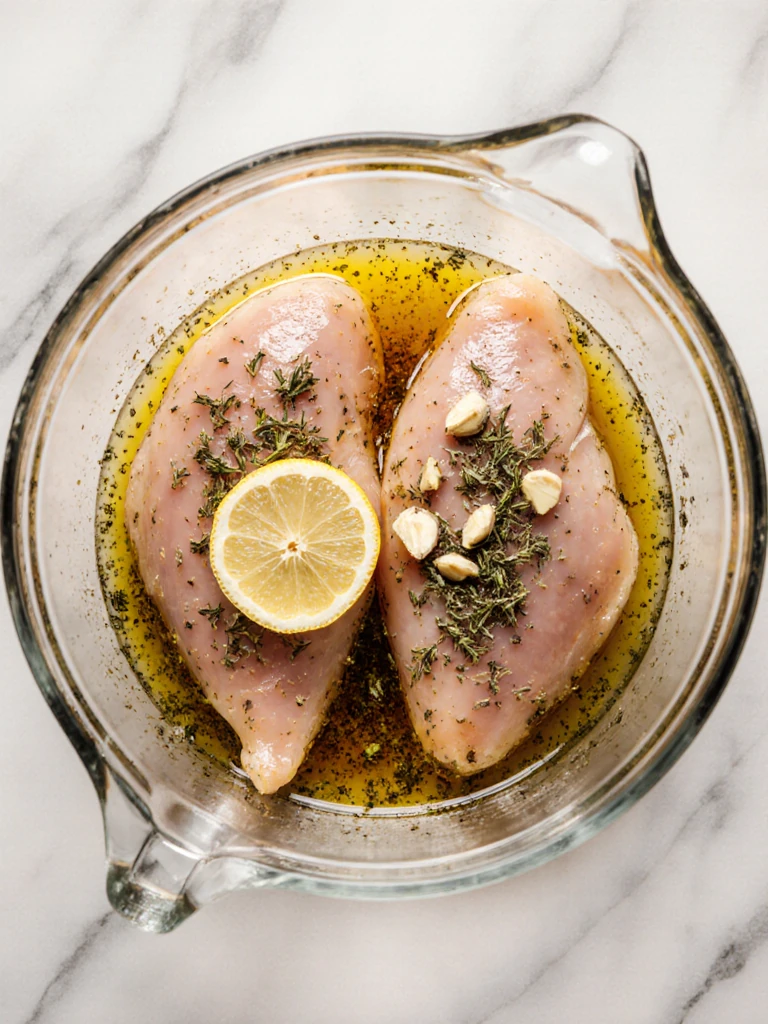
Building the Greek Marinade That Works for Both Chicken and Dressing
Whisk together olive oil, lemon juice, red wine vinegar, dried oregano, minced garlic, salt, and black pepper. Use half for the chicken marinade and reserve the other half, untouched by raw chicken, as the salad dressing.
Dried oregano is non-negotiable for an authentic flavour profile. Fresh oregano is milder and contains more water, which dilutes the marinade and slows browning on the grill surface. Greek dried oregano (Origanum vulgare subsp. hirtum) has a sharper, more resinous character than the Italian dried oregano found on most supermarket shelves; sourced from Mediterranean specialty stores, it produces a noticeably more complex result. If only standard dried oregano is available, increase the quantity from 1 teaspoon to 1½ teaspoons to compensate for the lower essential oil content.
Red wine vinegar provides acidity that lemon juice alone cannot. Lemon juice contributes brightness and floral citrus notes, but its pH (around 2.2) drops rapidly during marinating as it reacts with the chicken proteins. Red wine vinegar holds its acidity more stably and adds a secondary fruit note that rounds the dressing without competing with the feta. The ratio in this recipe is 2 parts lemon juice to 1 part red wine vinegar, which produces a dressing that is sharp enough to cut through the richness of the olive oil and feta without overwhelming the fresh vegetables.
Marinate the chicken for a minimum of 30 minutes at room temperature or up to 8 hours refrigerated. Beyond 8 hours, the acid in the marinade begins to denature the outer protein layer, producing a slightly grainy surface texture after grilling. For the best result, marinate for 4 to 6 hours maximum, then allow the chicken to rest at room temperature for 20 minutes before grilling so it cooks evenly from edge to centre.
How to Grill the Chicken for Greek Salad
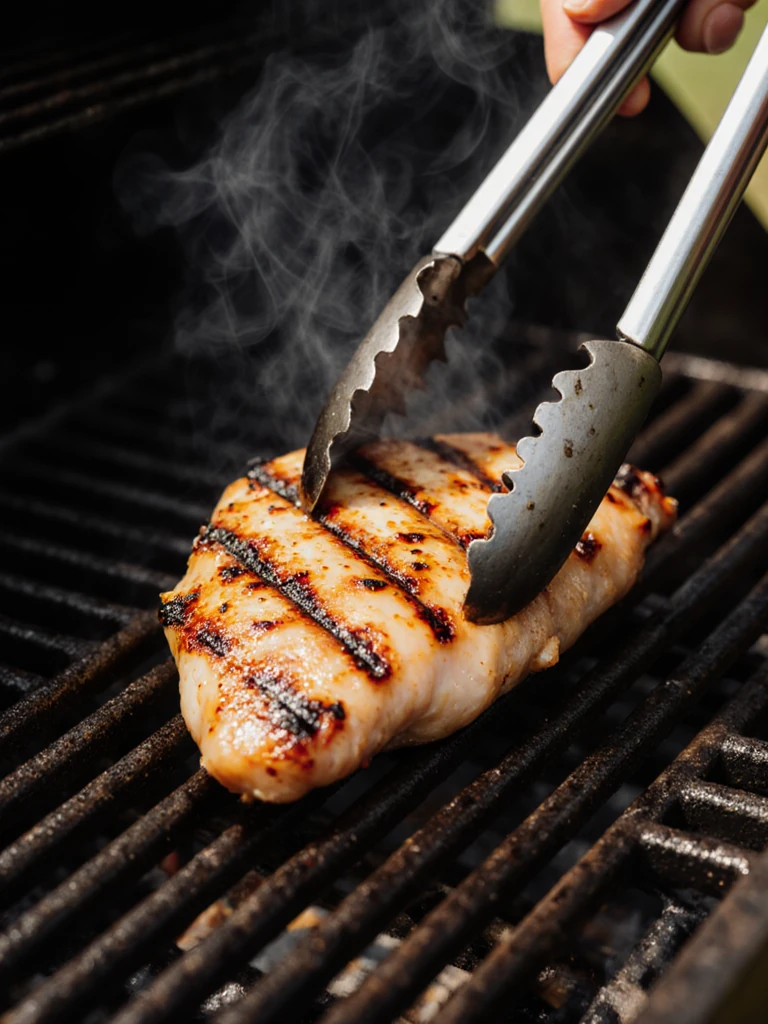
Grill boneless skinless chicken breasts over medium-high heat (400 to 425°F) for 5 to 6 minutes per side. Pull at an internal temperature of 160°F and rest for 5 minutes; carryover cooking brings the centre to the safe 165°F without drying the outer flesh.
Pound the chicken breasts to an even ½-inch thickness before marinating. Uneven breast thickness causes the tapered end to reach 180°F and dry out before the thick lobe reaches 165°F. A meat mallet applied for 30 seconds levels the breast to a consistent thickness that grills in the same time from edge to centre.
Pat the surface of the marinated chicken lightly dry with a paper towel before placing it on the grill. The marinade contains oil, which is beneficial for flavour, but surface moisture from the lemon juice and vinegar creates steam on contact with the grill grate. Steam delays the Maillard browning reaction by 60 to 90 seconds and produces a grey, steamed surface rather than defined golden grill marks. A brief pat dry preserves the oil coating while removing excess acidic liquid.
Do not move the chicken for the first 3 minutes after placing it on the grate. The protein needs contact time with the hot metal to release naturally; early movement tears the surface and removes the developing crust. After 3 minutes the chicken will lift cleanly from the grate. Rotate 45 degrees for crosshatch grill marks, cook for 2 to 3 more minutes, then flip and repeat on the second side.
Assembling the Grilled Chicken Greek Salad
Build the salad base first, add the dressing, toss to coat, then lay the sliced chicken on top rather than tossing it in. Chicken tossed through the salad breaks the feta into fine crumbles and bruises the romaine, collapsing the texture of the finished bowl.
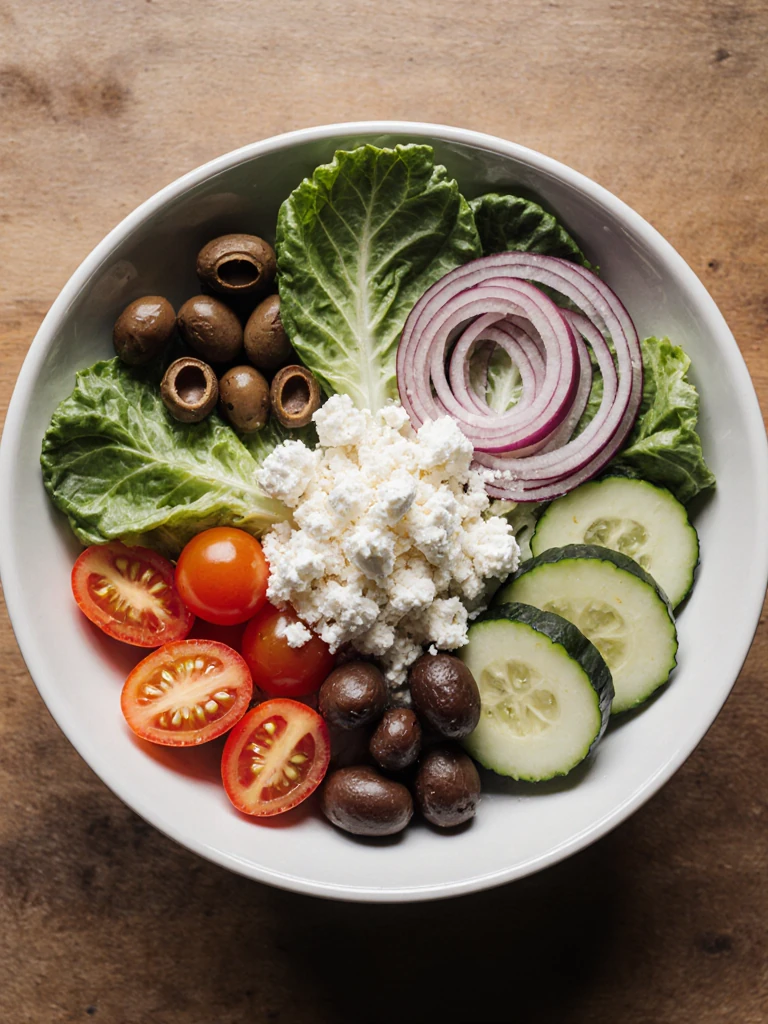
Use block feta rather than pre-crumbled. Block feta is packed in brine, which preserves moisture and produces a creamy, tangy interior texture. Pre-crumbled feta is dried during processing, resulting in a chalky, salty product that lacks the fat content needed to balance the acidity of the dressing. Break the block feta into irregular chunks by hand directly over the salad so each piece varies in size, giving some bites a concentrated salty hit and others a milder creamy note.
Kalamata olives provide brininess and a fruity depth that black canned olives cannot replicate. Kalamatas are cured in red wine vinegar brine rather than water, which gives them a distinct purple-black colour and a complex flavour with notes of wine and dried fruit. Slice them in half lengthwise before adding to expose the flesh and allow the brine to mingle with the dressing.
Dress the salad 2 to 3 minutes before serving rather than immediately before. Romaine holds its crunch for several minutes after dressing; those 2 to 3 minutes allow the dressing to soften the raw red onion slightly and begin integrating with the tomato juices released on the plate. Dressing applied more than 10 minutes before serving wilts the romaine and pools watery liquid at the base of the bowl.
Plating and Serving Grilled Chicken Greek Salad
Slice the rested chicken on the bias into strips roughly 1cm wide. Fan the slices over the dressed salad rather than chopping into cubes. Diagonal slices present more surface area, show the grill marks clearly, and stay juicier on the plate than cubes, which lose moisture rapidly from four cut faces rather than two.
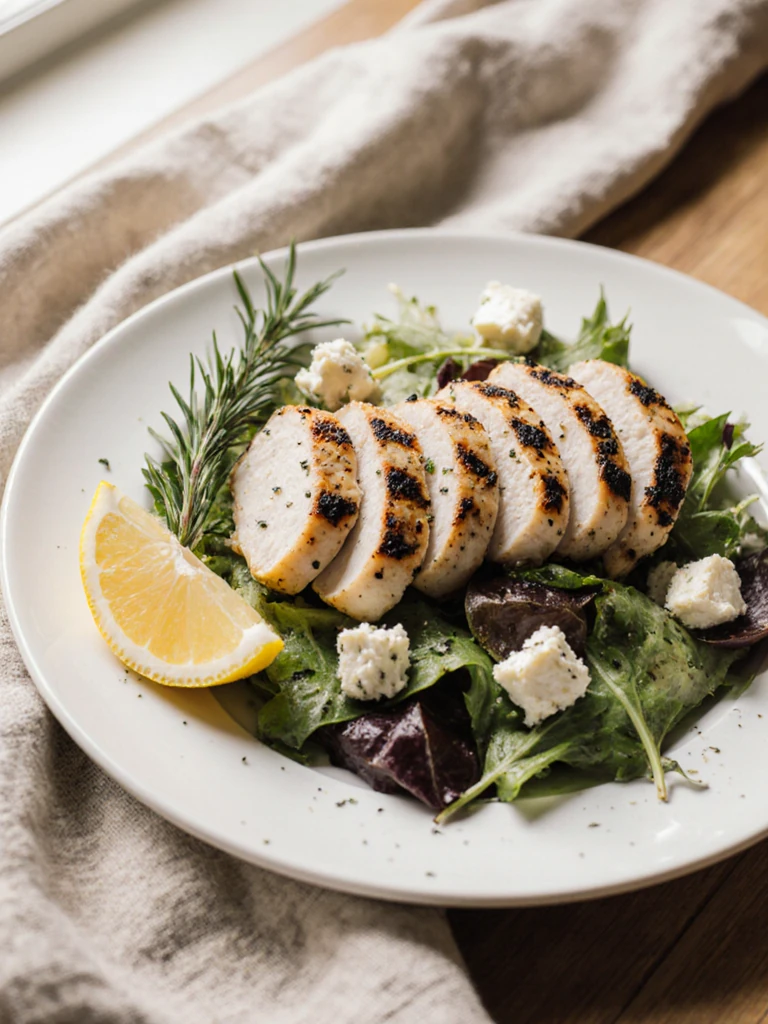
Finish each plate with a wedge of lemon and a pinch of dried oregano over the chicken slices. The lemon wedge allows each person to adjust acidity to their preference; some find the vinaigrette sufficient while others prefer a fresh squeeze to brighten the final bowl. A drizzle of high-quality extra-virgin olive oil over the assembled salad deepens the Mediterranean character in a way the vinaigrette alone cannot fully deliver. For a similarly structured protein-and-vegetable pairing where components are kept separate until the moment of serving, the same resting and slicing principle applies to the turkey in roasted stuffed pepper recipes that rely on carryover heat for a juicy finish.
Explore the full Recipe Diary collection for more salads built around grilled proteins and bold Mediterranean dressings.
The Recipe
Grilled Chicken Greek Salad
Ingredients
For the marinade and dressing
For the chicken
For the salad
To serve
Instructions
- 1
Whisk together olive oil, lemon juice, red wine vinegar, oregano, garlic, salt, and pepper in a small bowl or jar. Pour half into a separate container and refrigerate as the salad dressing. Use the remaining half as the marinade.
- 2
Pound the chicken breasts to an even ½-inch thickness. Place in a shallow dish, pour the marinade over, and turn to coat. Marinate for at least 30 minutes at room temperature, or up to 8 hours refrigerated.
- 3
Remove the chicken from the marinade and pat lightly dry with a paper towel to remove excess surface liquid while leaving the oil coating intact.
- 4
Preheat the grill to medium-high heat, 400 to 425°F. Clean and oil the grates. Place the chicken on the grill and cook undisturbed for 3 minutes. Rotate 45 degrees and cook for a further 2 to 3 minutes. Flip and repeat on the second side until the internal temperature reads 160°F.
- 5
Transfer the chicken to a cutting board and rest for 5 minutes.
- 6
Combine the romaine, cherry tomatoes, cucumber, red onion, and olives in a large wide bowl. Drizzle the reserved dressing over the salad and toss to coat.
- 7
Break the block feta into irregular chunks by hand directly over the salad. Toss gently once more.
- 8
Slice the rested chicken on the bias into 1cm-wide diagonal strips. Fan the strips over the top of the dressed salad.
- 9
Finish each plate with a lemon wedge, a pinch of dried oregano over the chicken, and a drizzle of extra-virgin olive oil. Serve immediately.
Nutrition Facts
Per serving
420 Calories
Hearty & filling per serving
Macronutrients
* % Daily Value based on a 2,000 calorie diet
Tips & Notes
Marinade timing: 30 minutes at room temperature is the minimum. The sweet spot is 4 to 6 hours refrigerated. Beyond 8 hours the acids break down the outer protein layer and the grilled surface turns slightly grainy. Even thickness: pound the chicken to ½ inch before marinating, not after. Uneven breasts produce overcooked thin ends and undercooked thick centres. Block feta only: pre-crumbled feta is drier and saltier than block. Break block feta by hand into irregular chunks for varied texture and more accurate salt control throughout the bowl. Dressing timing: dress the salad 2 to 3 minutes before serving. Earlier wilts the romaine; much later and the dressing pools at the base without integrating with the tomato juices. Pat dry before grilling: even 30 seconds of patting removes the acidic surface liquid that would cause steam on the grill and prevent browning. The oil coating remains intact.
Frequently Asked Questions
Boneless skinless chicken breast, pounded to ½-inch thickness, grills evenly in 10 to 12 minutes total. Boneless thighs work equally well and stay juicier; they need 12 to 14 minutes total at the same temperature.
Enjoyed this recipe?