Caprese Pasta Salad
Caprese Pasta Salad
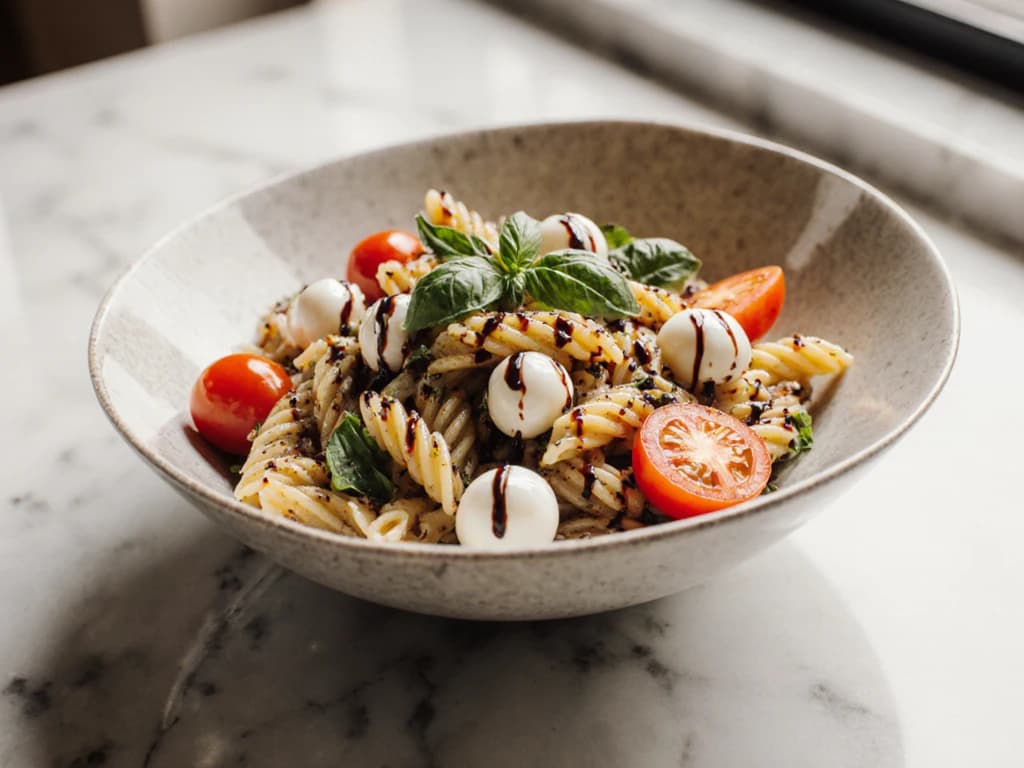
Caprese pasta salad brings the three-ingredient logic of an Italian classic — tomato, mozzarella, basil — into a bowl built for a crowd. Roasting half the tomatoes concentrates their sweetness while the raw half stays juicy and bright. Tossed in a golden balsamic vinaigrette and finished with a glaze drizzle, the result is ready in 30 minutes and gets better as it sits.
- 1
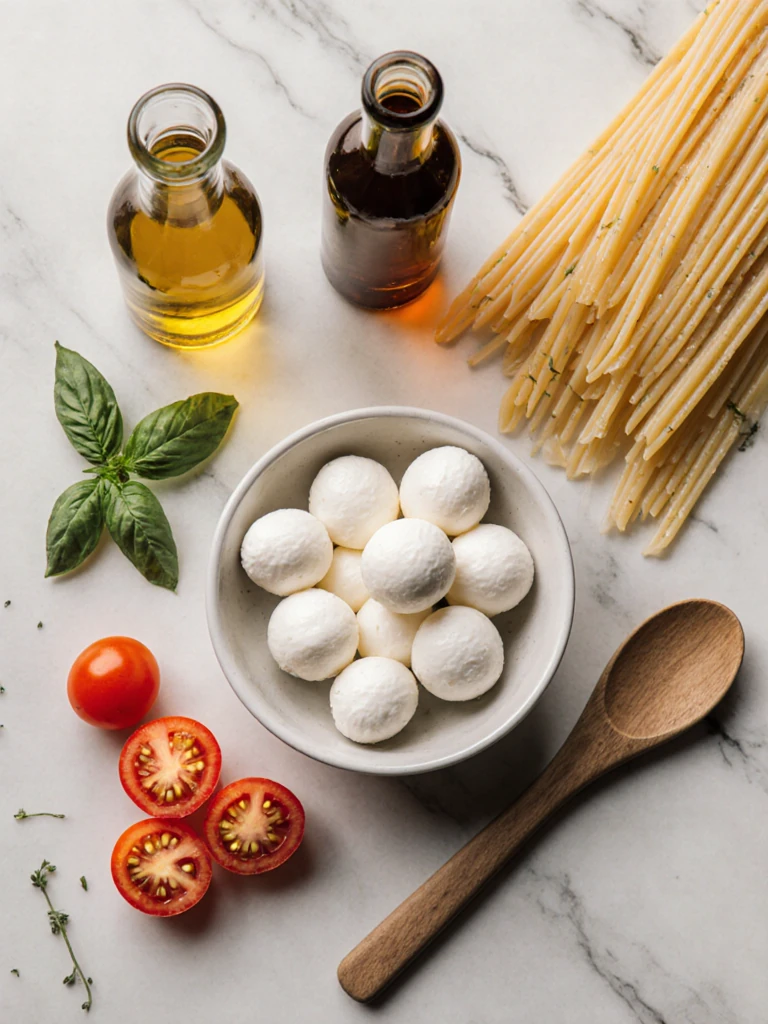
Roasting half the cherry tomatoes at 200°C concentrates their natural sugars into a jammy sweetness, while the raw half keeps its juice and acidity intact, creating two distinct tomato flavours across every forkful rather than a single flat note.
- 2
Bronze-cut fusilli has a microscopically rough, porous surface that grips olive oil and balsamic vinegar mechanically, keeping every spiral coated rather than letting the dressing pool at the bottom of the bowl.
- 3
Adding basil in two stages, half folded in 20 minutes before serving and half scattered at the table, delivers both an infused, deepened flavour from the first batch and the bright green aroma that signals fresh Caprese from the second.
Caprese pasta salad works because it does not overcomplicate a combination that already needs no improvement. Fresh mozzarella, ripe tomatoes, and basil have shared a plate since the dish was first served on the island of Capri as a tribute to the Italian flag. The pasta version earns its place by adding substance without disturbing that balance. The single technique that separates a memorable version from a forgettable one: roasting half the tomatoes before they go in, concentrating their sugars while the raw half keeps its juice and acidity intact.
Why Roasting Half the Tomatoes Makes a Better Salad
Roasting half the cherry tomatoes at 200°C (400°F) for 20 minutes concentrates their natural sugars through evaporation, producing a jammy, intensely sweet component that raw tomatoes alone cannot deliver.
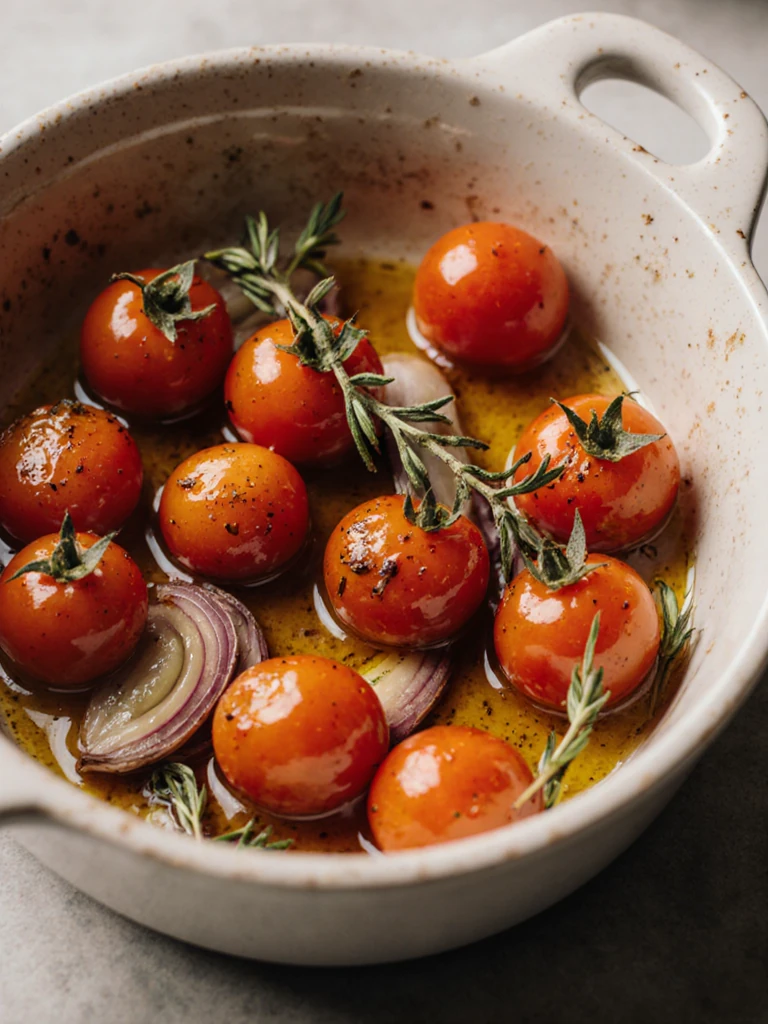
Raw cherry tomatoes contribute juice and brightness. Roasted tomatoes contribute depth and sweetness. Using both creates a layered tomato flavour across each forkful rather than a one-note acidity. Toss the roasting tomatoes with a thinly sliced shallot and 1 tablespoon of extra-virgin olive oil before they go into the oven. The shallot caramelises alongside the tomatoes and mellows from sharp to sweet in the same 20 minutes. Once the tomatoes burst and their skins begin to collapse, remove them from the oven and allow them to cool completely before adding to the pasta. Warm mozzarella pearls melt at the edges and lose their creamy texture.
Choosing the Right Pasta and Why Bronze-Cut Matters
Fusilli or cavatappi hold balsamic vinaigrette in their spirals, and bronze-cut pasta has a microscopically rough surface that grips oil-based dressings more effectively than smooth Teflon-extruded pasta.
Bronze-cut pasta is extruded through bronze dies rather than Teflon-coated ones, leaving a slightly porous, matte surface rather than a smooth, shiny one. That texture functions as a mechanical grip for olive oil and balsamic vinegar, keeping each piece coated rather than letting the dressing pool at the bottom of the bowl. Cook fusilli 1 minute past the al dente time on the package. Salads served cold firm up during refrigeration, and pasta at true al dente can taste chalky once chilled. Drain and rinse under cold water for 90 seconds, then shake the colander firmly. Surface water left on the pasta dilutes the vinaigrette and can cause it to separate within the first hour.
Golden Balsamic vs. Regular Balsamic in the Dressing
Golden balsamic vinegar is slightly sweeter and less caramelised than regular balsamic, and its pale colour does not stain the mozzarella pearls or discolour the pasta the way dark balsamic does.
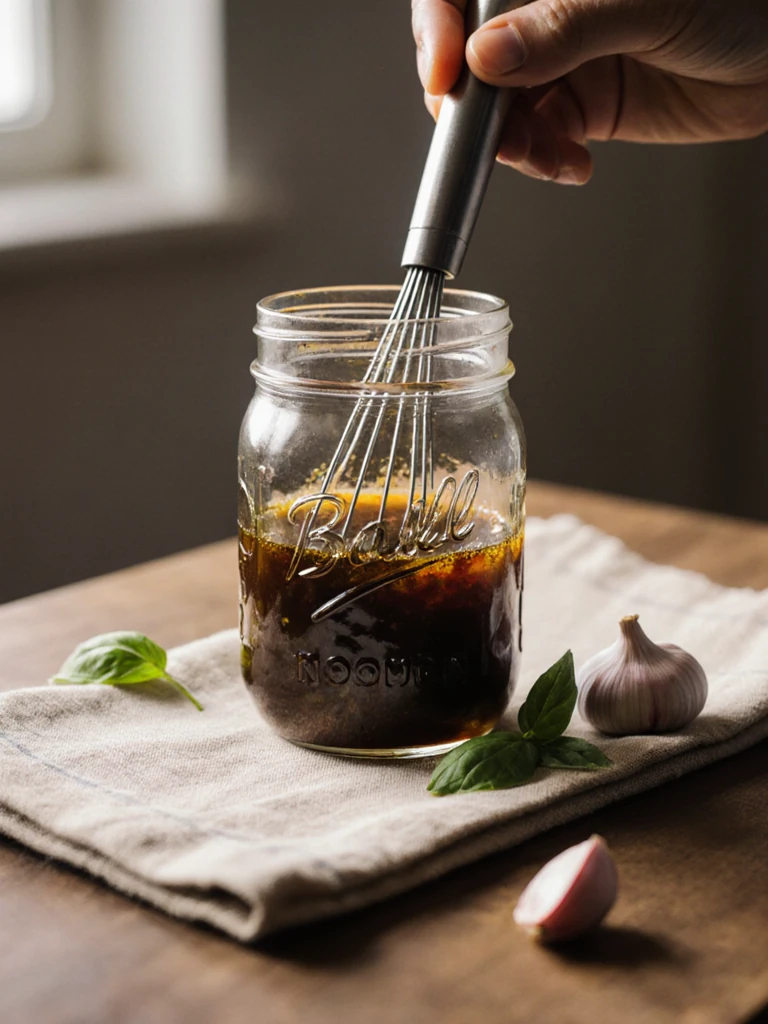
Regular balsamic vinegar works well in cooked sauces where colour does not matter, but in a pale pasta salad it turns mozzarella pearls an unappetising grey-brown within 30 minutes of contact. Golden balsamic, made from white Trebbiano grapes aged in wood, delivers the same sweet acidity with a lighter hue. Whisk together 3 tablespoons golden balsamic vinegar, 5 tablespoons extra-virgin olive oil, 1 minced garlic clove, ½ teaspoon dried oregano, and a pinch of salt until emulsified. Emulsification is the process of binding oil and a water-based liquid into a stable, cohesive mixture. A properly emulsified dressing coats pasta rather than splitting into oily streaks. Shake the sealed jar for 20 seconds for the fastest result. Taste the dressing and add ½ teaspoon of lemon juice if the garlic reads as sharp rather than rounded.
When to Add Basil and How to Cut It
Fresh basil cut in chiffonade — stacked leaves rolled tightly and sliced into thin ribbons — releases its aromatic oils more efficiently than torn leaves, but oxidises to black within 20 minutes of exposure to air and acid.
Chiffonade is the technique of stacking herb leaves, rolling them into a tight cylinder, and slicing across the roll into thin strips. The cut maximises the surface area releasing basil's volatile oils into the dressing while keeping each piece small enough to distribute through every forkful. Add basil in two stages: fold half through the dressed salad 20 minutes before serving, allowing it to infuse the dressing. Add the remaining half at the table just before bringing the bowl out. The first batch will have darkened slightly and deepened in flavour; the second batch stays bright green and provides the fresh aroma that makes Caprese salad immediately recognisable.
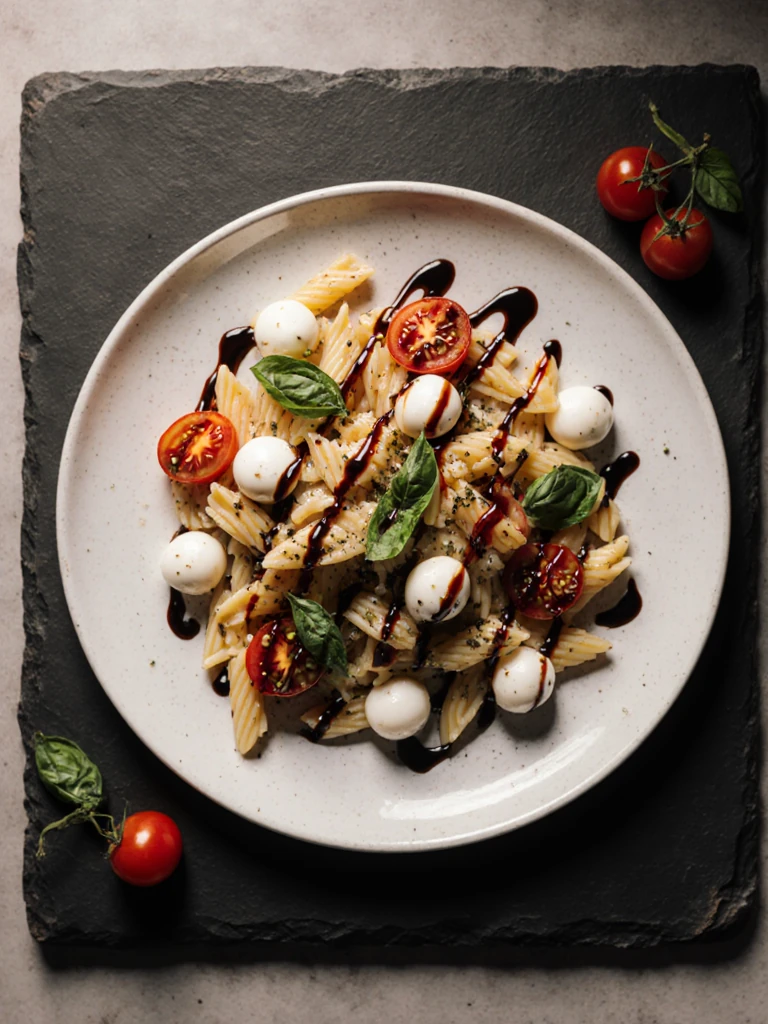
The Balsamic Glaze Finish
A balsamic glaze — balsamic vinegar reduced by half over low heat — is thicker, sweeter, and clings to mozzarella and pasta in a way that undressed vinegar cannot, making it the better finishing element rather than a dressing component.
To make a quick balsamic glaze, bring 1 cup of balsamic vinegar and 1 tablespoon of honey to a gentle simmer in a small saucepan. Reduce over low heat for 12 to 15 minutes, stirring occasionally, until the liquid coats the back of a spoon and has reduced by roughly half. Remove from heat and cool for 5 minutes before drizzling; the glaze continues to thicken as it cools. Bottled balsamic glaze from the supermarket is an acceptable substitute and eliminates the extra step entirely. Drizzle it over the assembled salad immediately before serving, not during tossing, so it stays visible as a finishing note rather than disappearing into the dressing.
Caprese pasta salad serves well alongside grilled chicken, seared salmon, or as the centrepiece of a summer spread on its own. For more salad recipes built around fresh seasonal produce, explore the full collection on Recipe Dairy.
The Recipe
Caprese Pasta Salad
Ingredients
For the salad
For the dressing
To finish
Instructions
- 1
Preheat oven to 200°C (400°F). Toss 250g cherry tomatoes and the sliced shallot with 1 tablespoon olive oil and a pinch of salt in a small baking dish.
- 2
Roast for 18 to 20 minutes until tomato skins burst and shallots are caramelised, then remove from oven and cool completely.
- 3
Bring a large pot of heavily salted water to a boil and cook fusilli 1 minute past the al dente time on the package.
- 4
Drain the pasta and rinse under cold water for 90 seconds, then shake the colander firmly to remove excess surface water.
- 5
Combine golden balsamic vinegar, olive oil, garlic, oregano, salt, and pepper in a small jar and shake for 20 seconds until emulsified.
- 6
Transfer the cooled pasta to a large bowl and pour all of the dressing over it, tossing to coat evenly.
- 7
Add the roasted tomatoes and their juices, the raw cherry tomatoes, and mozzarella pearls and fold together gently.
- 8
Stir half the chiffonade basil through the salad, then rest at room temperature for 20 minutes.
- 9
Scatter the remaining basil over the top, drizzle with balsamic glaze, and serve immediately.
Nutrition Facts
Per serving
390 Calories
Moderate energy per serving
Macronutrients
* % Daily Value based on a 2,000 calorie diet
Tips & Notes
Add the roasted tomatoes and their pan juices to the pasta. The concentrated tomato liquid that collects in the baking dish acts as a secondary dressing component and should not be discarded. Taste the dressing before tossing and add ½ teaspoon of lemon juice if the garlic flavour reads as harsh rather than rounded. Lemon juice softens raw garlic's sharpness without adding noticeable citrus flavour at this quantity. If using regular dark balsamic vinegar in the dressing instead of golden, reduce the amount to 2 tablespoons. Dark balsamic is more intense and will discolour the mozzarella pearls grey within 30 minutes of contact. Cool the roasted tomatoes completely before adding to the pasta. Warm tomatoes raise the temperature of the mozzarella pearls above 30°C, causing them to soften at the edges and lose their creamy, firm texture.
Frequently Asked Questions
Yes. Dress the pasta, add the tomatoes and mozzarella, and refrigerate for up to 24 hours. Add the second half of the basil and the balsamic glaze drizzle at serving time. Stir through a splash of olive oil before serving.
Enjoyed this recipe?


