Baked Cod with Roasted Asparagus
Baked Cod with Roasted Asparagus
Baked cod with roasted asparagus is a 25-minute sheet pan dinner where both components cook at 425°F with a staggered start time, so the asparagus caramelises and the fish stays moist. Lemon zest seasoning, a smoked paprika crust, and a 130°F pull temperature are the three details that separate a golden, flaking fillet from a dry, chalky one.

- 1
Starting the asparagus 5 minutes before the cod goes in the oven accounts for the different roasting times of each component at 425°F, so both the caramelised asparagus tips and the moist cod flakes finish simultaneously on the same pan.
- 2
Patting the cod fillets dry and seasoning with lemon zest rather than lemon juice prevents acid from denaturing the surface proteins before the oven heat reaches them, keeping the outer flesh from turning white and opaque before the interior cooks.
- 3
Pulling the cod at 130 to 135°F and resting on the hot pan for 2 minutes uses carryover cooking to reach the 145°F safe endpoint while preserving the large, moist flakes that are lost when the fish reaches 145°F inside the oven.
Baked cod with roasted asparagus is a single sheet pan dinner that takes 25 minutes from cold oven to table. Cod fillets are seasoned with garlic, lemon zest, smoked paprika, and olive oil, then placed on the same pan as the asparagus and roasted at 425°F — a temperature high enough to caramelise the asparagus tips and produce lightly golden edges on the fish without drying the flesh. The difference between dry, chalky cod and moist, flaking cod comes down to three variables: fillet thickness, oven temperature, and the moment the fish comes out of the oven.
Selecting and Preparing Cod Fillets for Baking
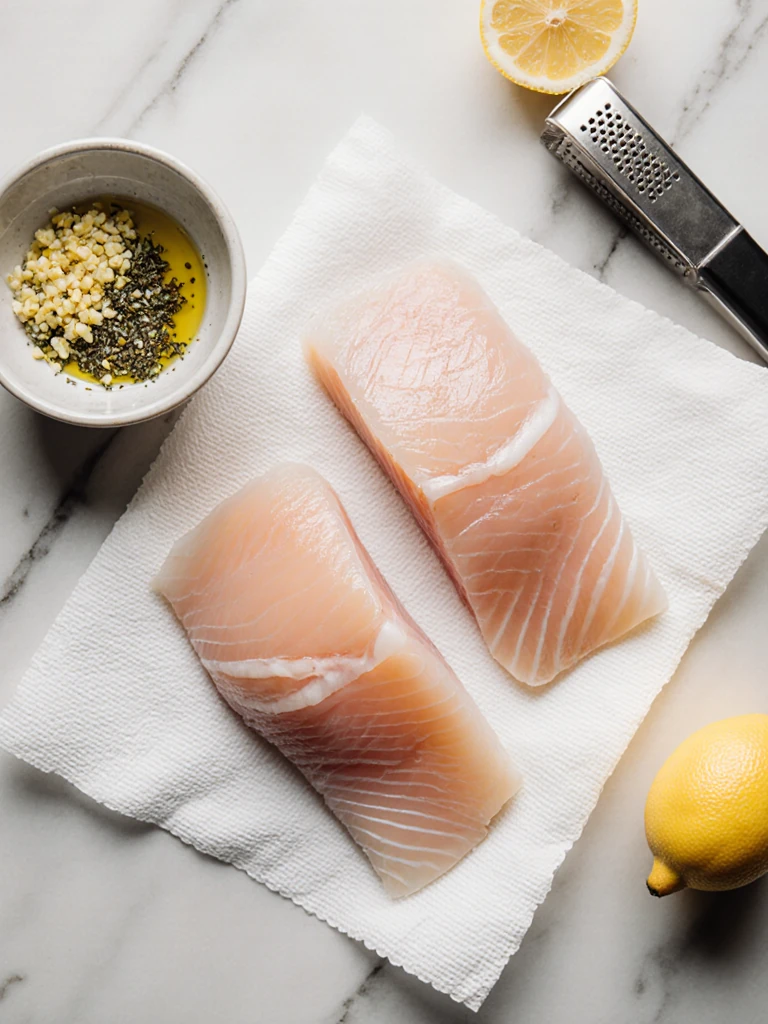
Choose cod fillets that are as uniform in thickness as possible, ideally 2.5 to 3cm thick throughout. Thin, tapering fillets dry out at the narrow end before the thick centre cooks through, producing a fillet that is simultaneously overcooked and undercooked on the same plate.
Atlantic cod and Pacific cod both bake well, with Atlantic cod producing slightly larger, more defined flakes due to its higher moisture content. Both varieties are interchangeable in this recipe. Haddock, pollock, and hake are direct substitutes with near-identical baking times. Tilapia and sole are thinner and cook faster; reduce the bake time to 8 to 10 minutes if substituting either.
Pat the fillets completely dry with paper towels before seasoning. Cod holds significantly more surface moisture than most fish; a wet surface creates steam in the oven that prevents browning and dilutes the seasoning layer before it adheres to the flesh. Two firm passes with a folded paper towel on each side of the fillet removes the visible moisture. The surface should feel tacky, not wet, before the olive oil goes on.
Lemon zest in the seasoning mix provides citrus flavour without the liquid of lemon juice. Lemon juice applied directly to raw fish before baking begins to denature the surface proteins (the same process as ceviche curing), producing a white, opaque outer layer before the oven heat ever reaches it. Zest carries the same aromatic compounds — limonene and other terpenes — without the acidic liquid. Reserve the juice for squeezing over the finished fish on the plate.
Roasting Asparagus on the Same Pan as Cod
Start the asparagus in the oven 5 minutes before the cod goes in. Asparagus needs 12 to 15 minutes at 425°F to develop caramelised tips and a tender bite; cod needs 12 to 14 minutes. A 5-minute head start ensures both components finish at the same time without either overcooking.
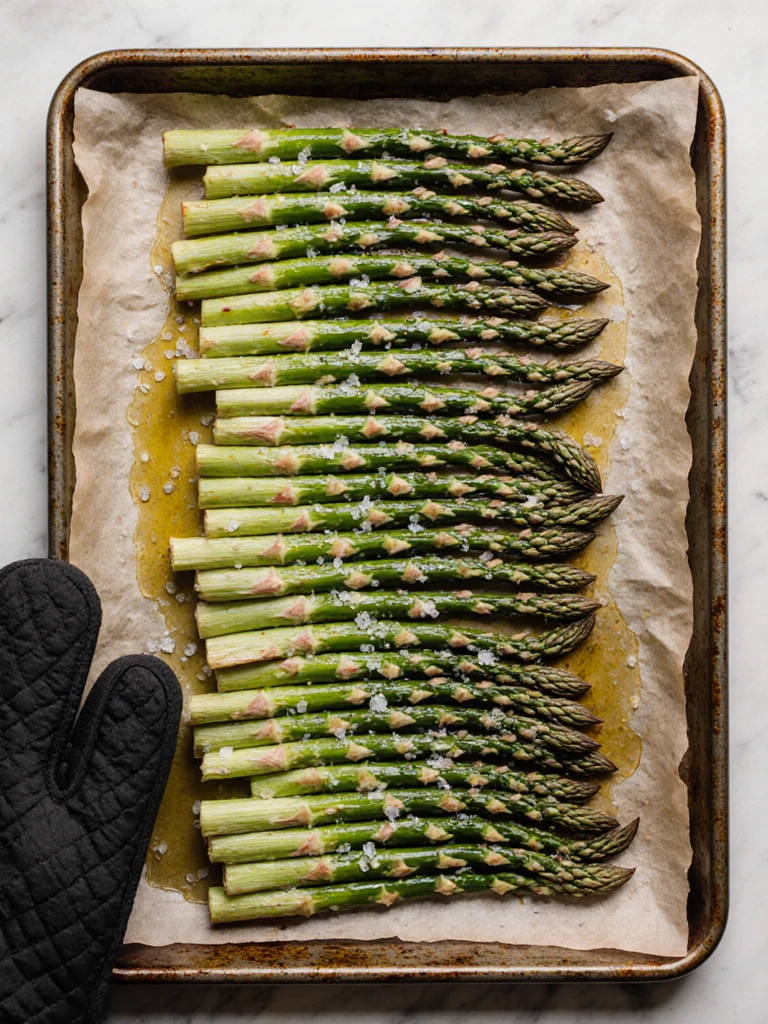
Trim asparagus by bending each spear near the base until it snaps naturally. The snap point marks the boundary between the tender stalk and the fibrous, woody base. Cutting all spears to the same length at an arbitrary point wastes edible stalk on thinner spears and leaves tough ends on thicker ones. After snapping, arrange the spears in a single layer with space between each one; overcrowded asparagus steams rather than roasts, producing a limp, olive-drab result rather than the bright green, slightly caramelised tip that defines properly roasted asparagus.
Toss the spears in olive oil until each one is lightly coated — approximately 1 tablespoon of oil per 450g of asparagus. Under-oiled asparagus desiccates on the outer surface before the interior softens. Over-oiled asparagus pools liquid at the base of the pan and steams from below. A thin, even coat produces dry roasting conditions on the oven shelf and develops the Maillard reaction on the tips within 8 minutes at 425°F.
Pencil-thin asparagus (under 8mm diameter) roasts fully in 8 to 10 minutes and should be added to the pan at the same time as the cod rather than 5 minutes earlier. Jumbo asparagus (over 14mm diameter) needs 16 to 18 minutes; add it to the oven 6 to 8 minutes before the cod. Medium asparagus (10 to 12mm diameter, the most common supermarket size) follows the standard 5-minute head start described in this recipe.
Baking Cod to the Right Internal Temperature
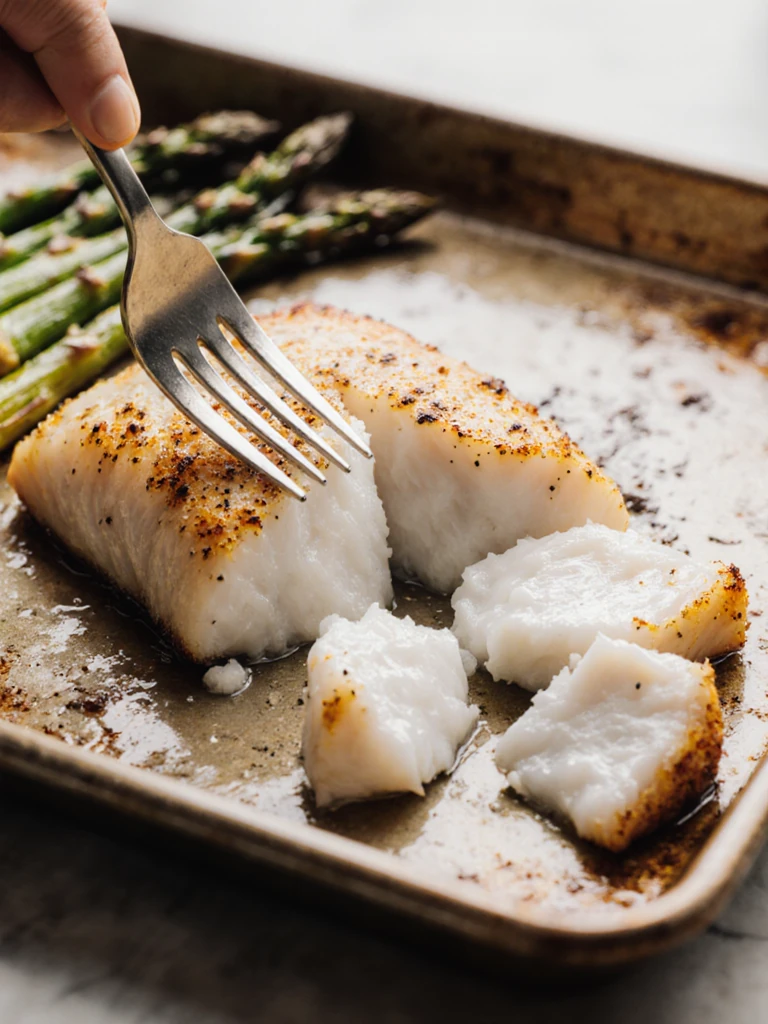
Bake cod at 425°F for 12 to 14 minutes per 2.5cm of thickness. Remove the fish when the thickest part reads 130 to 135°F on an instant-read thermometer and the flesh just begins to flake when pressed with a fork. Carryover heat raises the centre to the 145°F safe endpoint within 2 minutes of resting on the pan.
The USDA recommends cooking fish to an internal temperature of 145°F. At exactly 145°F, cod is fully safe but already slightly firm. Pulling the fish at 130 to 135°F and allowing it to rest on the hot pan uses the residual heat of the sheet pan and the fish's own thermal mass to continue cooking for 2 minutes, reaching 145°F while the centre stays moist and the flakes remain large and defined. Fish pulled at 145°F in the oven reaches 155 to 160°F by the time it is plated, producing dry, tight flakes.
The fork test provides a reliable visual cue without a thermometer. Press the tines of a fork gently against the thickest part of the fillet and twist slightly. Properly cooked cod separates into large, opaque, white flakes with minimal resistance. Undercooked cod resists the fork and the flesh appears translucent at the centre. Overcooked cod separates but the flakes are small, tight, and dry rather than large and moist.
A thin layer of smoked paprika in the seasoning accelerates surface browning. Paprika contains carotenoid pigments that darken rapidly under oven heat, producing a golden-edged appearance on the fillets 2 to 3 minutes before the Maillard reaction would otherwise begin at this temperature on a white-fleshed fish with no surface sugar content. The smoked variety adds a faint wood-smoke note that pairs well with the mild flavour of cod without overpowering it.
Plating and Serving Baked Cod with Roasted Asparagus
Transfer the cod with a wide spatula to avoid breaking the fillets along their natural fault lines. Slide the spatula fully under the fillet before lifting; a partial lift causes the fillet to hinge and separate at the thinnest point.
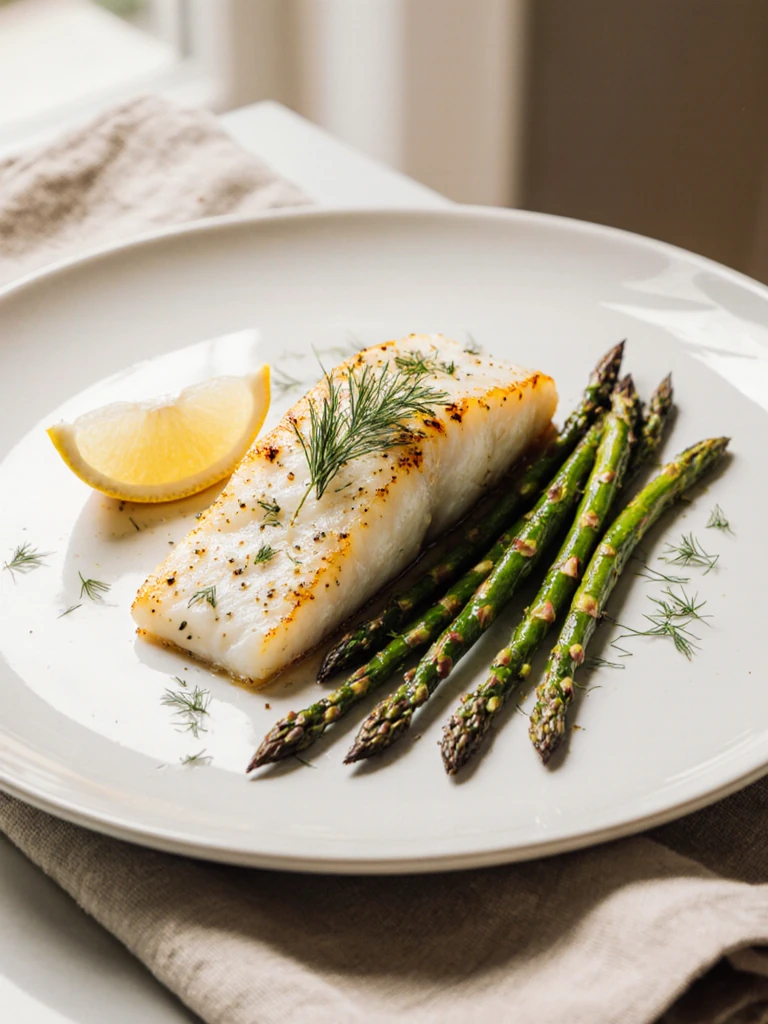
Fan the roasted asparagus alongside the fish rather than underneath it. Asparagus placed beneath a resting fillet traps steam against the fish surface and softens the lightly golden crust that developed in the oven. A wedge of lemon on the rim and fresh dill or flat-leaf parsley over the fish complete the plate. The lemon wedge is the finishing acid that ties the lemon zest in the seasoning to the brightness of the fresh herb garnish. For a complete low-carb meal, serve with a side of high-protein vegetable accompaniments or alongside the cauliflower rice technique used in grain-free weeknight dinners.
Explore the full Recipe Diary collection for more sheet pan dinners built around lean white fish and seasonal vegetables.
The Recipe
Baked Cod with Roasted Asparagus
Ingredients
For the cod
For the asparagus
To serve
Instructions
- 1
Preheat the oven to 425°F (220°C). Line a large rimmed baking sheet with parchment paper.
- 2
Snap the woody ends from the asparagus spears. Toss the spears on the prepared baking sheet with olive oil, salt, and pepper until evenly coated. Spread in a single layer with space between each spear.
- 3
Place the asparagus in the oven and roast for 5 minutes while preparing the cod.
- 4
Pat the cod fillets completely dry on both sides with paper towels. In a small bowl, mix together the olive oil, lemon zest, minced garlic, smoked paprika, salt, and pepper.
- 5
Brush the seasoning mixture evenly over the top and sides of each cod fillet.
- 6
After the asparagus has roasted for 5 minutes, push the spears to one side of the pan and place the seasoned cod fillets on the other side.
- 7
Return the pan to the oven and bake for 12 to 14 minutes, until the cod just begins to flake when pressed with a fork at the thickest point. An instant-read thermometer should read 130 to 135°F at the centre.
- 8
Remove the pan from the oven and rest for 2 minutes. The residual pan heat will bring the cod to 145°F.
- 9
Use a wide spatula to transfer the cod fillets to plates. Fan the roasted asparagus alongside. Finish with a squeeze of lemon, a scatter of fresh dill or parsley, and a drizzle of olive oil. Serve immediately.
Nutrition Facts
Per serving
285 Calories
Moderate energy per serving
Macronutrients
* % Daily Value based on a 2,000 calorie diet
Tips & Notes
Fillet uniformity: if the cod fillets taper significantly at one end, fold the thin end under itself to create an even thickness throughout. A folded thin end takes the same time to cook as the thick centre and eliminates dry overcooked edges. Asparagus spacing: a single layer with gaps between spears is the most important condition for proper roasting. Touching spears steam each other; the tips never caramelise and the stalks go limp. Use two sheet pans if the volume of asparagus is too large for one. Smoked paprika: standard sweet paprika works as a substitute but produces less colour development on the fish surface during the bake. Smoked paprika's carotenoid pigments darken faster under dry oven heat and add a faint smokiness that suits cod's mild flavour. Lemon zest vs juice: use zest only in the seasoning mix. Lemon juice on raw fish begins denaturing the proteins before the oven heat reaches them, turning the outer surface white and opaque. Squeeze fresh lemon over the fish only after it comes out of the oven. Resting on the pan: leave the fish on the hot sheet pan for 2 full minutes after removing from the oven. The residual heat of the pan and the fish's thermal mass continue cooking the centre from 130°F to 145°F. Plating immediately skips this window and the centre will be slightly underdone.
Frequently Asked Questions
Bake cod for 12 to 14 minutes per 2.5cm of fillet thickness at 425°F. Pull it at an internal temperature of 130 to 135°F and rest on the pan for 2 minutes; carryover heat brings it to the safe 145°F endpoint.
Enjoyed this recipe?


