Turkey and Vegetable Stir-Fry
Turkey and Vegetable Stir-Fry
Turkey and vegetable stir-fry combines ground turkey browned in a very hot wok with broccoli, bell pepper, snap peas, and carrot, all coated in a soy-ginger-oyster sauce thickened with cornstarch. The key is browning the turkey dry before the vegetables go in, adding vegetables in order of density, and pulling the wok off heat the moment the sauce turns glossy.

- 1
Tossing the ground turkey with a small amount of baking soda before cooking raises the surface pH of the meat, which accelerates the Maillard reaction and produces deeper golden-brown crumbles in a shorter time than unseasoned turkey at the same wok temperature.
- 2
Adding vegetables in order of density and cook time — broccoli first, bell pepper second, snap peas third — ensures every component reaches crisp-tender at the same moment rather than producing a mix of overcooked and undercooked textures in the same bowl.
- 3
Pouring the cornstarch-containing sauce directly over the turkey in the centre of the hot wok, rather than over the cooler vegetables at the sides, gives the starch direct contact with the high-temperature surface it needs to gelatinise into a glossy, even-coating sauce within 15 seconds.
Turkey and vegetable stir-fry puts a lean, high-protein weeknight dinner on the table in 25 minutes using one wok and a sauce mixed in under 2 minutes. Ground turkey replaces the sliced chicken or beef found in most restaurant stir-fries, making the recipe faster to cook and easier to portion. Broccoli, red bell pepper, snap peas, and shredded carrot provide four different textures and a broad range of cook times, which means the order in which each vegetable enters the wok determines whether the finished bowl is crisp-tender or uniformly soft. The soy-ginger sauce, built from pantry staples and thickened with cornstarch, coats every crumble of turkey and every vegetable edge with a glossy, savoury glaze.
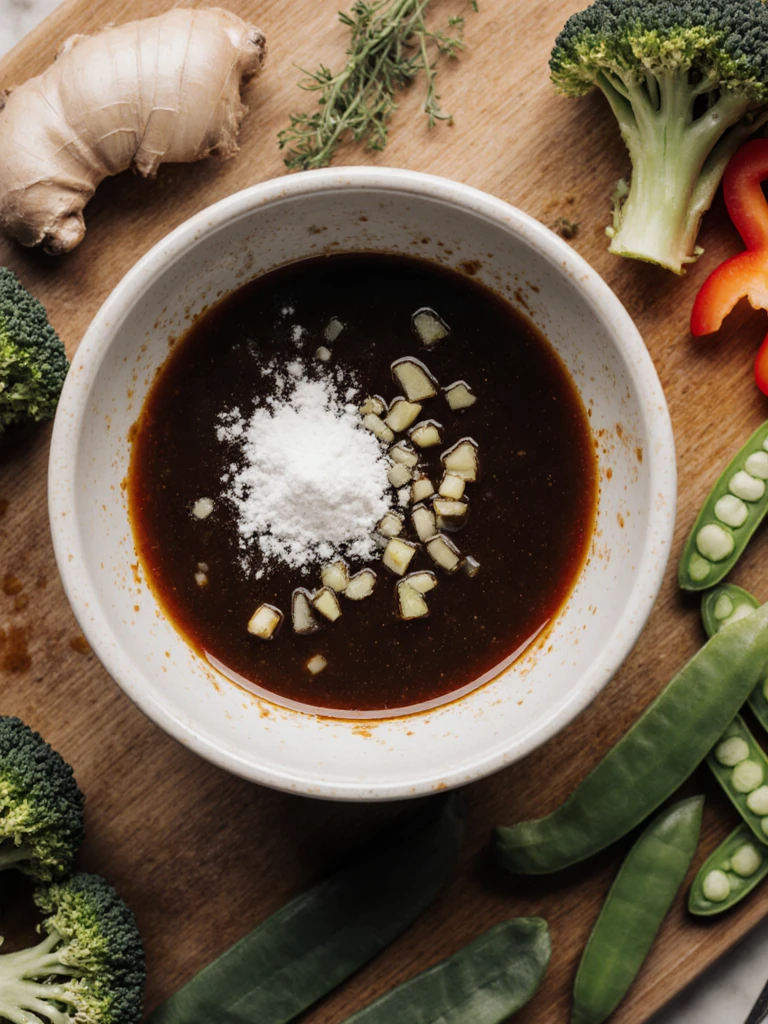
The Stir-Fry Sauce and Why Mise en Place Matters
Mix the entire sauce in a small bowl before the wok goes on the heat. Once cooking starts, the wok moves too fast for measuring — every ingredient must be at arm's reach before the first drop of oil hits the pan.
The sauce for this turkey and vegetable stir-fry uses low-sodium soy sauce as the salt and umami base, rice vinegar for brightness and balance, oyster sauce for a deeper savoury-sweet note, toasted sesame oil for aroma, and honey to round the edges. Cornstarch dissolved in the sauce, rather than added separately as a slurry at the end, distributes more evenly through the finished dish and prevents starchy pockets from forming around the turkey crumbles.
Fresh ginger grated on a microplane rather than minced with a knife releases more juice and disperses more evenly into the sauce. A 2cm piece of ginger, grated, yields approximately 1 teaspoon of paste. Ginger paste oxidises quickly once grated; add it directly to the sauce bowl and cover with the liquid ingredients within 60 seconds to preserve its bright, spicy character. Bottled minced ginger works as a substitute but loses the volatile aromatic compounds responsible for ginger's heat during processing, producing a flatter, less sharp result.
Cut all vegetables before the wok goes on the heat. Broccoli florets should be no larger than 3cm across; larger florets stay raw at the centre in the 3 minutes they spend in the wok. Bell pepper strips should be 5mm wide. Snap peas go in whole. Shredded carrot, bought pre-shredded or grated on a box grater, wilts in under 90 seconds and goes in last with the sauce. Each vegetable is sized to finish cooking at roughly the same moment.
Browning Ground Turkey in a Wok
Add the ground turkey to a dry, very hot wok without oil and without stirring for the first 90 seconds. The meat must release from the wok surface naturally before it is broken up; early breaking produces fine grey crumbles with no browning rather than distinct, golden-edged pieces.
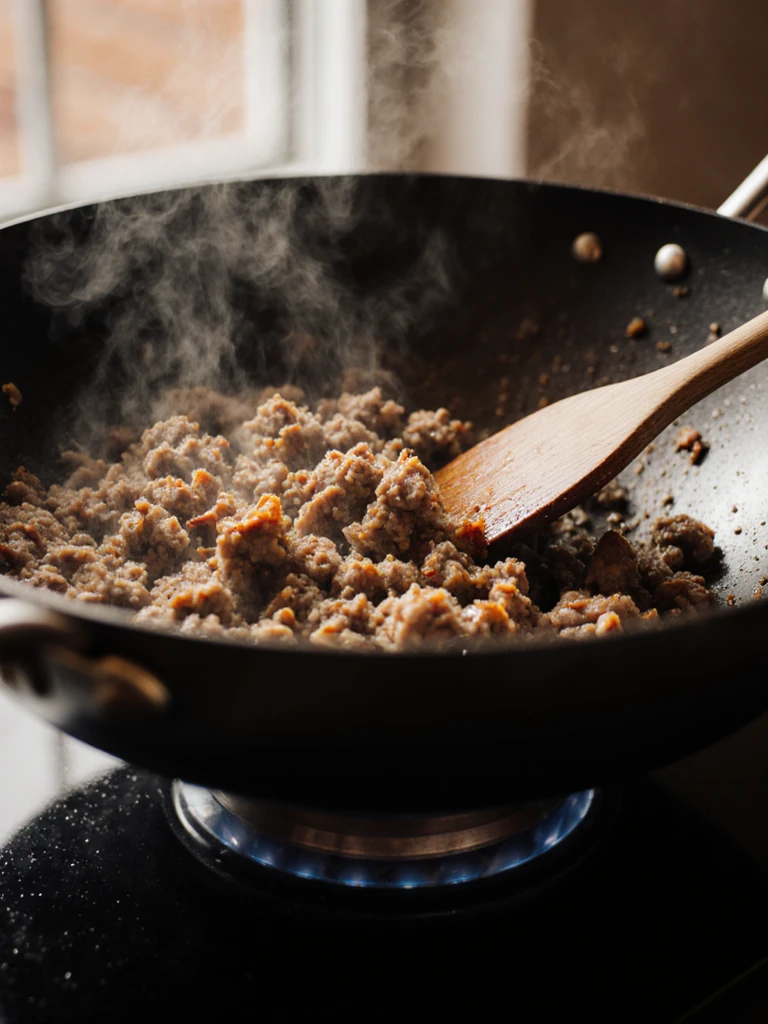
Ground turkey at 93% lean contains very little intramuscular fat, which makes it prone to releasing water rather than browning when added to a pan that is not sufficiently hot. The surface temperature of the wok must be above 400°F before the turkey goes in. At that temperature, the water expelled from the turkey cells evaporates almost instantly on contact with the metal, and the Maillard reaction begins on the exposed meat surface within 90 seconds. A wok that is only warm traps that water, and the turkey steams grey rather than browning.
A small amount of baking soda (¼ teaspoon per pound) tossed with the turkey before it enters the wok raises the surface pH of the meat. Higher pH accelerates the Maillard reaction, producing deeper browning at a lower sustained temperature and in less time. The technique is common in Chinese restaurant cooking for ground meat dishes and requires no additional ingredients beyond what most kitchens carry. The baking soda is undetectable in the finished dish at this quantity.
Once the turkey is broken into crumbles and fully browned, transfer it to a plate and wipe the wok clean with a folded paper towel held with tongs. Residual fat and turkey liquid pooled in the wok lower the temperature when the vegetables hit and cause them to steam rather than sear. A clean, re-oiled wok returns to stir-fry temperature in under 60 seconds.
Stir-Frying the Vegetables in the Right Order
Add vegetables to the wok in order of density and required cook time: broccoli first (3 minutes), bell pepper second (2 minutes), snap peas third (90 seconds), shredded carrot last (30 seconds with the sauce). Each addition goes in only when the previous vegetable has developed light colour at its edges.
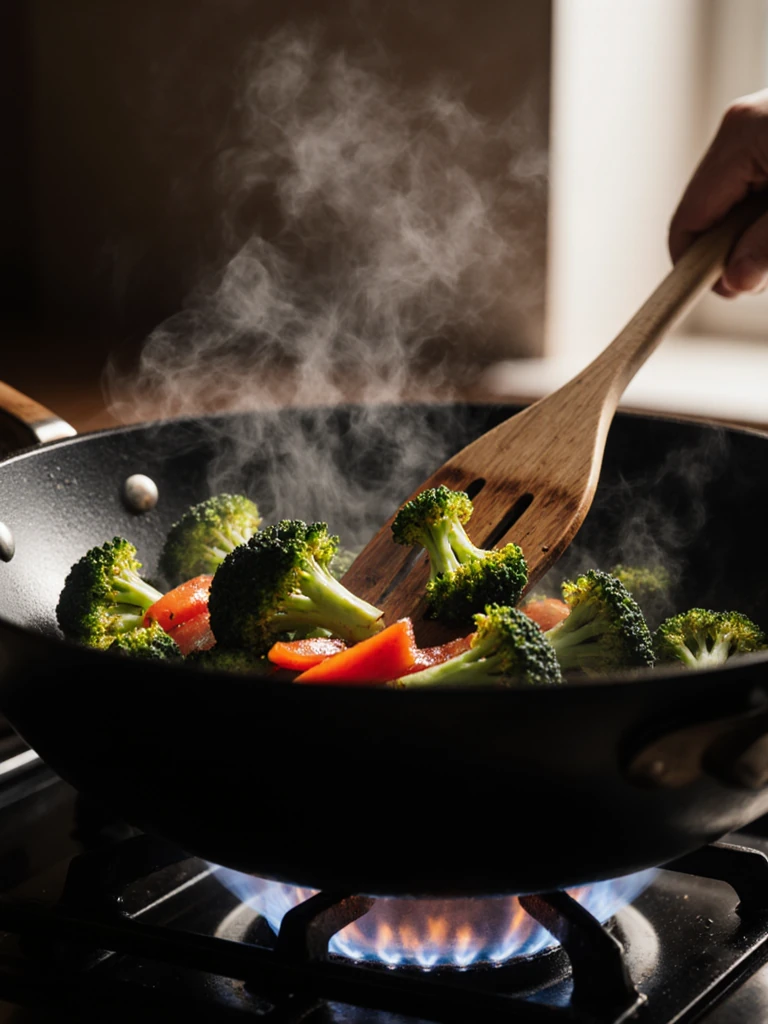
Broccoli benefits from a splash of water (1 tablespoon) added to the wok alongside it. The water creates a brief burst of steam that begins softening the dense floret stems from the inside while the outer surface continues to char on the hot wok. After 30 seconds the water evaporates, the steaming stops, and dry roasting conditions resume. Without this brief steam, the outer surface of the florets chars before the dense centre becomes tender.
Bell pepper strips require no water addition because they contain sufficient internal moisture to soften during the 2-minute sear without additional help. Snap peas have the thinnest cell wall of the three primary vegetables in this recipe and overcook quickly; adding them only in the final 90 seconds before the sauce arrives keeps them bright green and retaining a distinct snap. The snap in snap peas is provided by the turgidity of the cell walls; once those walls collapse from heat, the texture becomes flabby and the colour shifts from bright green to olive drab within 30 seconds.
Push all the vegetables to the sides of the wok when they are 80% cooked. Return the browned turkey to the centre, pour the sauce directly over the turkey, and allow it to bubble and thicken for 15 seconds before tossing everything together. This sequence allows the cornstarch in the sauce to reach the wok surface temperature it needs to gelatinise before it is diluted by the vegetables' surface moisture.
Finishing and Serving Turkey and Vegetable Stir-Fry
Remove the wok from heat immediately when the sauce turns glossy and coats the back of the spatula. Toasted sesame oil, added off heat, preserves its volatile aromatic compounds that evaporate rapidly when added to a hot wok mid-cook.
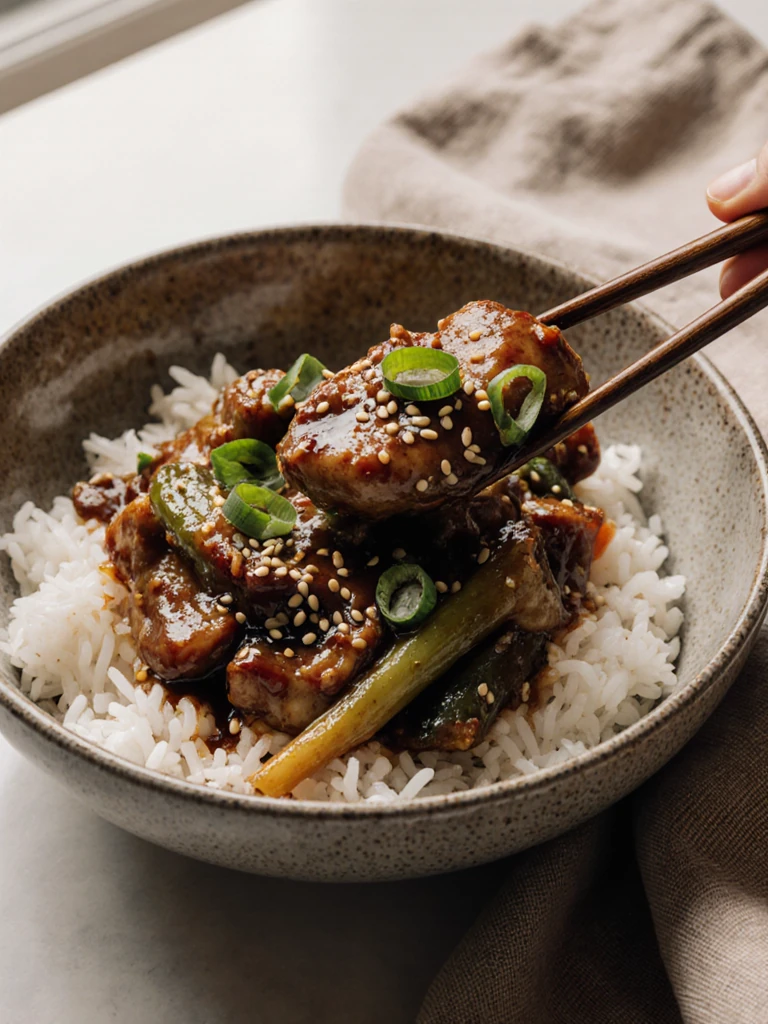
Serve immediately over jasmine rice, brown rice, or soba noodles. Spoon the stir-fry over the rice rather than mixing it in; the sauce pools at the base and seeps into the rice from below as the bowl is eaten, providing two textures in the same bowl. Garnish with sliced green onions cut on the bias and toasted sesame seeds. The bias cut on the green onions exposes more of the interior, releasing a sharper onion note that contrasts with the sweet-savoury sauce. For a low-carb alternative, the same stir-fry serves equally well over cauliflower rice prepared using the dry-press technique from the shrimp cauliflower fried rice method, which keeps the base dry enough to absorb the sauce without diluting it.
Explore the full Recipe Diary collection for more high-protein weeknight dinners built around lean ground meats and bold stir-fry sauces.
The Recipe
Turkey and Vegetable Stir-Fry
Ingredients
For the sauce
For the stir-fry
To finish
Instructions
- 1
Whisk together soy sauce, oyster sauce, rice vinegar, honey, cornstarch, and grated ginger in a small bowl until the cornstarch dissolves fully. Set aside.
- 2
Toss the ground turkey with baking soda and black pepper in a bowl until evenly coated.
- 3
Heat a large wok or 12-inch skillet over high heat for 2 full minutes until very hot. Add the turkey directly to the dry wok and cook undisturbed for 90 seconds. Break apart with a wooden spatula and continue cooking, stirring occasionally, for 3 to 4 minutes until crumbles are golden-brown at the edges and fully cooked through.
- 4
Transfer the turkey to a plate. Wipe the wok clean with a folded paper towel held with tongs.
- 5
Return the wok to high heat and add 1 tablespoon of oil. Add the broccoli florets and 1 tablespoon of water. Stir-fry for 2 minutes, letting the water evaporate and the florets develop light char at the edges.
- 6
Add the bell pepper strips and cook for a further 2 minutes until slightly softened but still holding shape.
- 7
Add the snap peas and garlic and stir-fry for 90 seconds until the peas are bright green.
- 8
Push all vegetables to the sides of the wok. Return the browned turkey to the centre and pour the sauce directly over it. Let bubble for 15 seconds, then toss everything together for 30 seconds until the sauce thickens and coats everything evenly.
- 9
Add the shredded carrot and toss for a further 30 seconds.
- 10
Remove the wok from heat. Drizzle with toasted sesame oil and toss once more.
- 11
Serve immediately over steamed rice or noodles, garnished with sliced green onions and toasted sesame seeds.
Nutrition Facts
Per serving
310 Calories
Moderate energy per serving
Macronutrients
* % Daily Value based on a 2,000 calorie diet
Tips & Notes
Wok temperature: preheat the wok for a full 2 minutes over the highest burner heat available before adding anything. A drop of water flicked onto the surface should vaporise instantly with a loud sizzle. A cool wok steams everything grey. Baking soda quantity: use exactly ¼ teaspoon per pound of turkey. More than this creates a slightly soapy aftertaste that is detectable in the finished dish. At ¼ teaspoon the effect is purely functional — deeper browning with no flavour change. Wipe between steps: always wipe the wok clean between browning the turkey and stir-frying the vegetables. Pooled turkey liquid on the wok surface drops the temperature when the vegetables hit and causes steaming. The 30-second wipe step is the single most effective way to produce crisp-tender vegetables. Sauce timing: pour the sauce over the turkey in the centre of the wok, not over the vegetables. The cornstarch needs direct contact with the hot wok surface and the concentrated turkey fat to gelatinise properly. Poured over the cooler vegetables at the sides, it fails to thicken before it is diluted. Sesame oil off heat: toasted sesame oil burns and turns bitter above 350°F. Add it only after removing the wok from heat for the most aromatic, nutty result.
Frequently Asked Questions
Yes. Ground chicken is the closest substitute and behaves identically in the wok. Ground pork adds more fat and a richer flavour. Ground beef works but releases more liquid during browning; wipe the wok between the meat and vegetable steps.
Enjoyed this recipe?


