Greek Pasta Salad
Greek Pasta Salad

Greek pasta salad brings together al dente rotini, briny Kalamata olives, crisp cucumber, and crumbled feta in a sharp red wine vinaigrette. Ready in 25 minutes and built to sit overnight, the flavours deepen rather than fade the longer it rests. A reliable make-ahead side dish for potlucks, BBQs, and weekday lunches alike.
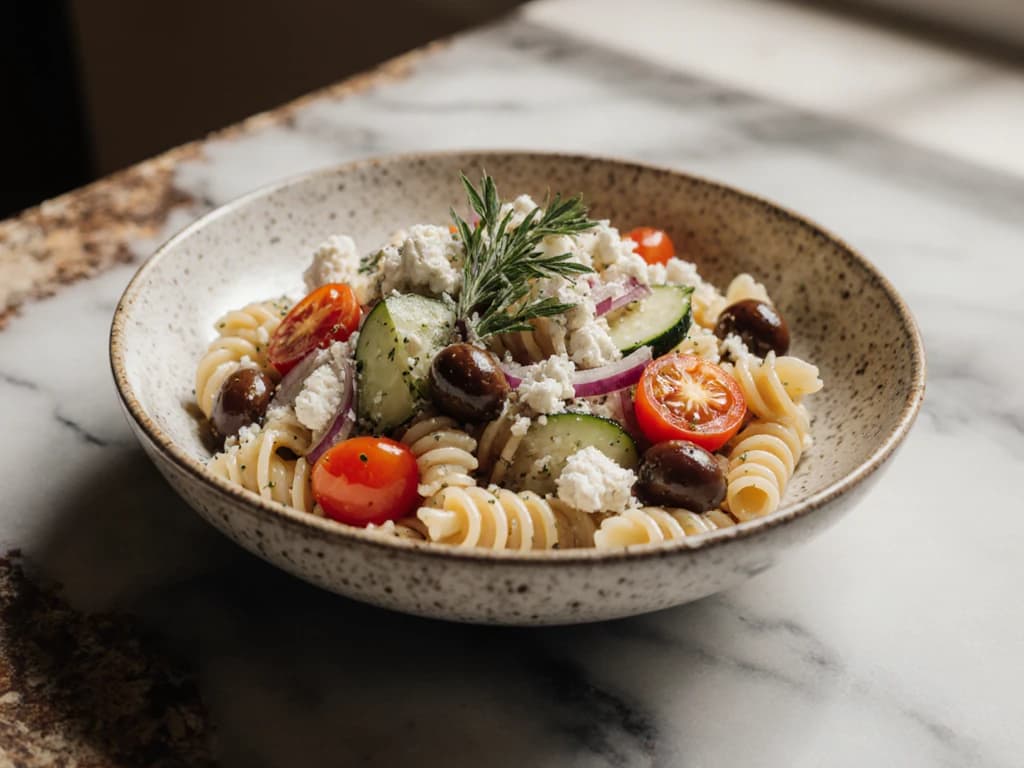
- 1
Cooking rotini 1 minute past al dente and cold-rinsing immediately firms the surface just enough to hold the vinaigrette without absorbing it all during refrigeration, keeping every piece of pasta flavourful rather than soggy.
- 2
A 1:2 acid-to-oil ratio in the vinaigrette is sharper than standard, intentionally so, because feta brine, pasta starch, and vegetable moisture all dilute the dressing as the salad sits, leaving the final balance perfectly seasoned.
- 3
Adding feta last, after tossing, preserves larger hand-crumbled chunks that deliver concentrated pockets of salt and creaminess rather than dissolving uniformly into the dressing.
Greek pasta salad is one of the few cold salads that genuinely improves after resting in the fridge. The red wine vinaigrette penetrates the rotini over 30 minutes, flavouring each piece of pasta from the inside rather than just coating the surface. The result is a salad that tastes intentional, not assembled.
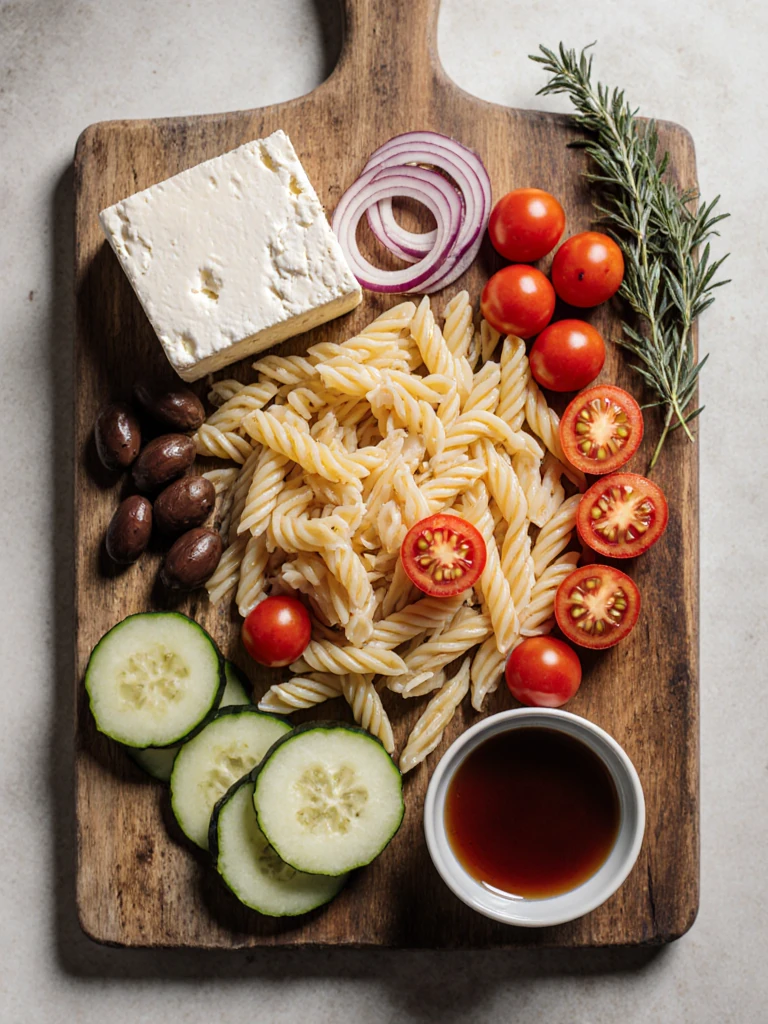
Why the Pasta Shape Matters for Greek Pasta Salad
Rotini, fusilli, or farfalle hold dressing in their ridges and curves, delivering flavour in every bite instead of pooling at the bottom of the bowl.
Smooth pasta shapes like penne or rigatoni shed vinaigrette the moment they are tossed. Spiral shapes trap the oil-and-vinegar emulsion mechanically. Cook the pasta 1 minute past al dente for salad use. Cold rinsing stops the cooking instantly and firms the surface, which prevents the pasta from absorbing excess dressing and turning mushy during refrigeration. The 1-minute overcook compensates for the slight firmness cold water adds back.
How to Build a Sharp Greek Vinaigrette
The acid-to-oil ratio that works for Greek dressing is 1:2, noticeably sharper than a standard vinaigrette, because the pasta and feta absorb and soften it over time.

Emulsification is the process of combining oil and a water-based liquid like red wine vinegar into a stable, cohesive mixture. Whisk vigorously for 30 seconds, or seal the jar and shake for 20 seconds, to achieve an emulsified dressing that clings to pasta rather than separating into oily pools. Adding ½ teaspoon Dijon mustard acts as an emulsifier, binding the oil and vinegar together for up to 2 hours before the mixture breaks. Dried Greek oregano, not Italian, carries a more resinous, peppery note that holds up against the brine of the olives and feta. Add half the salt to the dressing before tasting and reserve the rest for after the feta is mixed in. Feta contributes significant sodium and the final seasoning level will shift.
Choosing Feta: Block vs. Pre-Crumbled
A block of feta packed in brine contains more moisture and a creamier texture than pre-crumbled feta, which is dried and coated to prevent clumping.
Pre-crumbled feta loses structural integrity within 20 minutes of contact with vinaigrette, dissolving into a chalky residue that clouds the dressing. Crumbling a block by hand produces irregular pieces: some melt into the dressing and thicken it slightly, while larger chunks hold their shape and deliver concentrated bursts of salt. Add the feta last, after tossing, to preserve those larger pieces. For extra brine flavour without additional cheese, add 1 tablespoon of feta brine directly to the vinaigrette.
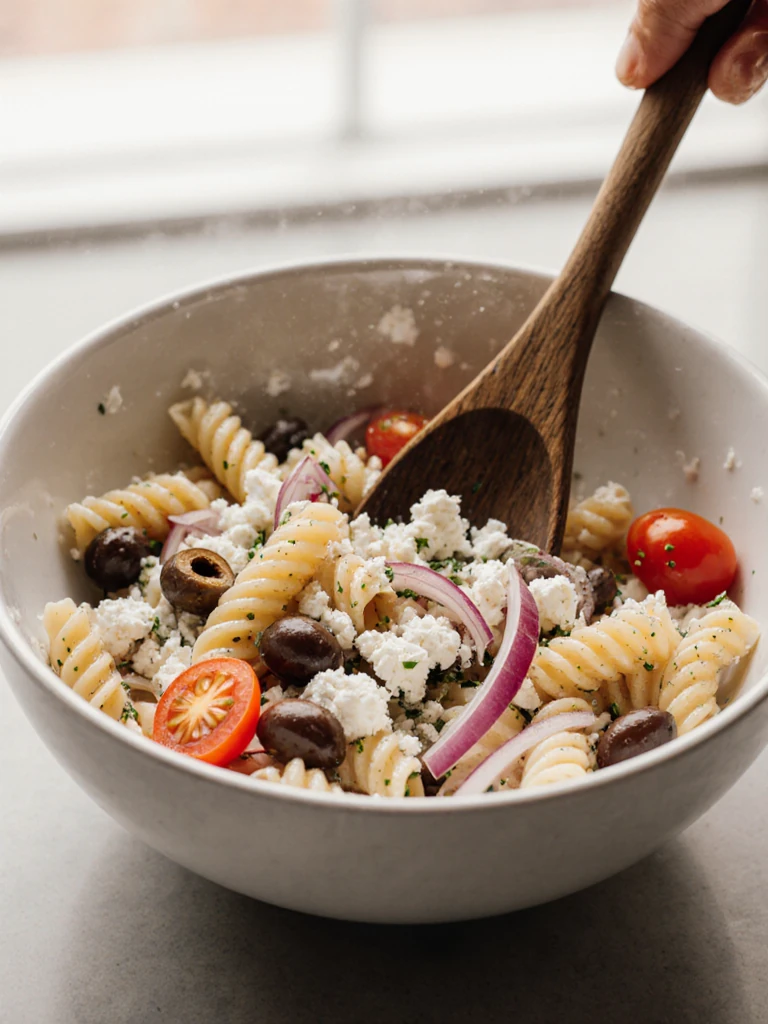
Vegetables That Hold Up Overnight
Cherry tomatoes, red onion, bell pepper, and Kalamata olives retain their texture through 24 hours of refrigeration, while cucumber softens after 4 hours and is better added right before serving.
Cucumbers release moisture through osmosis when cut and salted. In a vinaigrette-dressed salad, that released water dilutes the dressing and softens the surrounding pasta within a few hours. Slice and add cucumber at serving time for any batch prepared more than 2 hours in advance. Red onion mellows significantly after a 10-minute soak in cold water, losing its harsh raw bite while keeping its crunch. Kalamata olives, harvested fully ripe and cured in brine, bring a fruity, wine-like depth that green olives do not replicate in this recipe.
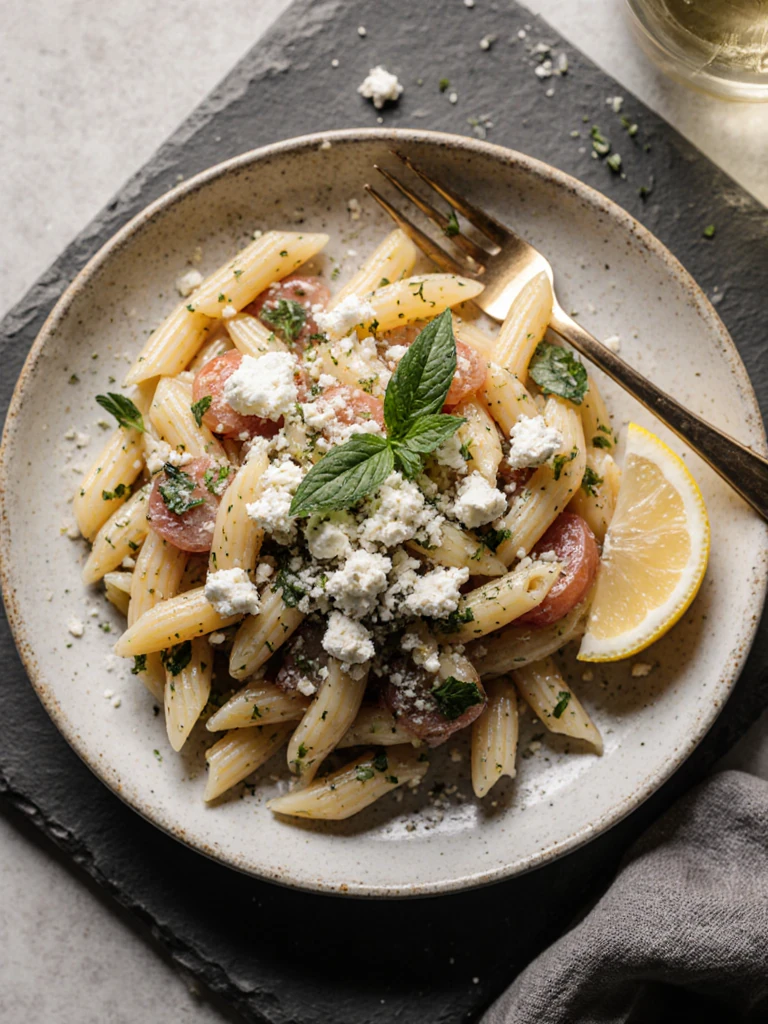
Make-Ahead Strategy for Greek Pasta Salad
Dress the salad 30 minutes before serving for maximum flavour penetration, or prepare the components separately and combine up to 8 hours ahead.
Pasta dressed and refrigerated overnight will absorb nearly all of the vinaigrette, requiring a refresh of 1 tablespoon olive oil and 1 teaspoon red wine vinegar before serving. Reserve 3 tablespoons of dressing separately whenever preparing in advance. Stir through the reserved dressing at serving time to revive the bright acidity that overnight refrigeration dulls.
Greek pasta salad belongs in every warm-weather recipe rotation. Serve it alongside grilled chicken or lamb, or build it into a full meal by adding a handful of rinsed chickpeas. For more fresh salad ideas, browse the full salad collection on Recipe Dairy.
The Recipe
Greek Pasta Salad
Ingredients
For the salad
For the dressing
Instructions
- 1
Bring a large pot of heavily salted water to a boil and cook rotini 1 minute past the al dente time on the package.
- 2
Drain the pasta and rinse under cold running water for 90 seconds until fully cooled, then shake off excess water.
- 3
Soak the sliced red onion in cold water for 10 minutes, then drain and pat dry.
- 4
Combine red wine vinegar, olive oil, Dijon mustard, oregano, garlic, salt, pepper, and feta brine in a jar and shake for 20 seconds until emulsified.
- 5
Add the cooled pasta, cherry tomatoes, red bell pepper, red onion, and Kalamata olives to a large bowl and pour two-thirds of the dressing over the top.
- 6
Toss thoroughly to coat all ingredients, then scatter the crumbled feta over the top and fold in gently.
- 7
Taste and add reserved dressing, salt, or a squeeze of lemon as needed.
- 8
Add the sliced cucumber and toss once more, then serve immediately or refrigerate for up to 30 minutes before serving.
Nutrition Facts
Per serving
380 Calories
Moderate energy per serving
Macronutrients
* % Daily Value based on a 2,000 calorie diet
Tips & Notes
Add salt to the dressing in two stages: half before mixing the salad, half after tasting once the feta is folded in. Feta varies widely in saltiness depending on the brand and brine concentration. Refrigerate for at least 30 minutes before serving to allow the vinaigrette to penetrate the pasta. If the salad has been in the fridge overnight, stir through 1 tablespoon of olive oil and 1 teaspoon of red wine vinegar to revive the dressing before serving. For the cucumber, add it just before serving if preparing the salad more than 2 hours in advance. Cut cucumbers release moisture over time, which dilutes the dressing and softens the surrounding pasta. The feta brine in the dressing is optional but adds a sharp, salty, slightly tangy note that bottled Greek dressings cannot replicate. Pour it straight from the feta block container.
Frequently Asked Questions
Yes. Prepare without cucumber and refrigerate overnight. Add cucumber and a splash of fresh dressing before serving, as overnight refrigeration absorbs most of the vinaigrette.
Enjoyed this recipe?


