Shrimp Cauliflower Fried Rice
Shrimp Cauliflower Fried Rice
Shrimp cauliflower fried rice swaps out white rice for riced cauliflower, cutting net carbs to 11 grams per serving without sacrificing the wok-charred flavour of the takeout original. Large shrimp, scrambled egg, peas, carrots, and a soy-sesame sauce come together in one pan in 30 minutes.

- 1
Pressing the riced cauliflower in a clean towel for 20 seconds removes 2 to 3 tablespoons of surface moisture before cooking, which keeps the wok temperature above 400°F when the cauliflower hits the pan and allows Maillard browning instead of steaming.
- 2
Tossing the shrimp in cornstarch before searing creates a thin surface barrier that browns in high heat within 90 seconds, producing a lightly charred exterior that holds its texture when the shrimp is returned to the sauce at the end.
- 3
Adding the soy-sesame sauce only after the cauliflower is fully cooked and the eggs are incorporated means the liquid glazes rather than steams the grains, coating every piece without collapsing the dry, toasted texture built during stir-frying.
Shrimp cauliflower fried rice delivers the savoury, slightly charred character of classic fried rice with cauliflower standing in for grain. The swap reduces net carbs from roughly 45 grams per serving in white-rice fried rice to 11 grams, while the shrimp and egg keep protein at 28 grams per bowl. A very hot wok, dry cauliflower rice, and shrimp cooked in a single layer are the three non-negotiable conditions that separate a properly toasted result from a soggy, steamed pan of vegetables.
How to Rice Cauliflower Without Making It Wet
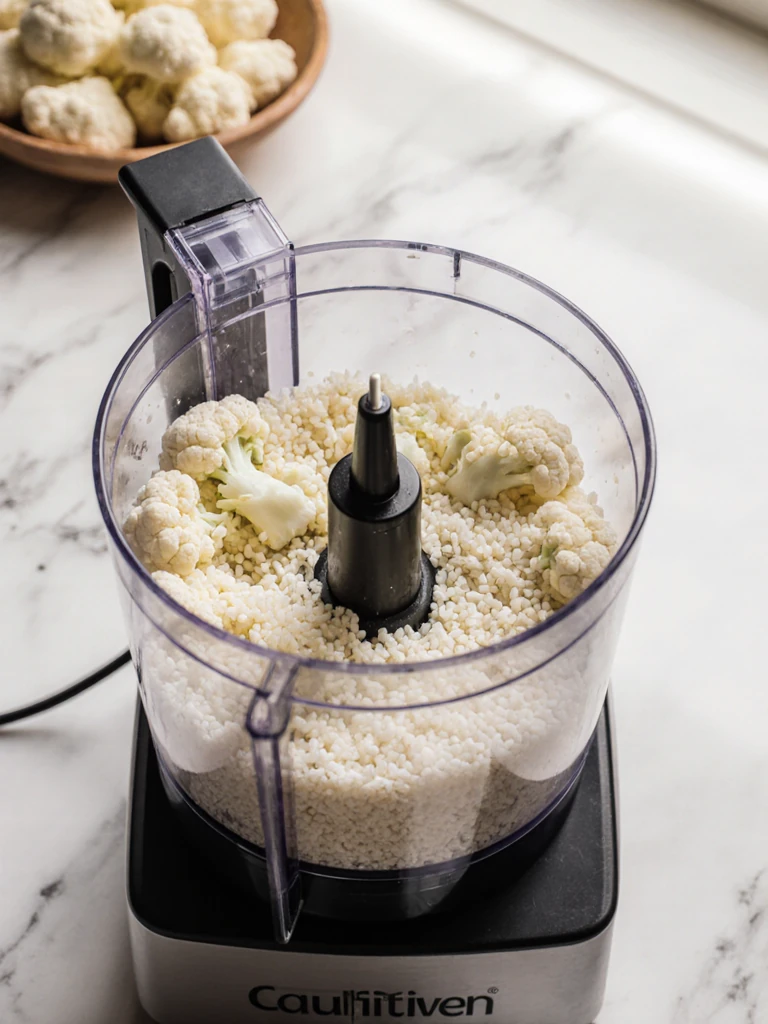
Pulse cauliflower florets in a food processor in 1-second bursts, stopping when the pieces reach the size of long-grain rice grains — roughly 3mm. Over-processing produces a fine powder that releases too much water during cooking and turns the finished dish to mush.
A standard medium head of cauliflower (about 600g) yields approximately 4 cups of riced cauliflower, enough for 4 servings. Cut the head into florets no larger than a golf ball before adding them to the processor; oversized florets cause uneven pulsing and leave large chunks mixed with fine powder. Work in two batches if the processor bowl holds less than 1.5 litres, as crowding produces the same uneven result.
After ricing, spread the cauliflower in a single layer on a clean kitchen towel or several layers of paper towel and press firmly. Hold the press for 20 seconds. The towel will absorb a visible amount of moisture. Skipping this step adds approximately 2 to 3 tablespoons of liquid to the wok the moment the cauliflower hits the hot oil, which drops the pan temperature immediately and begins steaming rather than frying. Frozen riced cauliflower requires even more drying: thaw fully in a colander, then wring in a clean towel before using.
Cooking Shrimp for Cauliflower Fried Rice
Cook the shrimp first, in a single layer over high heat, for 60 to 90 seconds per side until pink and just opaque at the thickest point. Remove them from the wok immediately and set aside. Shrimp added at the end, after the cauliflower cooks, overcook from the residual pan heat.
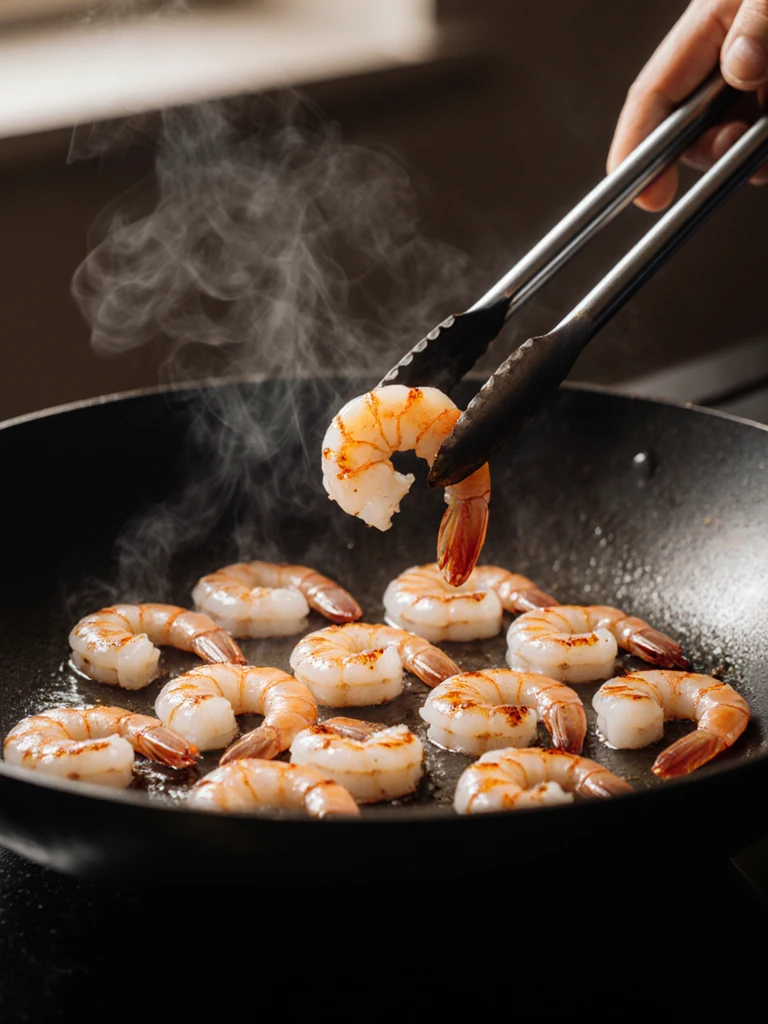
Large shrimp (21–25 count per pound, peeled and deveined) work best for this recipe because they remain visible and meaty against the fine cauliflower granules. Medium or small shrimp tend to disappear into the rice and overcook before the exterior develops any colour. Pat the shrimp completely dry with paper towels before they go into the wok; surface moisture creates steam that prevents the sear and turns the shrimp rubbery rather than lightly charred.
Toss the dried shrimp with ½ teaspoon of cornstarch before cooking. Cornstarch creates a thin barrier on the shrimp surface that browns quickly in hot oil, mimicking the slight crust found on shrimp in restaurant wok cooking. The technique, called velveting, is standard in Chinese stir-fry cooking and requires no additional ingredients beyond what most kitchens already carry.
The internal temperature for fully cooked shrimp is 120°F at the thickest point. At that temperature the flesh turns from translucent grey to fully opaque white-pink with a slight curl. A shrimp curled into a tight circle has overcooked by approximately 15 to 20 seconds; the muscle fibres have contracted past the point of tender texture.
Stir-Frying the Cauliflower Rice Without Steaming It
Add the dried cauliflower rice to the wok in a single layer, press it lightly against the hot surface, and leave it undisturbed for 90 seconds before stirring. That initial contact develops the toasted, slightly nutty flavour that makes cauliflower fried rice taste closer to the grain original.
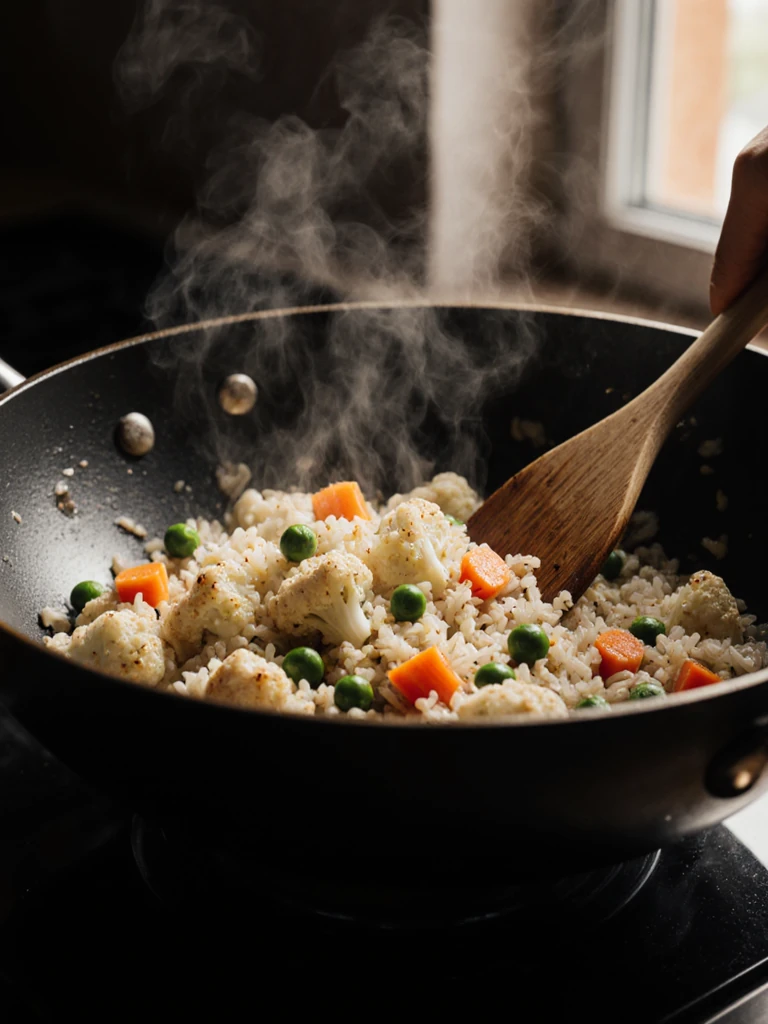
Pan temperature is the controlling variable. A properly preheated wok or large skillet over high heat reaches a surface temperature above 450°F before any oil or food is added. At that temperature, the Maillard reaction begins on the cauliflower surface within seconds of contact, producing the toasted, savoury character that distinguishes fried cauliflower rice from plain steamed cauliflower. A pan that is only warm, or one that is overcrowded, traps moisture and stews the cauliflower instead.
Cook the cauliflower rice for a total of 4 to 5 minutes, stirring every 60 to 90 seconds. The granules are ready when they appear dry, slightly golden at the edges, and have reduced slightly in volume as moisture evaporates. At this point push the cauliflower to the sides of the wok, add a small amount of oil to the centre, and scramble the eggs directly in the cleared space. Fold the scrambled egg ribbons through the cauliflower once they are 80% set — residual heat finishes cooking them without making them dry.
Add the soy sauce, sesame oil, and rice vinegar to the wok after the eggs are incorporated, not before. Liquid added earlier steams the cauliflower rather than glazing it. Toss everything together for 30 seconds over high heat until the sauce coats each granule and any excess evaporates.
Serving Shrimp Cauliflower Fried Rice
Return the cooked shrimp to the wok in the final 30 seconds, toss once to coat in the sauce, and serve immediately. The shrimp reheat through from the pan's residual heat without continuing to cook.
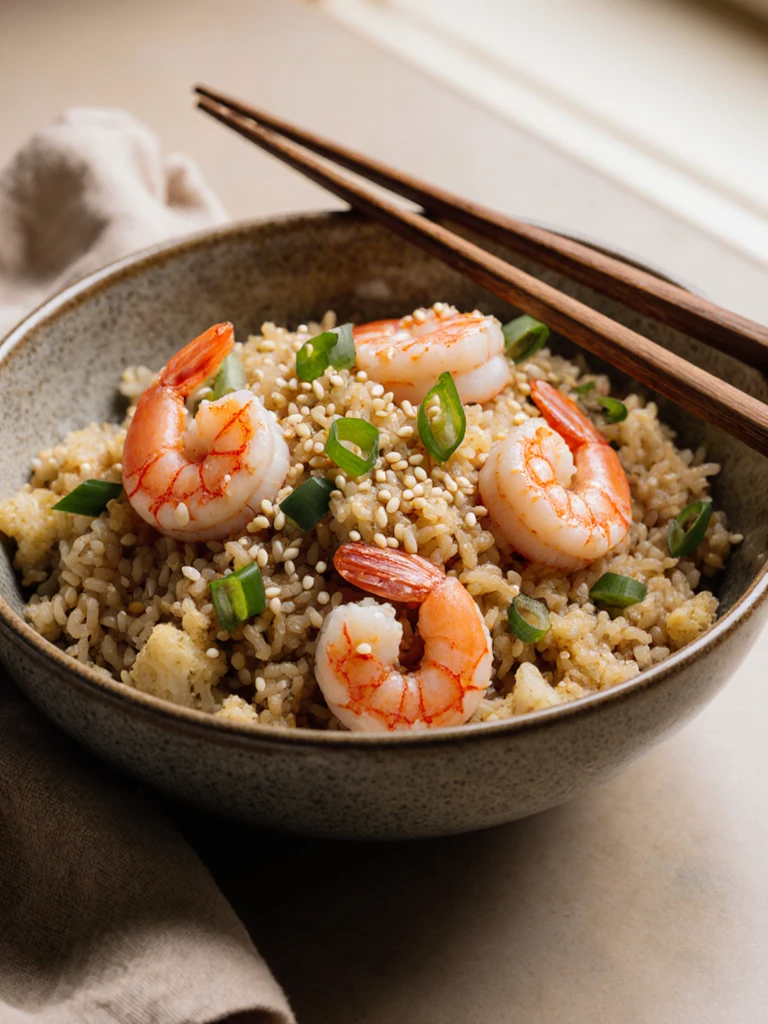
Divide into deep bowls and garnish with sliced green onions and a pinch of toasted sesame seeds. A drizzle of chilli oil or a few drops of sriracha cut through the mild sweetness of the cauliflower and complement the salty-umami sauce. For a leaner approach to a similar protein-forward bowl, the same sauce and shrimp technique works well over a bed of fresh greens, similar to what makes protein-in-vegetable-vessel dishes so effective at keeping meals light without sacrificing volume.
Explore the full Recipe Diary collection for more one-pan dinners built around lean proteins and low-carb vegetables.
The Recipe
Shrimp Cauliflower Fried Rice
Ingredients
For the shrimp
For the cauliflower rice
For the sauce
To serve
Instructions
- 1
Pulse cauliflower florets in a food processor in 1-second bursts until pieces reach rice-grain size, about 8 to 10 pulses. Spread onto a clean kitchen towel and press firmly for 20 seconds to remove excess moisture. Set aside.
- 2
Pat the shrimp completely dry with paper towels. Toss with cornstarch, salt, and pepper in a small bowl until evenly coated.
- 3
Whisk together soy sauce, sesame oil, rice vinegar, and honey in a small bowl. Set sauce aside.
- 4
Heat a large wok or 12-inch skillet over high heat for 2 minutes until very hot. Add ½ tablespoon of oil and swirl to coat. Add the shrimp in a single layer and cook undisturbed for 60 to 90 seconds until pink and lightly charred on the underside. Flip and cook for a further 45 seconds until just opaque. Transfer to a plate and set aside.
- 5
Return the wok to high heat and add the remaining ½ tablespoon of oil. Add diced carrots and stir-fry for 2 minutes until slightly softened. Add garlic and ginger and cook for 30 seconds until fragrant.
- 6
Add the dried cauliflower rice in a single layer. Press lightly against the wok surface and leave undisturbed for 90 seconds. Stir and cook for a further 3 minutes, stirring every 60 seconds, until the grains appear dry and lightly golden at the edges.
- 7
Push the cauliflower rice to the sides of the wok. Add a small drizzle of oil to the centre, then pour in the whisked eggs. Scramble the eggs until 80% set, about 45 seconds, then fold through the cauliflower rice.
- 8
Add the thawed peas and pour the sauce over everything. Toss over high heat for 30 seconds until the sauce coats each granule and any excess evaporates.
- 9
Return the cooked shrimp to the wok and toss for 20 to 30 seconds to coat in the sauce and heat through. Taste and adjust seasoning with a pinch of salt if needed.
- 10
Divide into bowls and top with sliced green onions, toasted sesame seeds, and chilli oil or sriracha if desired. Serve immediately.
Nutrition Facts
Per serving
265 Calories
Moderate energy per serving
Macronutrients
* % Daily Value based on a 2,000 calorie diet
Tips & Notes
Wok temperature is the single biggest factor. Preheat the wok over high heat for a full 2 minutes before adding any oil or food. Flick a drop of water onto the surface — it should vaporise instantly. A cool wok steams everything. Batch size: do not double this recipe in the same pan. A doubled batch overcrowds the wok, drops the temperature, and produces a wet, grey result. Cook in two separate rounds if serving 8. Frozen cauliflower rice: thaw fully in a colander, then wring hard in a clean kitchen towel before using. Frozen cauliflower holds more water than fresh after thawing and requires extra pressing. Soy sauce sodium: the recipe uses 3 tablespoons of low-sodium soy sauce. Standard soy sauce contains roughly 40% more sodium per tablespoon. Taste before adding any additional salt at the end if using standard soy sauce. Shrimp size: 21–25 count (large) is the optimal size. Smaller shrimp overcook in the time it takes the wok to return to full heat after adding them. With medium (31–40 count) shrimp, reduce the searing time to 45 seconds per side.
Frequently Asked Questions
Yes, but thaw it fully in a colander first, then wring out the excess water in a clean kitchen towel before cooking. Frozen cauliflower holds significantly more moisture than fresh and will steam rather than fry if added wet.
Enjoyed this recipe?


