Smoked Brisket BBQ Pizza
Smoked Brisket BBQ Pizza

Smoked brisket BBQ pizza puts leftover BBQ to its best use: chopped bark-edged brisket layered under bubbling mozzarella on a blistered, hand-stretched crust. A 50/50 blend of BBQ sauce and pizza sauce keeps the base rich without burning or overpowering the smoke. Ready in under 40 minutes of active time, with a crunch that holds all the way through the last slice.

- 1
A 50/50 blend of BBQ sauce and pizza sauce reduces the sugar concentration enough to prevent burning at 475°F while the pizza sauce's acidity and umami amplify the brisket's smoke flavor rather than masking it.
- 2
Layering chopped brisket below the mozzarella traps rendered fat and smoke-infused moisture under the cheese surface, concentrating flavor into every bite instead of letting it evaporate during the bake.
- 3
A pizza stone preheated for 45 minutes stores enough thermal mass to instantly transfer bottom heat to the dough, producing a crisp base that supports the full weight of brisket topping without going soft.
Smoked brisket BBQ pizza is a 35-minute build when the brisket is already cooked. The sauce is a 50/50 blend of BBQ sauce and pizza sauce that solves the single biggest failure in every other version of this recipe: a straight BBQ sauce base reduces to a sticky, scorched layer that masks the brisket's smoke rather than framing it. The brisket goes below the mozzarella, not above it, so the cheese acts as a moisture barrier that keeps the topping layer from steaming the crust soft during baking. A pizza stone preheated for 45 minutes at 475°F delivers the bottom-crust crunch that makes each slice hold its own weight.
The Sauce Blend That Makes Smoked Brisket BBQ Pizza Work
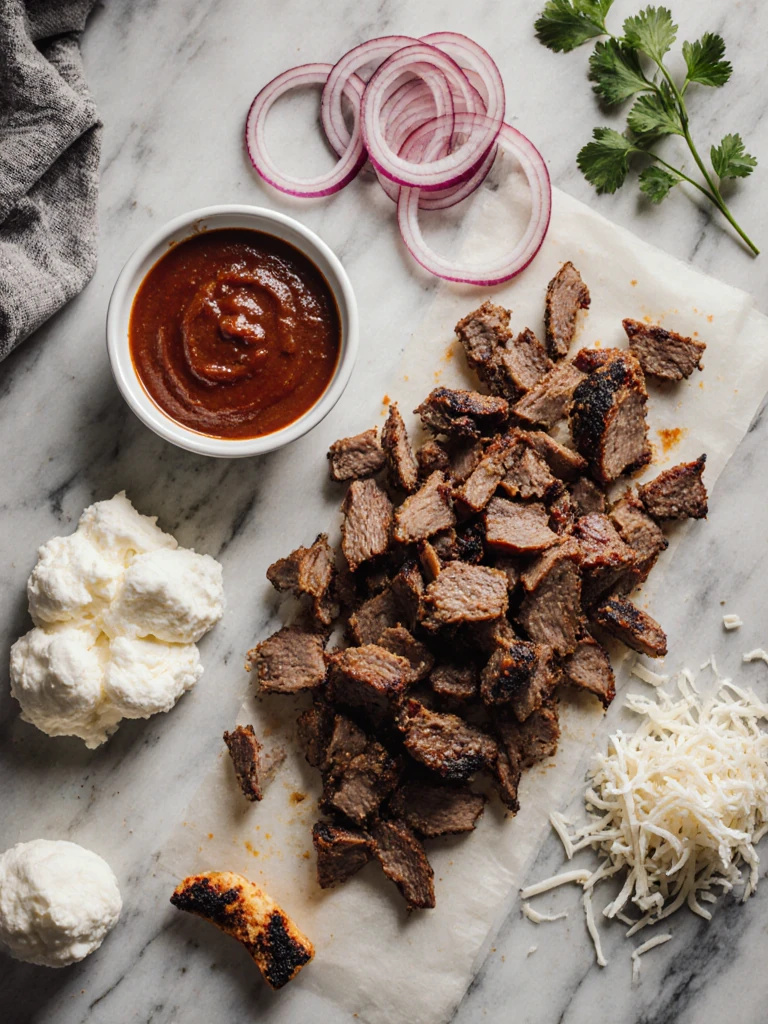
Mix equal parts BBQ sauce and pizza sauce before spreading. A pure BBQ sauce base contains 15–25% sugar by weight, which caramelizes rapidly at 475°F and crosses into scorched bitterness within 12 minutes. Diluting it with pizza sauce lowers the sugar concentration, adds acidity and umami, and keeps the base from overpowering the smoke notes in the brisket.
The right BBQ sauce for this blend is a medium-bodied, tomato-forward style rather than a molasses-heavy or honey-based sauce. Thick, sweet sauces do not integrate evenly with pizza sauce and pool in the center of the dough during baking. Thin the blend with one teaspoon of red wine vinegar per half cup of sauce if the consistency is too heavy to spread smoothly to the edges. The vinegar also brightens the base flavor and creates a counterpoint to the rich fat content of the brisket.
Spread the sauce to within half an inch of the dough edge. Leaving the full perimeter unsauced produces a pale, flour-tasting crust border. The sauce at the edge browns under oven heat and develops a slightly caramelized rim that tastes intentional rather than bare.
How to Stretch Dough for a Brisket-Loaded Pizza
Stretch the dough to 12 inches and keep the center thickness at around 4mm — roughly the thickness of a stack of four coins. A thinner center collapses under the weight of brisket and cheese; a thicker center stays doughy and underbaked because the topping moisture creates a steam pocket above the crust.
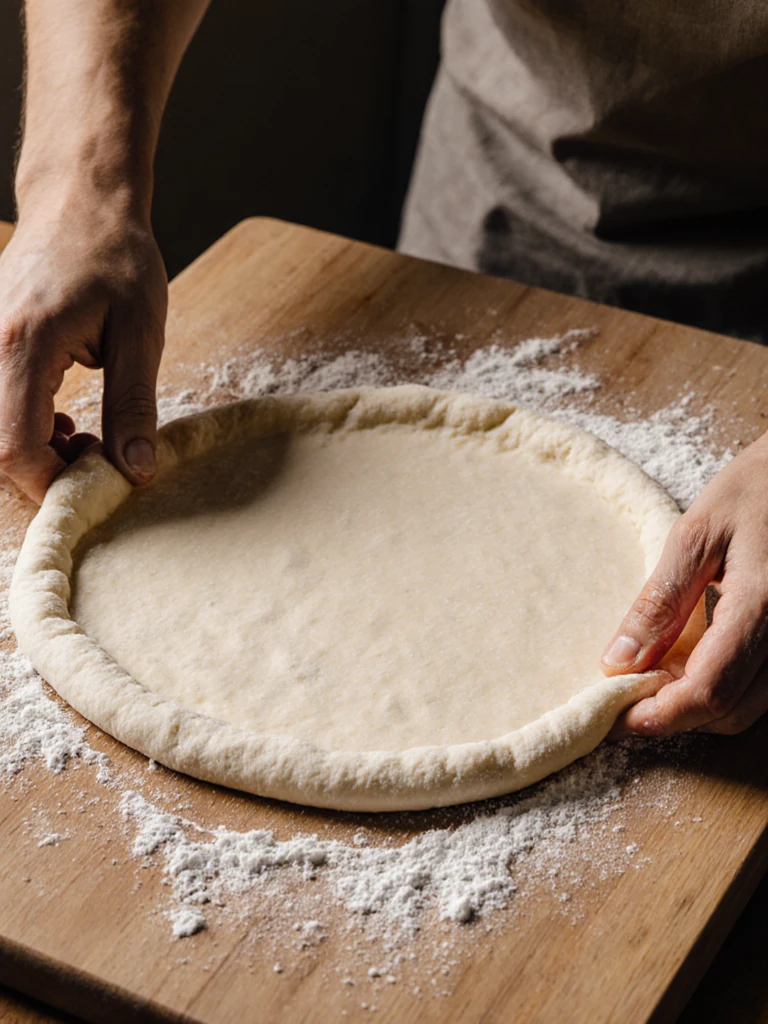
Allow refrigerated dough to rest at room temperature for 30 to 60 minutes before stretching. Cold dough has developed gluten tension that causes it to spring back when pulled. Resting allows the gluten network to relax, which means the dough stretches to size and stays there rather than contracting back to a smaller diameter during assembly. Store-bought dough behaves identically to homemade in this regard: both need the rest period.
Stretch by draping the dough over loosely closed fists and rotating it outward in a circular motion, rather than pressing it flat with a rolling pin. A rolling pin degasses the dough by compressing the air pockets that form the internal crumb structure. Stretched dough retains those pockets and produces a lighter, more open crust texture around the perimeter. Build a raised border of roughly three-quarters of an inch by pressing the outer edge between thumb and forefinger during the final stretch.
Building the Pizza: Brisket Under the Cheese
Layer the chopped brisket directly on the sauce, then cover it completely with mozzarella. On a pizza, heat comes from below via the stone and from above via oven convection. Cheese on top browns and forms a continuous surface layer that traps the brisket's rendered fat and smoke-infused moisture underneath, concentrating the flavor into every bite rather than letting it evaporate.

Use chopped brisket in roughly half-inch pieces, not shredded. Shredded brisket spreads into a fine, uniform layer that disappears texturally under the cheese. Chopped pieces create height variation across the surface, which means certain bites carry a full chunk of bark-edged beef rather than a uniform paste. Use a mix of point and flat cuts: point provides the fatty richness, flat provides the firmer texture that holds its shape through the bake.
Distribute the brisket in a single layer with small gaps between pieces rather than packing them tightly. Dense coverage traps steam between the pieces and the cheese, which prevents the mozzarella from browning evenly above the brisket zone. Add red onion slices over the cheese layer. Onion placed below the cheese steams and turns soft; placed on top, it catches direct oven heat and chars slightly at the edges, adding a sweet-bitter note that balances the BBQ sauce. For comparison, the opposite layering logic applies in smoked brisket nachos, where toppings sit above the cheese because the cooking method is top-down broiler heat rather than enclosing oven heat.
Baking on a Pizza Stone: Temperature and Timing
Preheat the pizza stone at 475°F for a minimum of 45 minutes before launching the pizza. A stone that has not fully absorbed oven heat produces a pale, soft bottom crust that cannot support the weight of brisket topping. The 45-minute window allows the stone's thermal mass to equilibrate with the oven air temperature throughout its full depth.
Launch the pizza from a well-floured peel with a quick, decisive forward-and-back motion. A hesitant launch allows dough to stick to the peel as it stretches under gravity, tearing the base. Dust the peel generously with semolina flour rather than all-purpose flour: semolina's coarser grain acts as ball bearings under the dough and reduces friction more effectively than fine flour. Check the pizza at 10 minutes by lifting one edge with a metal spatula. The bottom should show an even golden-brown color with occasional darker spots at the thinnest points. Bake for 12 to 14 minutes total until the mozzarella bubbles and shows brown patches and the crust edge is fully set.
Rest the baked pizza on a wire rack for 3 minutes before cutting. A cutting board traps steam under the base during the rest, softening the bottom crust. A wire rack allows airflow underneath and keeps the stone-baked crispness intact through slicing. Finish with a drizzle of BBQ sauce over the surface and scatter fresh cilantro immediately before serving. Add the cilantro after baking, not before: heat wilts the leaves and turns them brown within 4 minutes.
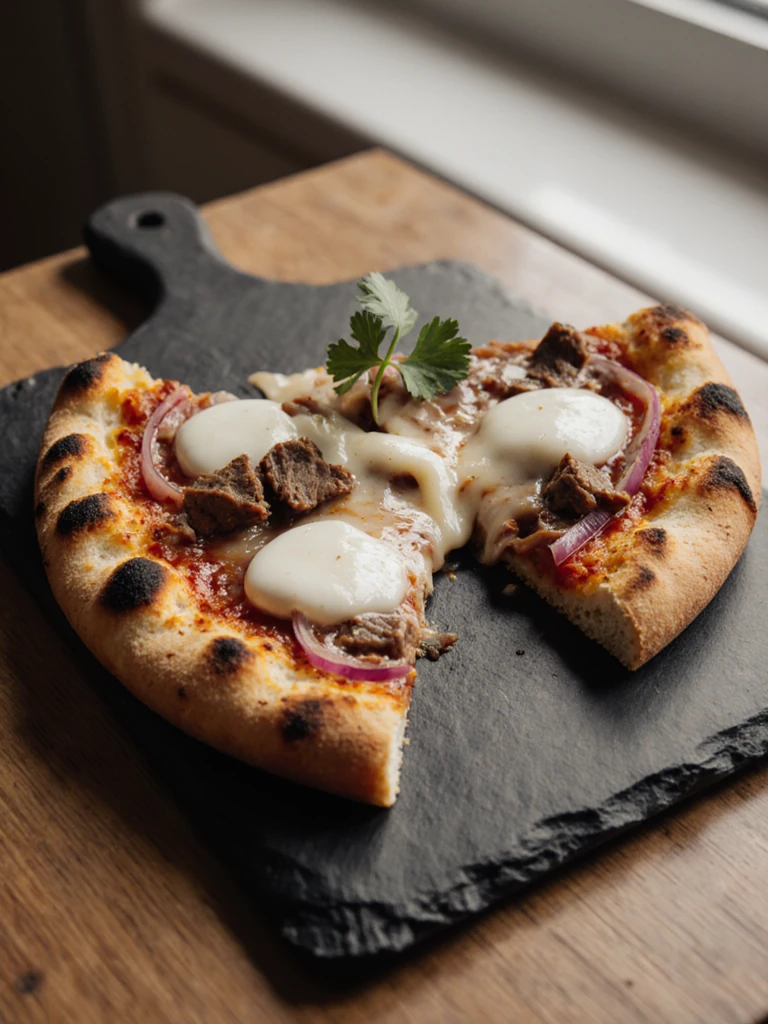
Add this smoked brisket BBQ pizza to the rotation any time there is leftover brisket in the fridge. Find the full recipe at Recipe Diaries.
The Recipe
Smoked Brisket BBQ Pizza
Ingredients
For the sauce
For the pizza
For finishing
Instructions
- 1
Place a pizza stone on the center oven rack. Preheat the oven to 475°F and allow the stone to heat for 45 minutes minimum before baking.
- 2
Remove pizza dough from the refrigerator and let it rest at room temperature for 30 to 60 minutes until relaxed and no longer cold to the touch.
- 3
Whisk BBQ sauce, pizza sauce, and red wine vinegar together in a small bowl until fully combined. Taste and adjust: the blend should be tangy and savory rather than sweet-forward.
- 4
Dust a pizza peel generously with semolina flour. On a lightly floured surface, stretch the dough over loosely closed fists, rotating in a circular motion, until it reaches a 12-inch diameter with a 4mm center thickness and a ¾-inch raised border. Transfer to the semolina-dusted peel.
- 5
Spread half the sauce evenly over the dough, reaching to within ½ inch of the outer edge.
- 6
Scatter half the chopped brisket in a single layer over the sauce, leaving small gaps between pieces.
- 7
Cover the brisket completely with 1 cup of shredded mozzarella. Lay half the red onion slices over the cheese.
- 8
Check the peel: shake it gently to confirm the pizza slides freely. If it sticks, lift the edge and add more semolina underneath.
- 9
Launch the pizza onto the hot stone with a quick, decisive forward-and-back motion. Bake for 12 to 14 minutes until the cheese bubbles with brown patches and the crust edge is fully golden.
- 10
Remove the pizza using the peel or a wide spatula. Transfer to a wire rack and rest for 3 minutes.
- 11
Drizzle with BBQ sauce and scatter fresh cilantro leaves. Slice into 6 or 8 pieces and serve immediately. Repeat steps 4 through 11 for the second pizza.
Nutrition Facts
Per serving
640 Calories
Hearty & filling per serving
Macronutrients
* % Daily Value based on a 2,000 calorie diet
Tips & Notes
Shred the mozzarella from a block rather than using pre-shredded bags. Block mozzarella has a higher moisture content and melts into a smooth, continuous layer. Pre-shredded cheese is coated with anti-caking starch that produces a grainy, separated melt at high oven temperatures. If the dough keeps springing back during stretching, cover it with a damp towel and rest it for 10 more minutes. The gluten network needs additional time to relax. Forcing it will tear thin spots into the dough and cause uneven baking. Semolina on the peel is non-negotiable. If semolina is unavailable, use polenta or cornmeal. All-purpose flour compacts under the dough's weight and loses its lubricating effect within 2 to 3 minutes, causing sticking during the launch. For outdoor grilling: preheat a gas grill to 500°F with the lid closed for 20 minutes. Place the pizza directly on the grates over indirect heat. The grill's radiant heat from below mimics a pizza stone and the lid traps top heat. Bake for 8 to 10 minutes, rotating the pizza 180 degrees halfway through.
Frequently Asked Questions
Yes. Store-bought dough works well. Rest it at room temperature for 30 to 60 minutes before stretching so the gluten relaxes and the dough stretches without springing back. Cold dough resists stretching and tears.
Enjoyed this recipe?


