Smoked Brisket Pho
Smoked Brisket Pho
Smoked brisket pho builds a clear Vietnamese broth from charred aromatics, toasted whole spices, and brisket drippings, then finishes with thinly sliced BBQ brisket. The drippings dissolve smoke compounds into the stock that no traditional recipe achieves. On the table in under two hours.

- 1
Brisket drippings carry water-soluble smoke compounds from the original cook that dissolve into the simmering broth, adding genuine smoke depth that cannot be achieved by adding brisket meat alone or increasing spice quantities.
- 2
Charring onion and ginger cut-side down in a dry skillet without oil develops Maillard compounds on the cut surface that leach a roasted, lightly bitter note into the stock, balancing the natural sweetness of star anise and cinnamon.
- 3
Placing cold sliced brisket in the bowl before ladling boiling broth warms the meat gently to serving temperature in 60 seconds without direct heat, keeping the muscle fibers tender rather than tightening them as a pan or microwave would.
Smoked brisket pho begins as a Vietnamese pho bo and diverges at two specific points: the aromatics are charred rather than broiled, concentrating their sugars into a deeper, more complex base, and leftover brisket drippings are added to the finished broth, dissolving bark-bound smoke compounds into the stock in a way that raw brisket fat cannot replicate. The result is pho with its characteristic sweet-anise clarity intact, carrying an undercurrent of oak or hickory smoke that registers as depth rather than barbecue flavor. The recipe serves four in under two hours — a fraction of the 6 to 12 hours that a traditional bone-stock pho requires.
Toasting the Pho Spices
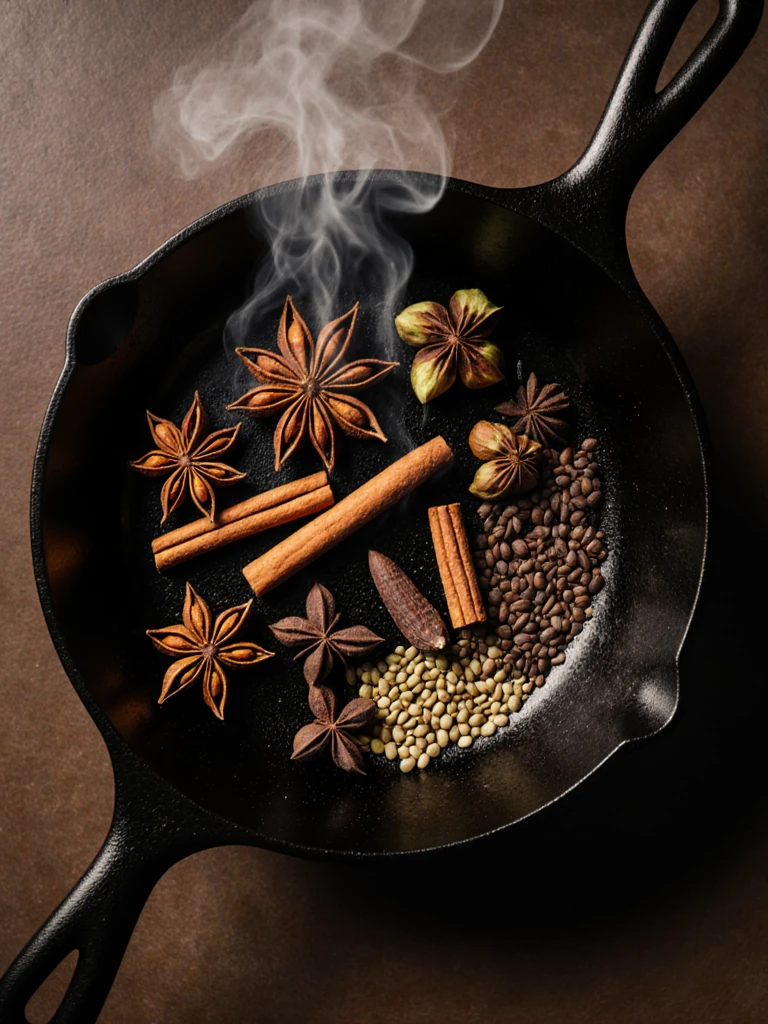
Toast whole pho spices in a dry skillet over medium heat for 2 to 3 minutes until fragrant and the star anise edges darken from tan to medium brown. The heat triggers the Maillard reaction in the surface oils of each spice, converting precursor compounds into volatile aromatics that dissolve into the broth far more completely than untoasted spices.
The spice blend for pho bo draws from three aroma categories: sweet-warming (cinnamon, star anise, cloves), citrus-floral (cardamom, coriander seeds), and earthy-herbal (fennel seeds). Each category volatilizes at a slightly different temperature, which is why the skillet method with its gradual, controllable heat outperforms an oven for spice toasting. A skillet allows the cook to remove the blend the moment fragrance becomes strong and before any spice crosses from toasted to acrid. The visual cue to pull: star anise edges turn medium brown and the kitchen smells like warm licorice. Transfer immediately to a small bowl to stop the cooking, as residual heat in a hot skillet can push the spices past the optimal window in under 60 seconds.
Place the toasted spices in a muslin spice bag or a square of cheesecloth tied with kitchen twine. Loose spices released into the broth during the simmer produce a cloudy, particulate-heavy stock and make the finished broth gritty rather than clear.
Charring the Aromatics: Onion and Ginger
Char onion and ginger cut-side down in a dry cast iron skillet over high heat for 5 to 7 minutes until the cut surfaces are deeply browned, with patches of black at the thickest points. The char layer develops bitter-sweet Maillard compounds that dissolve into the broth and add a roasted complexity that makes the difference between a flat stock and one with dimensional depth.
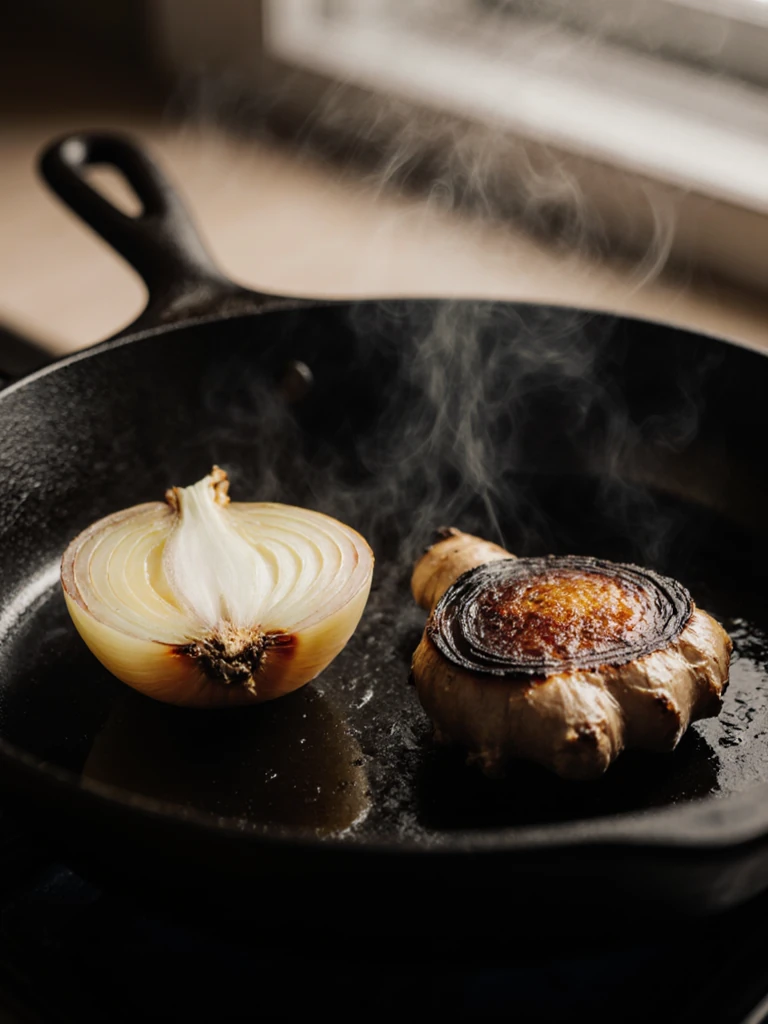
Halve one large yellow onion through the root and cut a 3-inch knob of ginger lengthwise. Place both cut-side down in the dry skillet without any oil. Oil between the surface and the pan creates steam that prevents direct contact browning. The onion layers are approximately 80% water; that water must evaporate from the cut surface before browning chemistry can begin. At high heat this takes 3 to 4 minutes. Resist the urge to move either piece during this phase — lifting breaks the contact needed for even charring.
The char is not waste. When the charred onion and ginger enter the broth, the blackened surface compounds leach a lightly bitter note that balances the sweetness of the star anise and cinnamon. A broth built without charred aromatics tastes one-dimensional and overly sweet. Comparable technique appears in the broth-building process for smoked brisket ramen, where charring aromatics before adding them to stock produces the same dimensional base flavor.
Building the Smoked Brisket Pho Broth
Combine the charred aromatics, spice bag, beef broth, fish sauce, and brisket drippings in a large pot. Bring to a boil, then reduce immediately to a bare simmer with small bubbles breaking the surface every 2 to 3 seconds. A rolling boil agitates the broth and emulsifies fat into the stock, producing a cloudy, greasy result rather than the clear, golden broth that defines pho.
Brisket drippings are the key ingredient separating this recipe from a standard brisket pho. The drippings collected from a smoked brisket cook contain three components: rendered fat, collagen-rich gelatin from the connective tissue, and water-soluble smoke compounds that migrated inward from the bark during the long cook. When added to the simmering broth, the gelatin dissolves and gives the stock a silky body that coats the palate. The smoke compounds distribute throughout the liquid, adding the secondary flavor layer that no amount of extra spices can replicate.
Skim the broth every 20 minutes during the simmer. Fat that sits on the surface for longer than 20 minutes begins to re-emulsify back into the broth under gentle heat agitation, creating a greasy mouthfeel. The target is a thin, shimmering fat layer no more than 1mm thick on the surface, enough to carry fat-soluble aroma compounds to the nose but not enough to coat the mouth heavily. After 75 minutes, taste for seasoning: fish sauce adds salt and umami simultaneously. Add it in 1-tablespoon increments rather than large pours, as fish sauce is far saltier than kosher salt by volume and overcorrection is difficult to reverse.
Slicing the Brisket and Assembling the Bowls
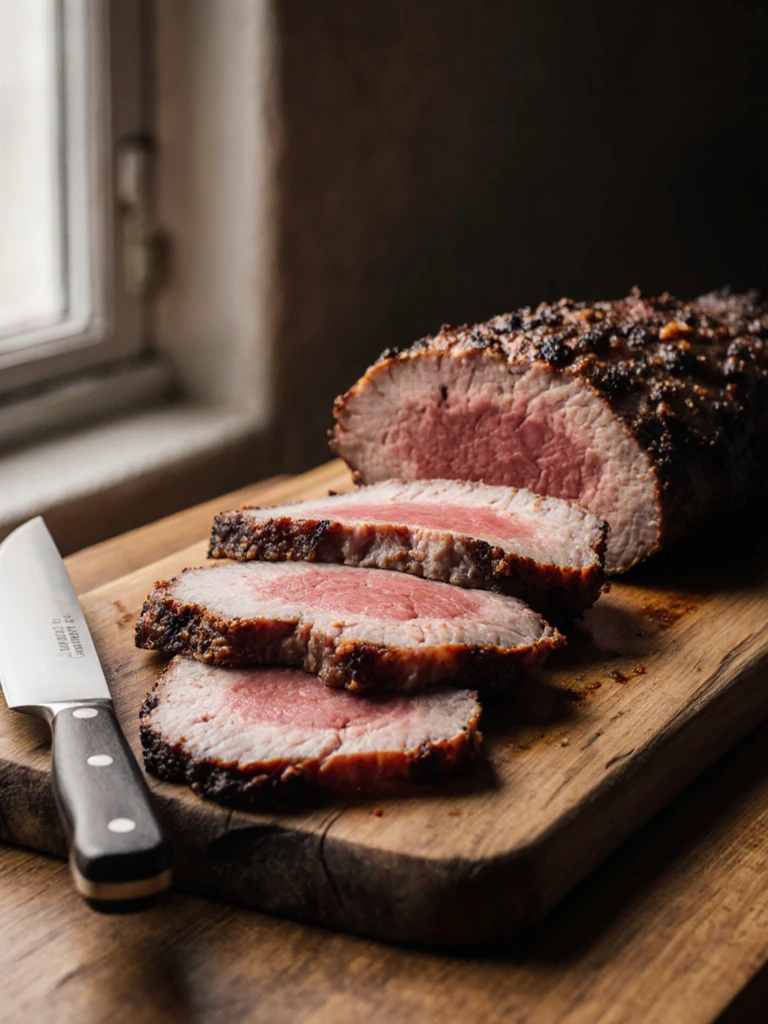
Slice cold smoked brisket against the grain as thin as possible, 2mm to 3mm, and place it into the bowl before ladling the broth. The 200°F-plus boiling broth carries enough thermal energy to bring the sliced brisket from refrigerator temperature to serving temperature within 60 seconds, finishing the meat gently without toughening the muscle fibers the way direct pan heat would.
The grain direction in brisket flat runs lengthwise along the muscle. Slicing against the grain means cutting perpendicular to those long fibers, shortening each individual fiber strand to the width of the slice rather than its full length. A slice cut with the grain requires the diner's teeth to sever the full fiber length; a slice cut against the grain severs them at 2mm to 3mm, producing a noticeably more tender result without any change in cooking method. The flat provides the cleanest slices for pho because its uniform thickness and low fat content hold form under the thin-slice cut. The point muscle, with its irregular marbling, shreds rather than slices cleanly and works better for loaded applications such as the smoked brisket loaded baked potato.
Prepare rice noodles according to package directions and drain. Divide among four wide bowls. Add 4 to 5 brisket slices per bowl, fanning them over the noodles. Bring the broth to a full rolling boil immediately before serving. Ladle 2 to 3 cups of boiling broth per bowl. Broth ladled at a simmer (around 190°F) loses 15 to 20°F on contact with cold noodles and arrives at the table lukewarm.
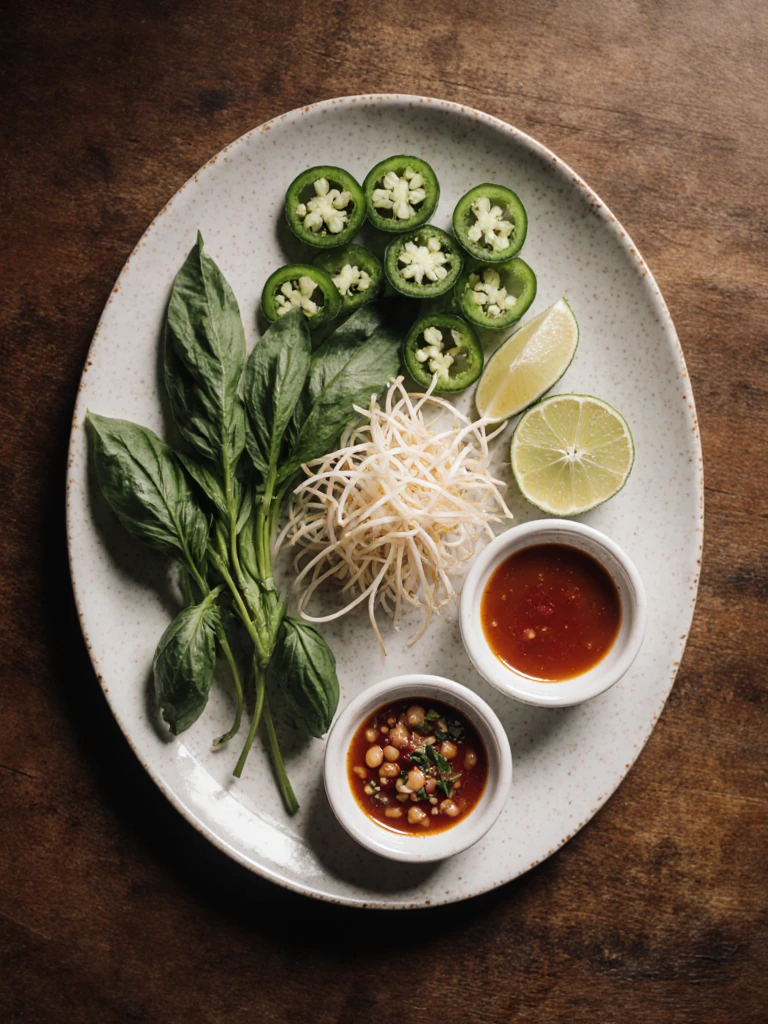
Serve each bowl with its own garnish plate and build this smoked brisket pho whenever the brisket supply allows. Find the full recipe at Recipe Diaries.
The Recipe
Smoked Brisket Pho
Ingredients
For the broth
For the bowls
For the garnish plate
Instructions
- 1
Toast the spices: Place star anise, cinnamon stick, cardamom pods, cloves, coriander seeds, and fennel seeds in a dry skillet over medium heat. Stir constantly for 2 to 3 minutes until fragrant and star anise edges deepen to medium brown. Transfer immediately to a bowl. Bundle in a cheesecloth square and tie with kitchen twine.
- 2
Char the aromatics: Heat a cast iron skillet over high heat for 2 minutes. Place onion and ginger cut-side down in the dry skillet without oil. Cook undisturbed for 5 to 7 minutes until the cut surfaces are deeply browned with patches of black. Remove and set aside.
- 3
Build the broth: Combine beef broth, water, charred onion, charred ginger, and the spice bag in a large pot. Bring to a boil over high heat.
- 4
Reduce heat to low and maintain a bare simmer. Add brisket drippings, fish sauce, and sugar. Stir to incorporate.
- 5
Simmer uncovered for 75 minutes, skimming fat and foam from the surface every 20 minutes.
- 6
Remove the spice bag, onion, and ginger. Taste the broth and adjust seasoning with fish sauce, 1 tablespoon at a time.
- 7
Prepare the rice noodles according to package directions. Drain and divide among four wide bowls.
- 8
Slice cold brisket flat against the grain as thin as possible, 2mm to 3mm per slice. Arrange 4 to 5 slices over the noodles in each bowl.
- 9
Bring the broth to a full rolling boil. Ladle 2 to 3 cups of boiling broth into each bowl directly over the brisket slices.
- 10
Top each bowl with sliced green onions. Serve immediately with a garnish plate of bean sprouts, Thai basil, cilantro, jalapeño slices, and lime wedges, plus ramekins of hoisin and sriracha.
Nutrition Facts
Per serving
580 Calories
Hearty & filling per serving
Macronutrients
* % Daily Value based on a 2,000 calorie diet
Tips & Notes
Brisket drippings are the liquid and solidified fat collected in the foil or drip pan during the original brisket smoke. Refrigerate them after the cook and the fat solidifies on top for easy portioning. If drippings were discarded, substitute 2 tablespoons of toasted sesame oil stirred in at the end of the simmer for fat-soluble aroma complexity, though without the same smoke depth. The broth can be made up to 3 days in advance. Stored in the refrigerator, the spice compounds continue to meld and the flavor typically improves. Reheat to a rolling boil before assembling bowls. Noodle soaking time varies by brand: thin bánh phở noodles (2mm) need about 20 minutes in room-temperature water; medium noodles (4mm) need 30 to 35 minutes. Over-soaked noodles turn mushy when hot broth hits them. Check by bending a noodle strand — it should flex without snapping. For a cleaner broth, pass the finished stock through a fine-mesh strainer lined with a double layer of damp cheesecloth before assembling the bowls. This removes residual spice particles and produces a restaurant-clear result.
Frequently Asked Questions
The flat cut slices most cleanly for pho. Its uniform thickness and low fat content hold a thin 2mm to 3mm slice under a sharp knife. The point muscle shreds rather than slices cleanly and is better suited to loaded or chopped applications.
Enjoyed this recipe?


