Smoked Brisket Tacos
Smoked Brisket Tacos
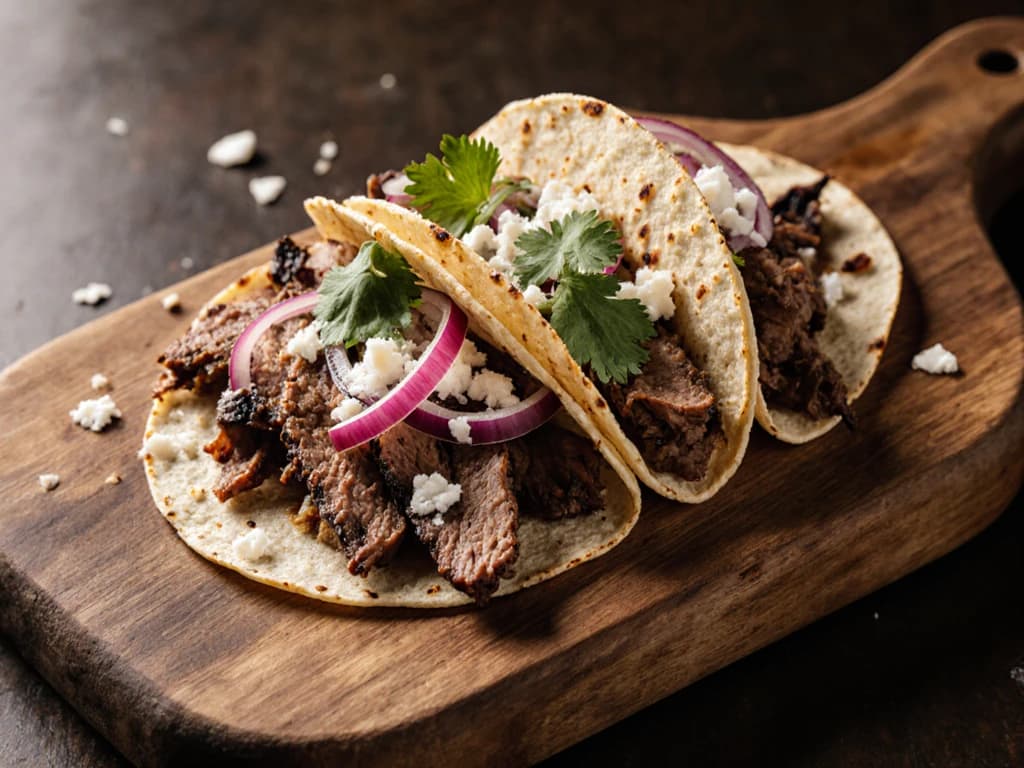
Smoked brisket tacos layer tender, bark-edged brisket slices into warm corn tortillas with pickled red onions, fresh cilantro, and a squeeze of lime. The brisket smokes low and slow at 225°F over oak or post oak wood for a deep smoke ring and meltingly soft texture. A quick salsa verde and fast-pickled onions pull the whole taco together in minutes once the brisket is rested.
- 1
Butcher paper wrapping at the stall exits the temperature plateau 1 to 2 hours faster than unwrapped cooks while keeping the bark firm, because the paper breathes and limits steam accumulation against the crust.
- 2
Slicing against the grain in ¼-inch cuts then chopping into ½-inch pieces shortens muscle fibers so the brisket holds inside the tortilla and severs cleanly with each bite rather than pulling free in a single strand.
- 3
Fast-pickled red onions made with red wine vinegar and cumin in 30 minutes provide the acid and crunch that cut through rendered brisket fat, balancing the richness without dulling the smoke flavor.
Smoked brisket tacos take the centerpiece of Texas BBQ and fold it into a handheld format built for bold, contrasting flavors. The brisket flat smokes at 225°F for 8 hours over oak wood until the bark is mahogany-dark and the meat pulls apart with gentle pressure. Pickled red onions, fresh cilantro, crumbled cotija, and a bright salsa verde cut through the fat and smoke without muting them.
How to Choose and Trim the Brisket Flat
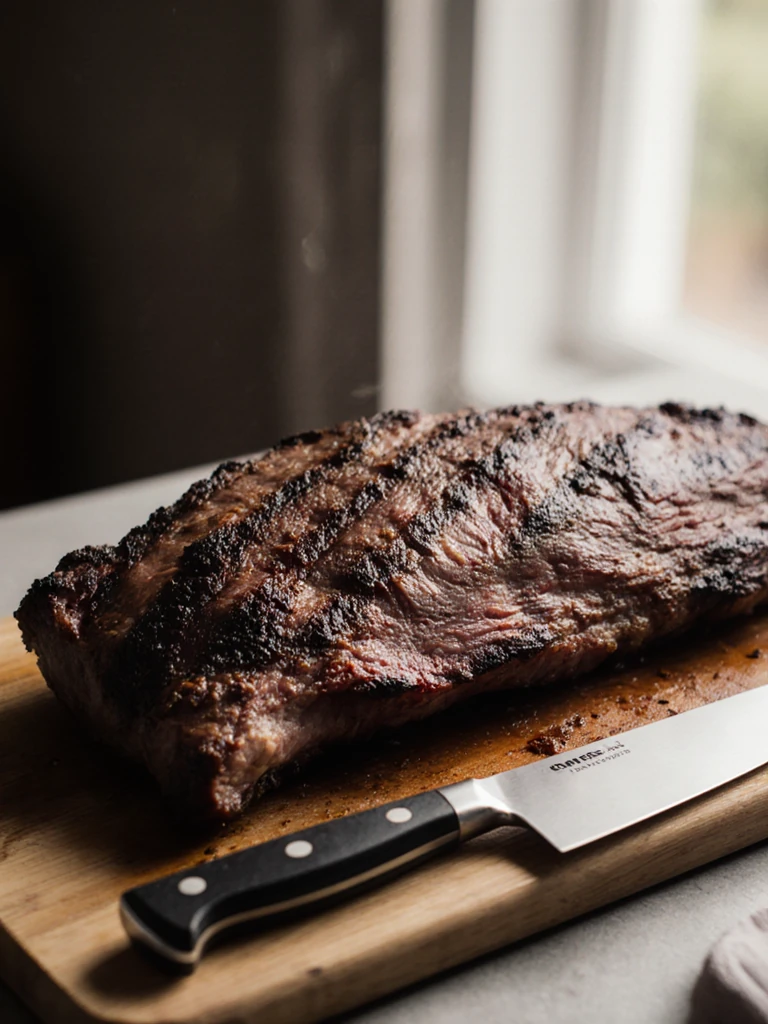
Select a USDA Choice or Prime brisket flat between 4 and 6 pounds with a fat cap of at least ½ inch. Trim the fat cap to exactly ¼ inch, leaving enough to baste the meat during the smoke without creating a grease pool under the bark.
A brisket flat with uniform thickness smokes more evenly than one with a tapered thin end. When the thin end finishes cooking before the thick end reaches the target internal temperature of 203°F, the thin section dries out and produces crumbly taco filling rather than sliceable meat. Trimming the flat end into an even rectangle and folding it under the main muscle solves the thickness problem without discarding usable beef.
Fat cap direction matters on the smoker. Placing the fat cap toward the heat source, whether bottom or side, creates a natural basting layer as the fat renders downward over the flat. Placing the fat cap up does the opposite and works on direct-heat offset smokers where radiant heat strikes from the side.
The Dry Rub and Bark Formation
Apply the dry rub 12 hours before smoking and refrigerate uncovered. The salt draws surface moisture out of the meat, which then reabsorbs along with the spices to form a tacky pellicle that holds the smoke and builds into bark during the cook.
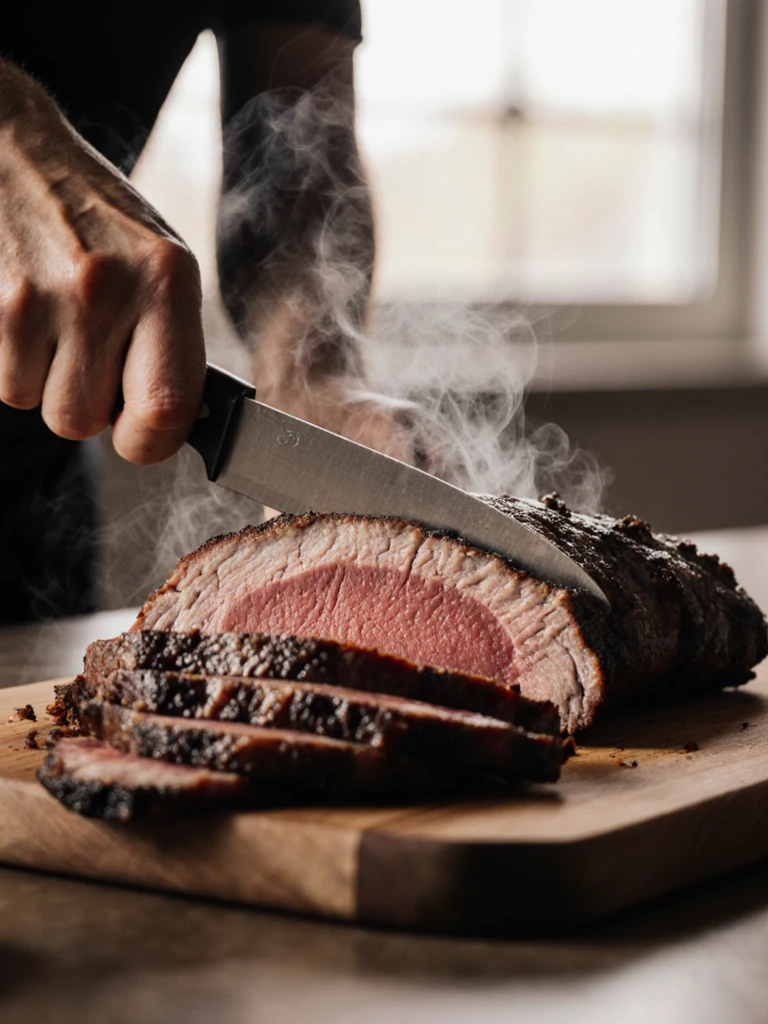
The smoke ring is a cosmetic result of nitric oxide from wood smoke reacting with myoglobin in the meat. A pink ring up to ½ inch deep below the bark confirms the meat took on smoke during the early hours of the cook, before the internal temperature crossed 140°F. Above that temperature, the myoglobin denatures and no longer reacts with smoke, locking in whatever ring has formed.
A rub of equal parts coarse black pepper and kosher salt, roughly 1 tablespoon of each per pound of flat, produces a Texas-style bark with a peppery crust that holds up inside a tortilla without turning soggy. Adding brown sugar to the rub creates a sweeter bark that caramelizes well but can char at higher ambient temperatures. Keep the ambient smoker temperature below 250°F when using a sugar-based rub.
Smoking Temperature, Wood Selection, and the Stall
Smoke the brisket at 225°F over post oak or white oak until the internal temperature reaches 165°F, then wrap tightly in butcher paper and continue until the meat hits 203°F. The wrap shortens the stall by 1 to 2 hours without steaming the bark as foil does.
The stall occurs when evaporative cooling from the meat's surface matches the smoker's heat input, holding the internal temperature at 155°F to 165°F for 2 to 4 hours. Wrapping in unwaxed butcher paper reduces evaporation while allowing enough moisture transfer to keep the bark firm. Foil wrapping accelerates the stall exit more aggressively but traps steam against the bark, softening the crust that makes brisket tacos worth eating.
Post oak is the traditional Texas choice because its medium-density smoke complements beef without introducing resinous or astringent notes. Hickory adds a stronger, bacon-like smoke that works well but can dominate a delicate salsa verde. Fruit woods like apple or cherry produce a mild, slightly sweet smoke that suits brisket prepared with a sugar rub better than a straight salt-and-pepper one.
Slicing the Brisket for Tacos
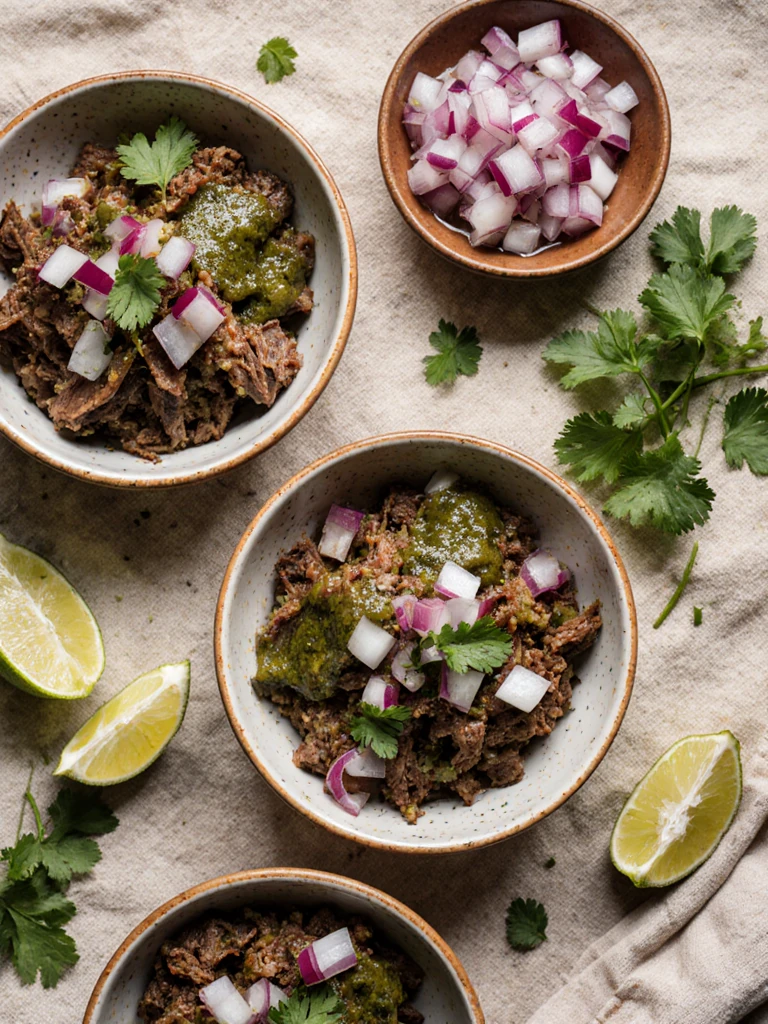
Rest the wrapped brisket in a dry cooler for at least 1 hour before slicing. Cut against the grain in slices no thicker than ¼ inch, then chop the slices into ½-inch pieces for taco filling that holds together in the tortilla without pulling out in one piece.
Slicing with the grain produces long muscle fibers that slide out of the tortilla when bitten. Slicing against the grain shortens those fibers so each piece severs cleanly. The direction of the grain in the flat runs lengthwise along the muscle, so a perpendicular cut to the long axis of the flat produces the correct bite.
Warm the corn tortillas on a dry cast iron skillet over medium heat for 30 seconds per side until they develop small char spots and flex without cracking. Cold or unwarmed tortillas tear under the weight of the brisket and toppings. A damp kitchen towel wrapped around a stack of warmed tortillas keeps them pliable for up to 20 minutes without a tortilla warmer.
Building the Taco and Balancing Flavors
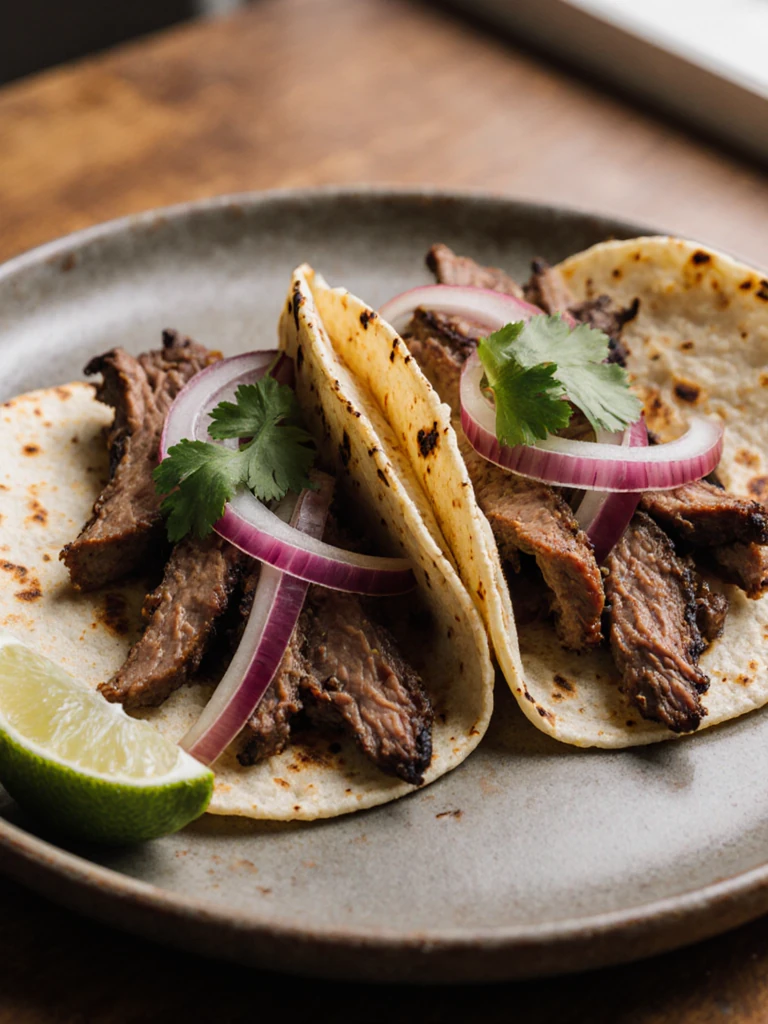
Layer the taco in order: one doubled corn tortilla, 2 to 3 tablespoons of chopped brisket, a spoonful of salsa verde, pickled red onions, fresh cilantro, and crumbled cotija. A squeeze of lime goes on last, directly before eating.
Doubling the tortilla prevents the fat from the brisket from soaking through and splitting the base. Street taco vendors in Texas BBQ towns routinely double corn tortillas under heavy or juicy proteins for this reason. A single flour tortilla holds up longer but changes the flavor profile, introducing a wheat note that competes with the smoke.
Pickled red onions made with red wine vinegar and a pinch of cumin take 30 minutes to soften at room temperature. The acid cuts through brisket fat in the same way a bright vinegar-based coleslaw does alongside pulled pork. Salsa verde made with tomatillos, serrano chiles, garlic, and lime provides green acidity and gentle heat without obscuring the smoke character of the brisket. Explore more brisket serving ideas built around similar technique once you have a full flat to work with.
Cotija adds a salty, granular contrast against the soft brisket. Feta makes an acceptable substitute for cotija when unavailable, producing a creamier, slightly tangier topping. Avoid shredded cheddar or Monterey Jack, both of which melt on contact with warm brisket and puddle rather than providing textural contrast. Find more full-meal uses for leftover brisket in the smoked brisket chili recipe, which uses the same smoke ring meat as the base.
Build all tacos immediately before serving. Assembled smoked brisket tacos held for more than 10 minutes allow the tortilla to absorb brisket fat, softening the base and concentrating the smoke flavor to an unbalanced degree. Set out the toppings and brisket separately and let guests assemble their own plates for the best result at a gathering.
The Recipe
Smoked Brisket Tacos
Ingredients
For the brisket flat
For the pickled red onions
For the salsa verde
For assembly
Instructions
- 1
Combine black pepper, kosher salt, garlic powder, onion powder, and smoked paprika in a small bowl. Apply the rub all over the brisket flat, pressing firmly so it adheres. Refrigerate uncovered on a wire rack for 12 hours.
- 2
Preheat the smoker to 225°F and add post oak or white oak chunks. Place the brisket fat cap down and insert a probe thermometer into the thickest part of the flat. Smoke until the internal temperature reaches 165°F, about 5 to 6 hours.
- 3
Remove the brisket and wrap tightly in two layers of unwaxed butcher paper. Return to the smoker and continue cooking until the internal temperature reaches 203°F and the probe slides in with no resistance, about 2 to 3 more hours.
- 4
Transfer the wrapped brisket to a dry cooler. Rest for at least 1 hour, up to 2 hours.
- 5
Combine red onion slices, red wine vinegar, sugar, salt, and cumin in a jar. Press the onions below the brine and leave at room temperature for 30 minutes.
- 6
Broil tomatillos, serranos, and garlic on a foil-lined sheet pan for 5 to 7 minutes until charred in spots. Transfer to a blender with cilantro, lime juice, and salt. Blend until smooth. Taste and adjust salt.
- 7
Unwrap the brisket and slice against the grain in ¼-inch cuts. Chop the slices into ½-inch pieces.
- 8
Warm corn tortillas two at a time in a dry cast iron skillet over medium heat, 30 seconds per side.
- 9
Assemble tacos by layering 2 to 3 tablespoons of chopped brisket on doubled tortillas, followed by salsa verde, pickled red onions, cilantro, and cotija. Squeeze lime over each taco before serving.
Nutrition Facts
Per serving
520 Calories
Hearty & filling per serving
Macronutrients
* % Daily Value based on a 2,000 calorie diet
Tips & Notes
Season the brisket flat 12 hours before smoking and refrigerate uncovered so the surface forms a dry, tacky pellicle that binds the smoke. Use 1 tablespoon each of coarse black pepper and kosher salt per pound of meat as the base rub. Do not open the smoker lid during the first 3 hours — temperature swings in the early cook prevent the smoke ring from forming fully. Insert the thermometer probe into the thickest part of the flat parallel to the grain, not perpendicular, so the reading reflects the center of the muscle rather than the edge. When the probe slides in with no resistance, like a knife through soft butter, the brisket is done regardless of the exact temperature. Rest the wrapped brisket in a dry cooler padded with towels for 1 hour minimum. A 2-hour rest gives the muscle fibers time to reabsorb juices fully and produces noticeably juicier taco filling.
Frequently Asked Questions
The brisket flat is the best cut for tacos because its uniform thickness slices evenly and the leaner grain holds together when chopped into bite-sized pieces. The point cut works for shredded brisket tacos but is too fatty for clean slices.
Enjoyed this recipe?


