Lemon Herb Orzo Salad
Lemon Herb Orzo Salad

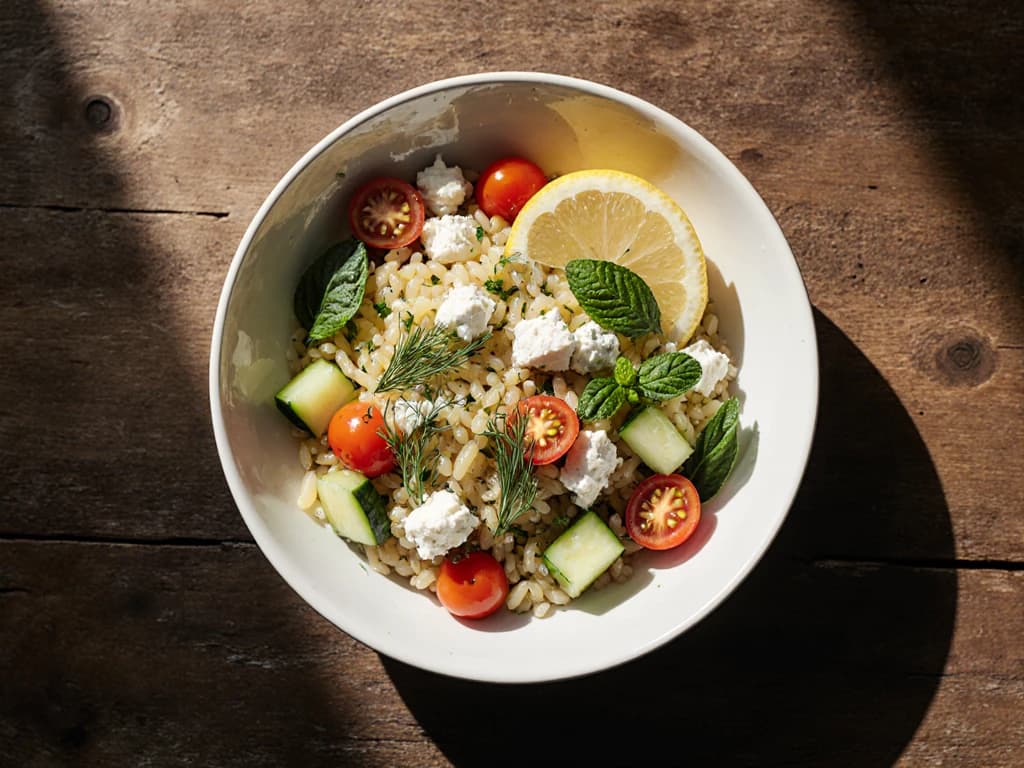
Lemon herb orzo salad is built around four fresh herbs, each added at a different stage to preserve its distinct aromatic character. A lemon-zest-infused olive oil forms the dressing base, delivering citrus fragrance more evenly than zest stirred into finished vinaigrette. Ready in 25 minutes and better after 30 minutes of chilling, it is the most herb-forward cold salad in the collection.
- 1
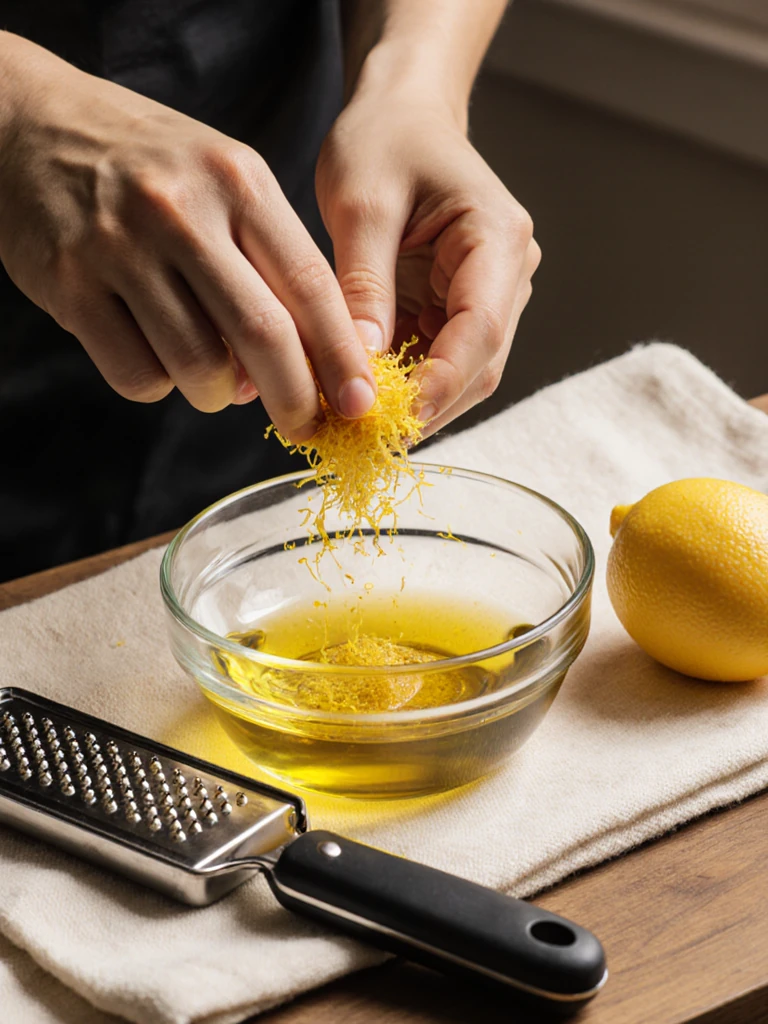
Rubbing lemon zest into olive oil for 60 seconds before adding acid ruptures the flavedo cells and releases fat-soluble limonene into the oil, dispersing citrus fragrance evenly across every orzo grain rather than concentrating it in isolated zest particles.
- 2
Adding mint and parsley during the initial toss and reserving dill and basil until just before serving preserves the fragile volatile compounds (carvone in dill, linalool in basil) that dissipate within 20 minutes of contact with acidic dressing.
- 3
Cooking orzo 1 minute beyond al dente and tossing with dressing while warm allows the open surface starch to absorb the lemon-oil emulsion fully, preventing the dry, underdressed bites common in cold-tossed orzo salads.
Lemon herb orzo salad treats fresh herbs not as garnish but as a primary flavour group, using mint, flat-leaf parsley, dill, and basil in quantities that make each one perceptible in every bite. The lemon-zest-infused olive oil dressing carries citrus fragrance across the salad in a way that stirring zest into cold vinaigrette cannot achieve. Orzo's small grain size means it absorbs the dressing more quickly and completely than any other pasta shape, and Persian cucumber adds clean crunch without the wateriness that seeded garden cucumbers release after 30 minutes in an acidic dressing. Crumbled block feta finishes each bowl with pockets of creamy salt that balance the brightness of the lemon and herbs.
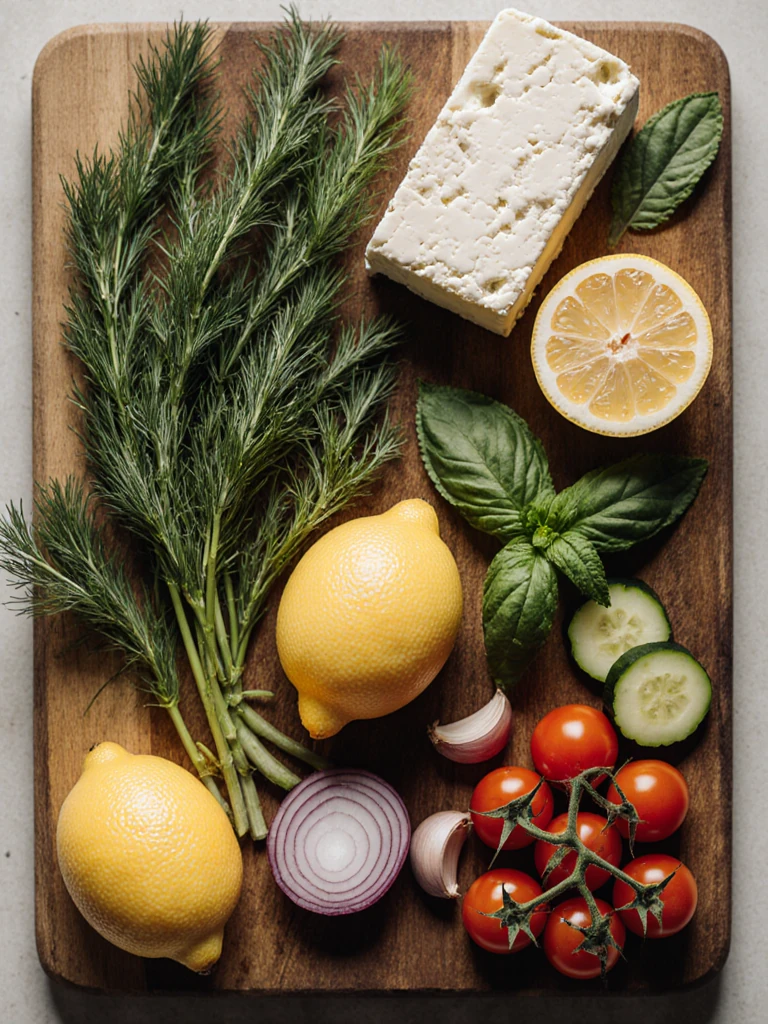
The Lemon Zest-Infused Oil Technique
Rubbing lemon zest directly into the olive oil for 60 seconds before adding any acid releases the essential oils from the zest's flavedo cells into the fat, dispersing lemon fragrance across every orzo grain rather than concentrating it in isolated pockets of zest.
The flavour compounds in lemon zest, primarily limonene and citral, are fat-soluble. They reside inside the small oil glands visible on the outer yellow layer of the peel and rupture readily under gentle pressure. Rubbing zest into olive oil with the back of a spoon for 60 seconds releases these compounds into the fat where they emulsify into the dressing and coat every grain of orzo during tossing. Zest added to a finished cold vinaigrette and stirred in sits as suspended particles: each one carries concentrated lemon flavour only in its immediate vicinity. Use a microplane grater to produce fine, dry zest and stop at the yellow layer — the white pith beneath contains limonin, a bitter compound that carries no citrus fragrance.
The Layered Herb Addition Method
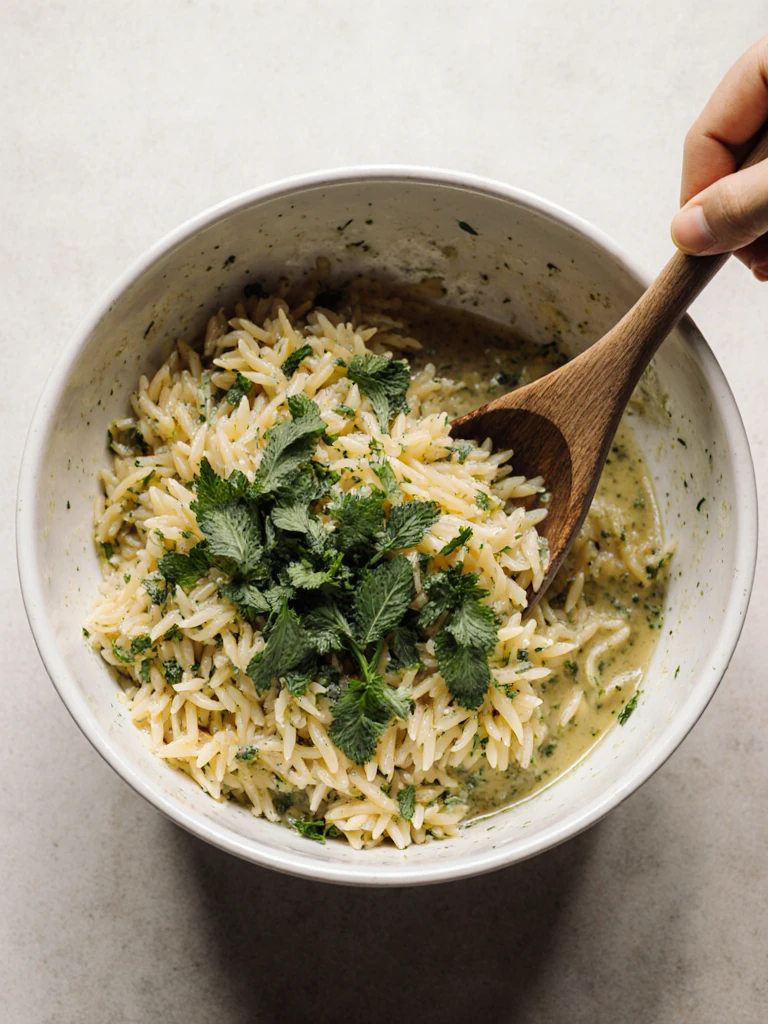
Adding mint and parsley during the initial toss and reserving dill and basil to fold in just before serving preserves the fragile volatile compounds in dill (carvone) and basil (linalool) that dissipate within 20 minutes of contact with acidic dressing, while allowing the hardier mint and parsley aromatics to infuse the salad during the chilling period.
Most lemon herb orzo salad recipes add all herbs at once, producing a salad where the dill and basil smell faint by the time it reaches the table. Mint carries menthol, a robust terpene that holds up well in acid for 1 to 2 hours. Flat-leaf parsley carries apiol and myristicin, which are similarly stable. Dill's primary aroma compound (carvone) and basil's (linalool) are both highly volatile and begin oxidising within minutes of the herb being cut and exposed to acid. Adding them with the cucumber and feta in the final step, right before serving, keeps them at peak fragrance. Chop dill and basil just before use: pre-chopped herbs stored in the fridge for even 30 minutes lose 30 to 40 percent of their volatile compounds through cut-surface oxidation.
Assembling and Chilling the Salad
Tossing warm orzo with the lemon-oil base immediately after draining, then cooling for 10 minutes before adding cucumber and feta, prevents the cucumber from releasing water into the warm pasta while still allowing the starch-open orzo surface to absorb the dressing fully.
Cook orzo for 1 minute beyond the package al dente time — orzo firms as it cools and true al dente produces slight chewiness in a cold salad. Drain and immediately transfer to the bowl containing the zest-infused olive oil. Add the lemon juice, Dijon mustard, garlic, salt, and pepper, then toss until every grain is coated. Spread on a tray and cool for 10 minutes. Transfer back to the bowl and add the chopped mint, flat-leaf parsley, diced cucumber, and halved cherry tomatoes. Fold through gently. Cover and refrigerate for 30 minutes. Before serving, fold in the dill, basil, and crumbled feta, then taste for salt and lemon — the orzo will have absorbed the first application's acid, and a squeeze of fresh lemon juice typically restores the intended brightness.
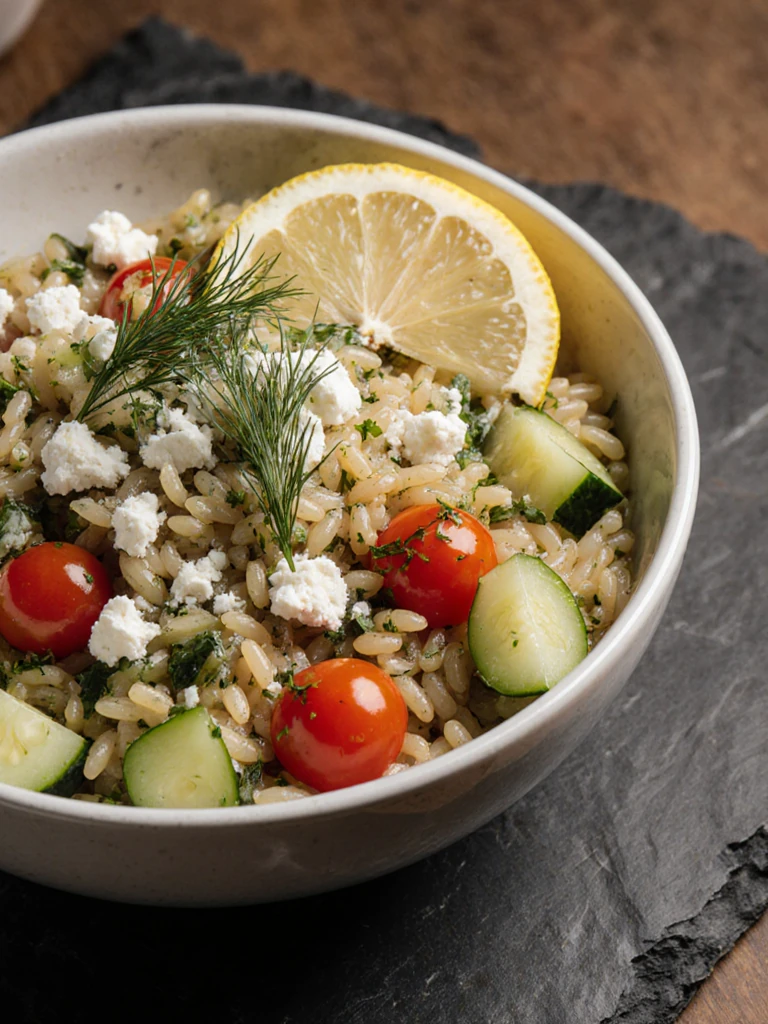
Serving Lemon Herb Orzo Salad
Serve at cool room temperature rather than straight from the refrigerator. Cold firms the feta into dry crumbles, solidifies the olive oil into a paste-like coating on the orzo, and mutes the citrus and herb aromatics that define the salad.
Remove from the refrigerator 10 minutes before plating. Stir through 1 teaspoon of olive oil and a squeeze of lemon juice to loosen the dressing before serving. Present in a wide, shallow bowl with extra dill fronds and a lemon wheel on top. Serve alongside grilled fish, spiced lamb skewers, roasted chicken, or falafel for a complete Mediterranean spread. For a crowd, the recipe doubles cleanly. Browse more herb-forward salad ideas in Recipe Dairy's salad collection.
The Recipe
Lemon Herb Orzo Salad
Ingredients
For the lemon-zest dressing
For the salad
Instructions
- 1
Rub lemon zest into the olive oil with the back of a spoon in a large bowl for 60 seconds, then whisk in lemon juice, Dijon mustard, garlic, salt, and pepper.
- 2
Bring a large pot of water to a boil, add 1 tbsp kosher salt, and cook orzo for 1 minute beyond the package al dente time.
- 3
Drain the orzo and immediately transfer to the bowl with the lemon-oil dressing, then toss until every grain is coated.
- 4
Spread the dressed orzo on a baking tray and cool at room temperature for 10 minutes.
- 5
Transfer back to the large bowl and add the diced cucumber, cherry tomatoes, red onion, mint, and parsley, then fold through gently.
- 6
Cover and refrigerate for 30 minutes.
- 7
Just before serving, fold in the freshly chopped dill and torn basil, then crumble the feta over the top.
- 8
Taste for salt and lemon, add a squeeze of fresh lemon juice if needed, and serve with lemon wedges.
Nutrition Facts
Per serving
340 Calories
Moderate energy per serving
Macronutrients
* % Daily Value based on a 2,000 calorie diet
Tips & Notes
Use a microplane grater for the lemon zest and stop at the yellow layer. The white pith beneath contains limonin, a bitter compound with no citrus fragrance that will make the dressing taste sharp and unpleasant. Chop dill and basil immediately before folding them in. Pre-chopped herbs stored in the fridge for 30 minutes lose 30 to 40 percent of their volatile aroma compounds through cut-surface oxidation. Make-ahead: Assemble through step 6, refrigerating for up to 24 hours. Store dill, basil, and feta separately and add just before serving. Stir in 1 teaspoon of olive oil and a squeeze of lemon before serving to loosen the dressing. Persian cucumbers are preferred over English or garden cucumbers. Persian cucumbers have thinner skin, fewer seeds, and release less water into the dressing over 24 hours of refrigeration.
Frequently Asked Questions
Fresh mint, flat-leaf parsley, dill, and basil are the four-herb combination. Add mint and parsley during the initial toss and fold dill and basil in just before serving to preserve their fragile aromatics.
Enjoyed this recipe?


