Smoked Brisket Shepherd's Pie
Smoked Brisket Shepherd's Pie
Smoked brisket shepherd's pie layers chopped bark-edged brisket in a rich drippings-based gravy beneath a piped cheddar mashed potato crown that crisps to deep gold in the oven. The brisket's rendered fat builds the gravy from scratch, and the piped potato surface creates three times more browning than a flat spread. Serves six to eight from a single baking dish.

- 1
Brisket drippings replace standard beef broth as the gravy's fat and flavor base, dissolving rendered collagen into the sauce for a silky, clingy texture and contributing smoke compounds that no store-bought stock contains.
- 2
Piping the mashed potato topping in ridged rows instead of spreading it flat creates 40 to 50 percent more exposed surface area, producing deeply golden peaks while the valleys stay cream-colored and soft.
- 3
Resting the pie for 10 minutes after baking allows the gelatin in the gravy to partially set, so each portion holds its distinct two-layer structure from dish to plate rather than collapsing into a single mixed mass.
Smoked brisket shepherd's pie builds on two underused advantages of leftover BBQ: the brisket's rendered fat produces a gravy with far more depth than any packet or canned base, and the bark's caramelized exterior adds a concentrated savory note to the filling that ground beef cannot replicate. The mashed potato crown is piped rather than spread, which creates ridged peaks that catch oven heat and crisp to a golden crust while the valleys stay creamy underneath. Assembled and baked in one 9x13 ceramic dish, the pie serves six to eight and reheats cleanly the next day when the layers have had time to set fully.
Choosing and Preparing the Brisket for the Filling
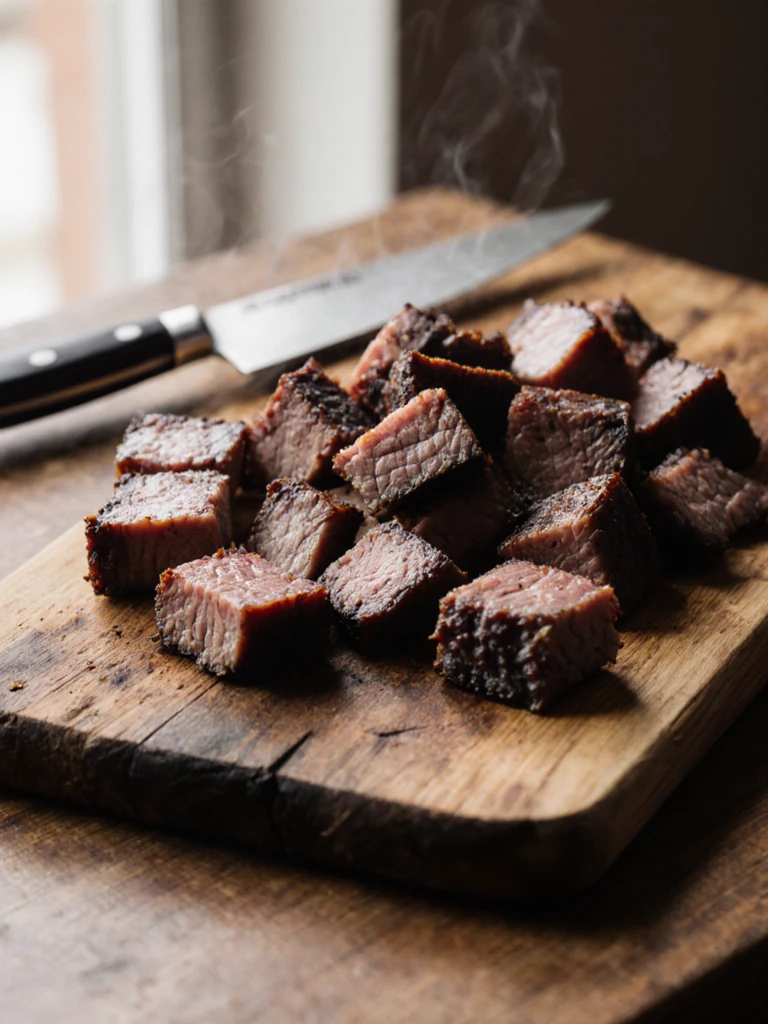
Use a combination of brisket point and flat, chopped into half-inch to three-quarter-inch cubes rather than shredded. Point provides the fatty richness that keeps the filling moist through the oven bake; flat provides the firmer texture that holds its shape inside the gravy. Shredded brisket dissolves into the gravy and loses its textural presence, turning the filling into a uniform paste.
Cold refrigerated brisket chops cleanly with a sharp knife. Warm brisket tears unpredictably and produces uneven pieces that cook at different rates during the filling simmer. A half-inch to three-quarter-inch cube is the right size: small enough to fit on a spoon alongside vegetables and gravy, large enough to maintain a distinct chew against the soft mashed potato topping. Bark pieces are an asset here. The bark's dense, caramelized exterior holds its form through the bake and delivers a concentrated burst of smoke in the bites that contain it. Trim away any bark pieces thicker than half an inch, as those dense sections resist softening and can feel tough when surrounded by tender vegetables and yielding mash.
Season the chopped brisket lightly with black pepper and a pinch of smoked paprika. The brisket's original rub already carries salt, garlic, and smoke, so additional seasoning targets only the freshly exposed cut faces that lost their crust surface during chopping.
Building the Gravy From Brisket Drippings
Start the gravy with a roux of butter and flour cooked for 2 minutes before adding liquid. A roux-based gravy produces a stable, glossy sauce that clings to the brisket pieces and vegetables without separating during the oven bake. Packet gravy mixes and canned beef consommé produce a thin, watery base that turns soupy as the pie bakes and causes the potato topping to sink rather than float above the filling.
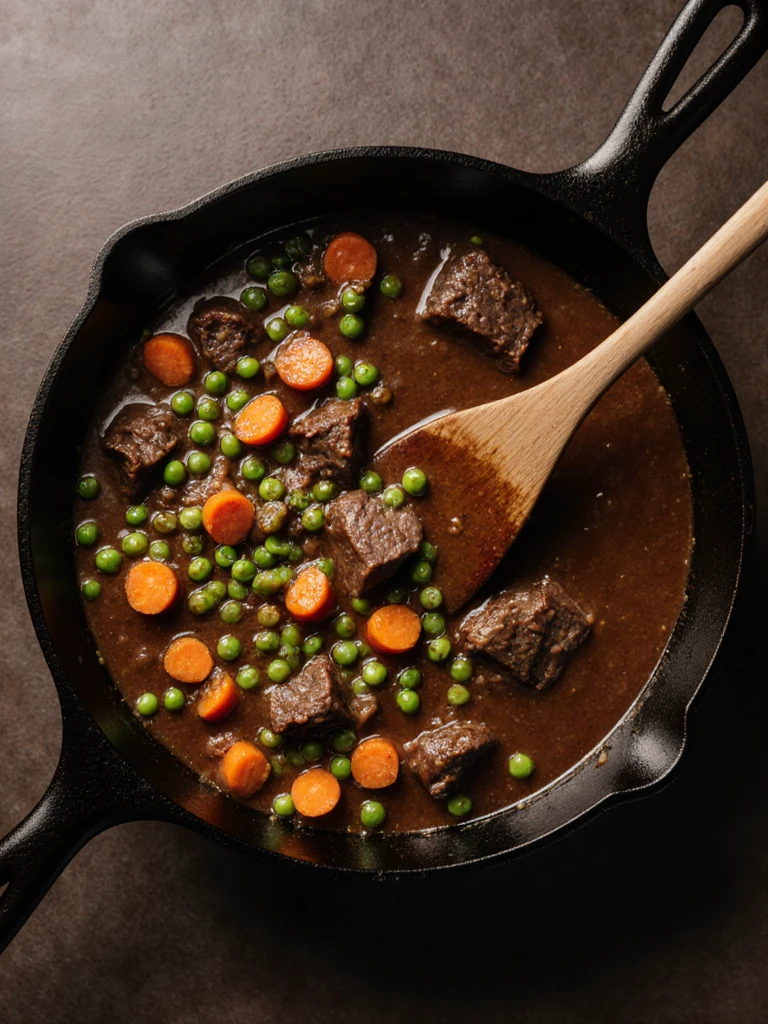
Melt butter in a wide, heavy-bottomed skillet over medium heat. Add finely diced onion, carrot, and celery and cook for 5 to 6 minutes until the onion turns translucent and the carrot softens slightly. Add tomato paste and cook for 90 seconds, stirring constantly, until the paste darkens from bright red to a deep brick color. That color change marks the point where the tomato's raw acidity converts to a rounder, more concentrated umami note. Add flour and stir for 2 minutes to cook out the raw starch flavor. The mixture will look dry and paste-like — that is correct.
Deglaze with red wine, scraping up any browned bits from the pan base. The fond — the caramelized residue from browning the tomato paste and vegetables — contains concentrated flavor compounds that dissolve into the liquid and deepen the gravy. Add beef broth and brisket drippings. Brisket drippings carry the same smoke compounds, rendered collagen, and spiced fat as described in the smoked brisket pho broth — in this context they transform a standard beef gravy into one with genuine BBQ depth. Simmer for 8 to 10 minutes until the gravy thickens enough to coat the back of a spoon. A gravy too thin at this stage will thin further as the vegetables release moisture during baking; aim for a consistency slightly thicker than desired in the finished pie.
Add Worcestershire sauce, fresh thyme, and the chopped brisket. Stir to combine, taste for seasoning, and add salt only if needed — the drippings and original rub carry significant salt. Fold in frozen peas off heat. Peas added during the simmer overcook and turn gray and mealy; added off heat, they carry enough residual warmth to thaw and set their color at bright green.
Moisture Management: Getting the Filling Depth Right
Fill the baking dish to no more than two-thirds capacity before adding the mashed potato topping. A filling level higher than two-thirds leaves insufficient headroom for the potato layer, and the weight of the mash compresses the filling, forcing liquid up through the potato crown during baking and producing a wet, sunken topping rather than a golden crust.
The filling should look slightly too thick at the transfer stage. During the 25 to 30 minutes in the oven, residual moisture from the brisket pieces, vegetables, and gravy continues to release and loosens the filling to the correct consistency. A filling that looks perfectly sauced before baking will be too wet by the time the potato topping is done. If the filling appears very thick after the simmer — closer to a stew than a sauce — stir in 2 to 3 tablespoons of beef broth to adjust before transferring to the dish.
The Mashed Potato Crown: Piping vs. Spreading
Pipe the mashed potatoes over the filling using a large star tip or transfer them to a zip-lock bag with one corner cut off. Piped ridges have 40 to 50% more exposed surface area than a flat spread layer, which means more potato surface makes contact with oven heat and browns. A flat-spread potato topping steams from below and produces a pale, damp top crust with little to no browning.
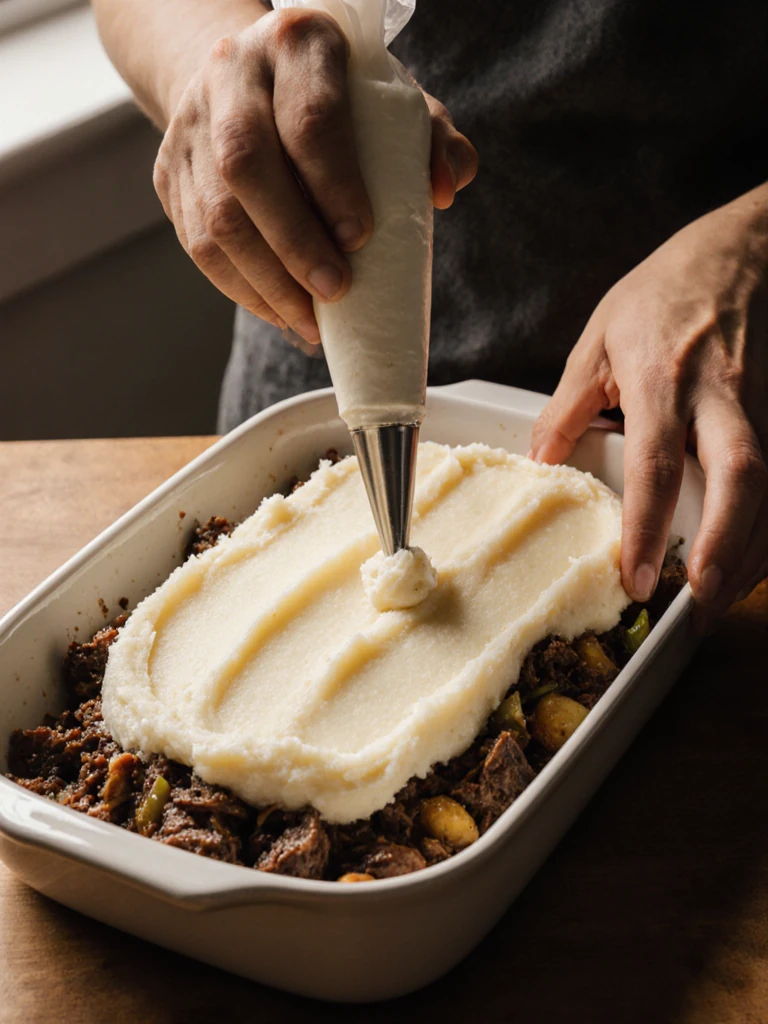
The mash itself requires specific preparation to pipe cleanly without tearing or collapsing. Boil Russet potatoes in heavily salted water — the water should taste like mild ocean water — until a fork meets no resistance, around 18 to 20 minutes. Drain completely and return to the hot pot over low heat for 60 seconds to drive off excess steam. Steam-drying prevents a wet mash that slumps out of the piping bag. Rice or mash the potatoes, then fold in butter and warm cream in stages rather than all at once. Cream added cold to hot potatoes seizes the starch and produces a gluey, dense mash. Warm cream disperses evenly and produces the light, smooth consistency that holds a piped ridge.
Fold in grated mature cheddar and one egg yolk. The egg yolk acts as an emulsifier that binds the fat and starch together into a cohesive mass, which is what allows the piped ridges to hold their shape through the full oven bake. Scatter additional grated cheddar over the piped surface before baking. The cheese on the peaks melts and browns in the oven's dry heat while the valleys stay cream-colored and soft, creating the visual contrast that makes the finished pie look restaurant-level.
Baking and Resting the Smoked Brisket Shepherd's Pie
Bake at 400°F for 25 to 30 minutes until the potato peaks are deeply golden and the filling is visibly bubbling at the dish edges. The bubbling edge confirms the filling has reached a temperature sufficient to fully melt the cheese and re-meld any filling that separated during assembly.
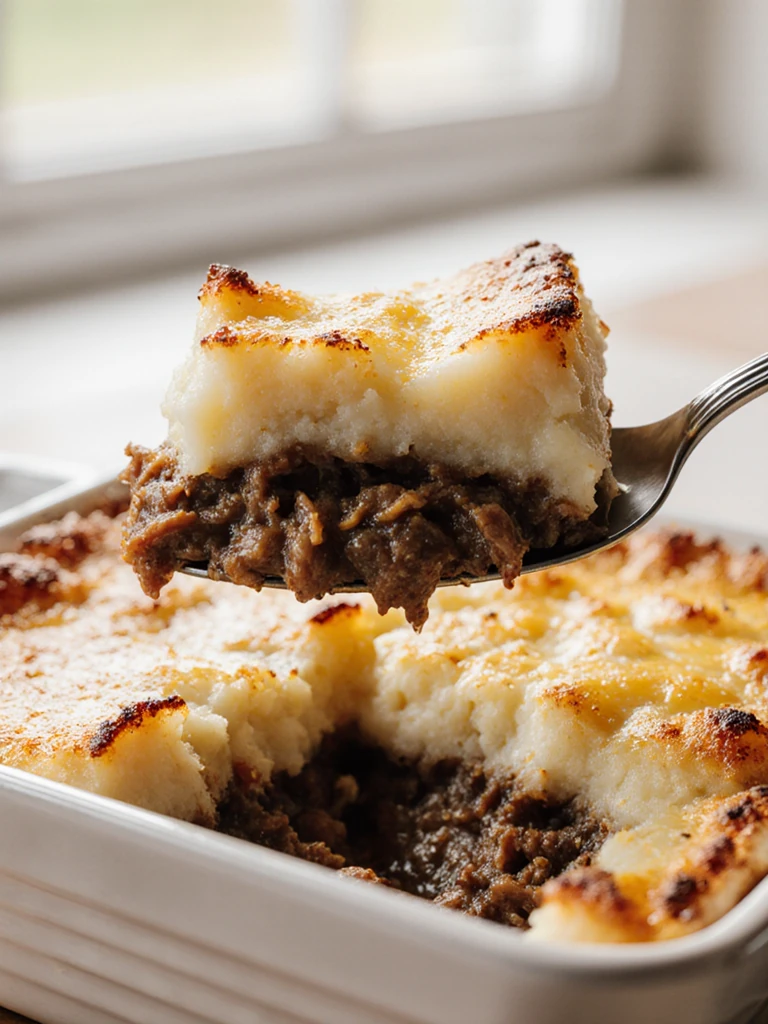
Rest the pie on a wire rack for 10 minutes before cutting. A pie cut immediately from the oven has a filling that is still fully liquid at the center and flows out when a spoon breaks the potato surface. Ten minutes of resting allows the gelatin in the gravy to partially set, so each portion holds its two-layer structure — golden potato above, dark glossy filling below — from the dish to the plate. For a comparable make-ahead dish where resting between cook and serve similarly improves the structure, the same principle applies in the smoked brisket loaded baked potato, where toppings set and meld during a brief rest before serving.
Serve the smoked brisket shepherd's pie directly from the baking dish at the table. Find the full recipe at Recipe Diaries.
The Recipe
Smoked Brisket Shepherd's Pie
Ingredients
For the filling
For the mashed potato crown
Instructions
- 1
Preheat oven to 400°F. Season chopped brisket with smoked paprika and black pepper. Set aside.
- 2
Boil potato cubes in heavily salted water for 18 to 20 minutes until a fork meets no resistance. Drain completely and return to the pot over low heat for 60 seconds to drive off excess steam.
- 3
Rice or mash the potatoes. Fold in butter until melted. Add warm cream in two stages, folding between additions. Fold in egg yolk and ¾ cup of the grated cheddar. Season with salt and white pepper. Transfer to a piping bag fitted with a large star tip. Set aside.
- 4
Melt butter in a wide heavy-bottomed skillet over medium heat. Add onion, carrot, and celery. Cook for 5 to 6 minutes, stirring occasionally, until the onion is translucent and the carrot has softened slightly.
- 5
Add garlic and cook for 30 seconds until fragrant. Add tomato paste and stir constantly for 90 seconds until it deepens from bright red to brick.
- 6
Add flour and stir for 2 minutes until fully absorbed and the mixture looks dry. Deglaze with red wine, scraping the pan base clean. Simmer for 2 minutes until the wine reduces by half.
- 7
Add beef broth, brisket drippings, Worcestershire sauce, and thyme sprigs. Stir to combine. Simmer over medium-low heat for 8 to 10 minutes, stirring occasionally, until the gravy coats the back of a spoon.
- 8
Remove thyme sprigs. Add the chopped brisket and stir to coat. Taste for seasoning — add salt only if needed. Remove from heat and fold in frozen peas.
- 9
Transfer the filling to a 9x13 ceramic or cast iron baking dish, filling to no more than two-thirds capacity.
- 10
Pipe the mashed potatoes over the filling in ridged rows, covering the filling completely to the dish edges. Scatter the remaining ¼ cup of cheddar over the piped surface.
- 11
Bake for 25 to 30 minutes until the potato peaks are deeply golden and the filling bubbles at the dish edges.
- 12
Remove from oven and rest on a wire rack for 10 minutes before cutting. Serve directly from the dish.
Nutrition Facts
Per serving
680 Calories
Hearty & filling per serving
Macronutrients
* % Daily Value based on a 2,000 calorie diet
Tips & Notes
Taste the brisket before salting the filling at any stage. Smoked brisket carries substantial salt from its original rub, and the drippings add more. Most batches require no additional salt at all — the Worcestershire sauce and tomato paste provide enough savory depth without further seasoning. Steam-dry the potatoes after draining. Return the drained potatoes to the hot pot over low heat for 60 seconds and let the residual steam escape. Wet potatoes make a dense, slumping mash that tears when piped and fails to hold ridges through the bake. If a piping bag is unavailable, use a zip-lock bag with one corner cut to a half-inch opening. Alternatively, dollop the mash across the filling in large spoonfuls and use a fork to drag lines across the surface. Fork-dragged lines create ridges that brown almost as well as piped rows. A cast iron skillet can replace the ceramic baking dish for a more rustic presentation. A 12-inch cast iron skillet holds approximately half the recipe volume — reduce all quantities by one-third or cook in two skillets.
Frequently Asked Questions
Technically cottage pie, since shepherd's pie uses lamb and cottage pie uses beef. The name smoked brisket shepherd's pie has become the common search term for this dish, so that is what this recipe is called — but the distinction is worth knowing.
Enjoyed this recipe?


