Texas-Style Smoked Brisket
Texas-Style Smoked Brisket
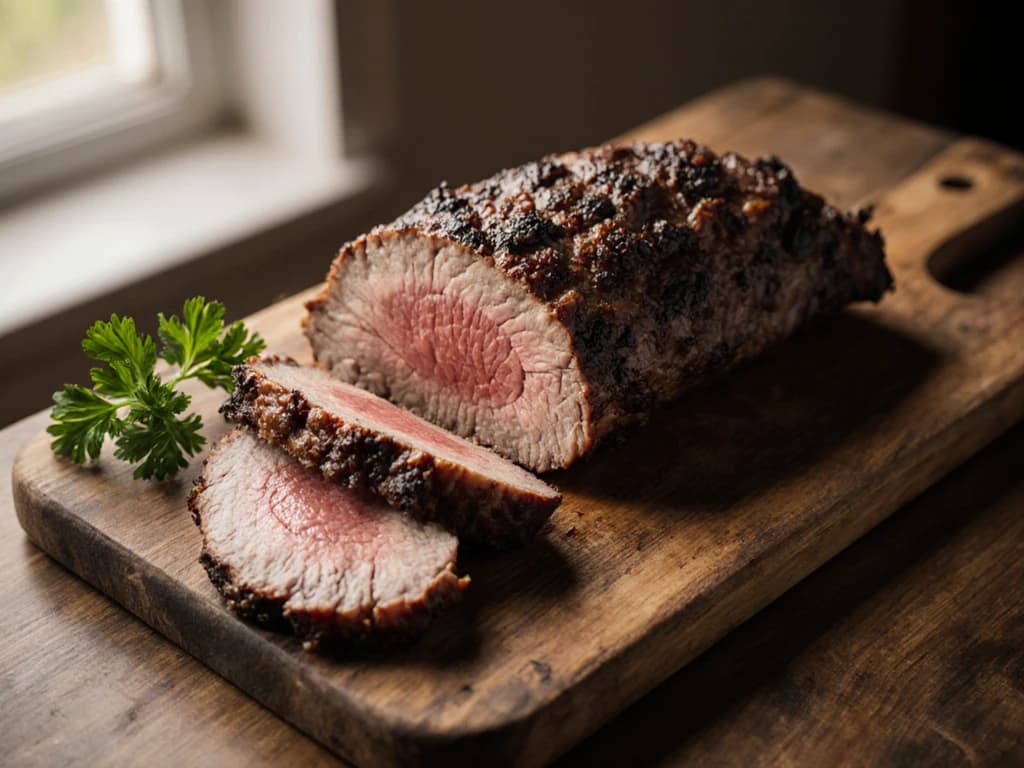
Texas-style smoked brisket delivers a thick black bark, a vivid smoke ring, and meat so tender it yields to the weight of a knife. Seasoned with nothing more than coarse salt and black pepper, the flavor comes from post oak smoke and 12 to 14 hours at 225°F. Start the cook the night before and plan for a 2-hour rest before the first slice.
- 1
A 12-to-24-hour dry brine draws surface moisture out and back in, dissolving the salt into the meat and producing a dry surface that accelerates Maillard browning and bark formation in the first 3 hours of the smoke.
- 2
Wrapping in unwaxed butcher paper at 165°F eliminates the evaporative cooling stall without trapping steam, so the bark stays firm and the temperature climbs steadily to 203°F over the next 4 to 6 hours.
- 3
A minimum 2-hour rest allows contracted muscle fibers to relax and reabsorb the liquid driven to the center during cooking, keeping the moisture in the meat rather than on the cutting board.
Texas-style smoked brisket is the benchmark of American barbecue: a whole packer brisket seasoned with coarse salt and black pepper, smoked low and slow over post oak until a firm black bark forms and the internal temperature hits 203°F. The cut comes from the chest of the steer, a heavily worked muscle built from collagen-rich connective tissue that transforms into silky gelatin only after many hours of sustained heat between 225°F and 250°F. A 14-pound packer brisket typically takes 12 to 14 hours in the smoker, plus a mandatory 2-hour rest before slicing.
Choosing the Right Cut of Brisket
Buy a whole packer brisket graded USDA Choice or Prime, weighing 12 to 16 pounds, with a fat cap of at least ¼ inch thick after trimming.
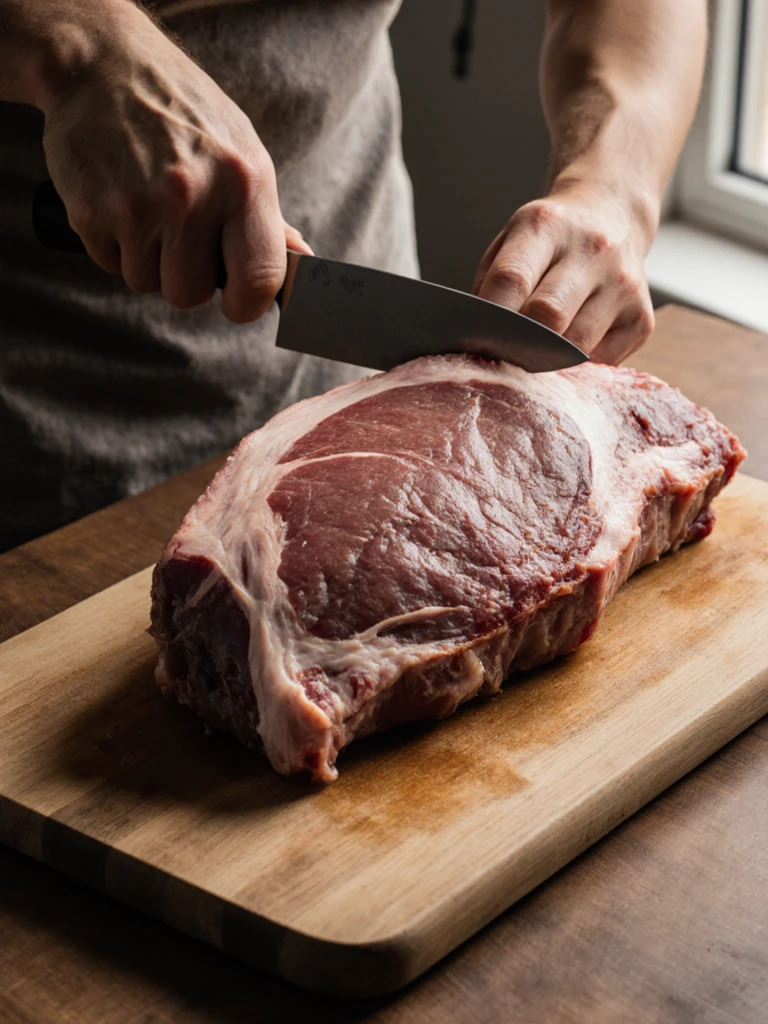
A whole packer brisket contains two overlapping muscles: the flat and the point. The flat is the lean, uniform portion that slices cleanly for serving. The point sits on top, marbled with intramuscular fat that renders during the cook and continuously bastes the flat from above. Supermarkets often sell only the flat cut, which dries out during a long smoke because it lacks that internal fat protection. A butcher shop or warehouse store is the reliable source for a whole packer.
Marbling grade matters here. A USDA Prime brisket carries roughly 8 to 13 percent intramuscular fat by weight, which gives the final product its characteristic buttery texture. USDA Choice sits below that at 4 to 8 percent and produces a good result with proper technique. Wagyu brisket can exceed 20 percent fat and produces an intensely rich result, though the forgiving fat content makes the cook more tolerant of temperature fluctuations.
How to Trim and Season a Brisket
Trim the fat cap to ¼ inch, remove all hard fat nodes from the meat side, and season with 1 part coarse kosher salt to 1 part coarse black pepper at a ratio of ½ teaspoon per pound of meat per side.
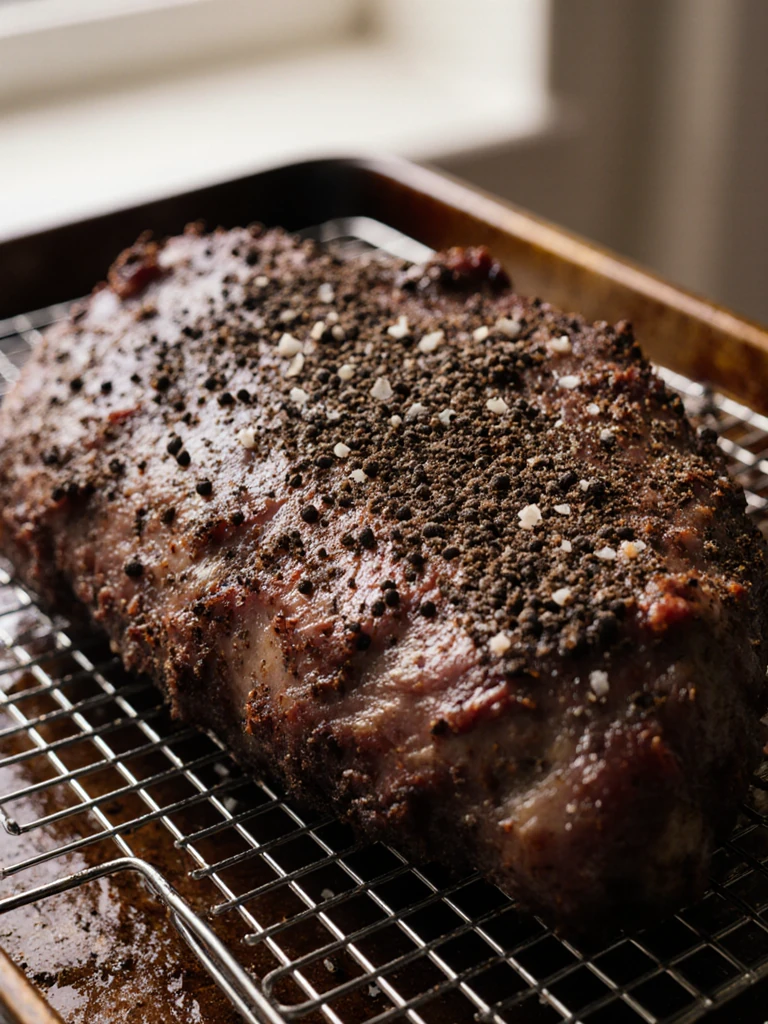
Cold brisket trims more cleanly than warm brisket. Pull the meat straight from the refrigerator before trimming. The fat cap needs to be reduced to ¼ inch, not eliminated. A fat cap that is too thin exposes the flat to direct radiant heat and accelerates moisture loss. A fat cap thicker than ½ inch insulates the meat and delays bark formation on that side.
Hard fat nodes on the meat side, particularly the crescent-shaped deposit between the point and flat, will not render during the cook. Leaving them in place creates a chewy, waxy pocket in the finished brisket. Remove them completely with a sharp boning knife. The Dalmatian rub of equal parts coarse kosher salt and coarse black pepper is the Texas standard. Applying the rub the night before and refrigerating uncovered for 12 to 24 hours dry-brines the surface: the salt draws moisture out, the moisture dissolves the salt, and the solution reabsorbs into the meat. A dry surface going into the smoker promotes faster bark development because surface moisture must first evaporate before browning reactions can begin.
Smoking Temperature, Wood, and the Stall
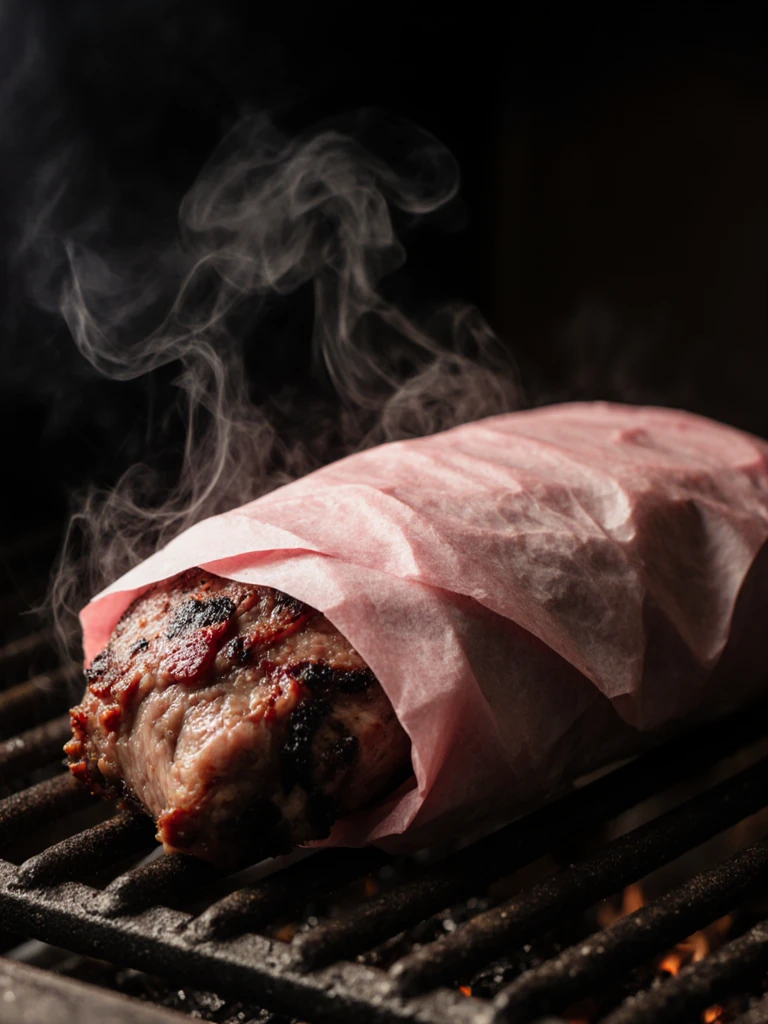
Smoke the brisket fat-side up at 225°F using post oak, hickory, or pecan until the internal temperature of the flat reaches 165°F, then wrap in unwaxed butcher paper and continue until the probe reads 203°F.
Post oak is the dominant wood in Central Texas barbecue because it produces a medium-intensity smoke with earthy, slightly sweet undertones that complement beef without overpowering it. Mesquite burns hotter and delivers a sharper smoke that can turn acrid on a long cook. Hickory sits between the two: bold, with a bacon-like quality that works well when used in smaller quantities mixed with oak.
The stall is a period during which the internal temperature of the brisket plateaus between 150°F and 165°F, sometimes for 4 to 6 hours, as surface moisture evaporates and cools the meat at the same rate the smoker heats it. Wrapping the brisket in unwaxed butcher paper at 165°F, a technique called the Texas Crutch, eliminates the evaporative cooling effect and pushes the internal temperature past the stall. Butcher paper is the preferred wrapping material over aluminum foil because it breathes slightly, allowing steam to escape and preserving the bark texture. Foil seals completely and steams the bark soft.
Smoke absorption effectively stops once the surface protein sets around 140°F. Smoke applied after that point contributes minimal additional flavor. Placing the brisket in the smoker before dawn and keeping a consistent 225°F produces a more even result than starting hot and adjusting down, because the collagen-to-gelatin conversion that produces tenderness requires sustained low heat over many hours.
Resting and Slicing Brisket Correctly
Rest the wrapped brisket for at least 2 hours at ambient temperature, or hold it in a 145°F warming oven for up to 8 hours, then slice each muscle separately against the grain at pencil-width thickness.
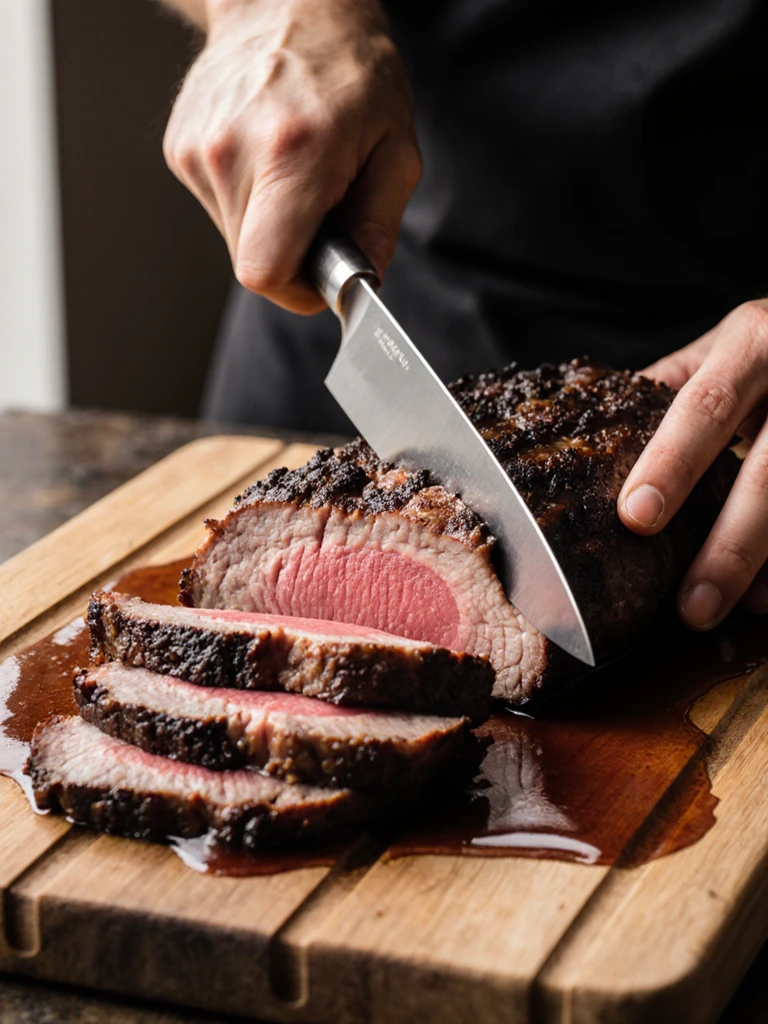
Skipping or shortening the rest is the single most common error in brisket preparation. During the cook, muscle fibers contract and push moisture toward the center of the brisket. A 2-hour rest at ambient temperature allows the fibers to relax and reabsorb that liquid. Slicing immediately after pulling from the smoker releases the juice onto the cutting board rather than keeping it in the meat.
The flat and the point run in different grain directions. Slicing the entire brisket from one end to the other cuts across the flat grain correctly but cuts with the grain of the point. When slicing reaches the junction where the point begins to sit over the flat, rotate the point 90 degrees and continue slicing. Slices should be approximately ¼ inch thick, the width of a pencil. Slices thinner than ⅛ inch shred when lifted; slices thicker than ½ inch require more chewing and obscure the tenderness of the meat. Serve immediately after slicing, as cut brisket oxidizes and dries quickly at room temperature.
Find the full recipe at Recipe Diaries and explore more slow-cooked beef recipes in the collection.
The Recipe
Texas-Style Smoked Brisket
Ingredients
For the brisket
For the rub
For the cook
Instructions
- 1
Remove brisket from refrigerator and trim fat cap to ¼ inch; remove all hard fat nodes from the meat side and the crescent-shaped deposit between the point and flat.
- 2
Combine coarse salt, black pepper, and garlic powder in a shaker; coat all surfaces of the brisket evenly, using approximately ½ tsp per pound per side.
- 3
Place seasoned brisket on a wire rack over a baking sheet and refrigerate uncovered for 12 to 24 hours to dry-brine the surface.
- 4
Preheat smoker to 225°F using post oak; place brisket fat-side up with the point end toward the heat source and insert a wired probe thermometer into the thickest part of the flat.
- 5
Smoke undisturbed at 225°F, adding wood as needed to maintain steady smoke, until the internal temperature of the flat reaches 165°F, approximately 6 to 8 hours.
- 6
Remove brisket and wrap tightly in 2 layers of unwaxed butcher paper, spritzing the paper with apple cider vinegar to make it pliable before wrapping.
- 7
Return wrapped brisket to the smoker and continue cooking until the probe reads 203°F and slides in with no resistance, approximately 4 to 6 more hours.
- 8
Remove brisket from the smoker and rest wrapped at ambient temperature for at least 2 hours, or hold in a 145°F oven for up to 8 hours.
- 9
Unwrap brisket over a sheet pan to collect the rendered juices; separate the point from the flat at their junction.
- 10
Slice the flat against the grain at ¼-inch thickness; rotate the point 90 degrees and slice against its grain at the same thickness.
- 11
Arrange slices on a platter and spoon reserved drippings over the top; serve immediately with pickles, white bread, and sliced white onion.
Nutrition Facts
Per serving
520 Calories
Hearty & filling per serving
Macronutrients
* % Daily Value based on a 2,000 calorie diet
Tips & Notes
Trim the brisket cold, straight from the refrigerator. Cold fat is firmer and cuts cleanly without smearing. Season the night before for the best bark. A 24-hour dry brine produces a noticeably drier surface than a same-day rub, which translates to a harder, more even bark. Use a wired probe thermometer rather than opening the smoker to check temperature. Every time the smoker lid opens, the temperature drops by 25 to 50°F and adds 10 to 15 minutes to the cook. Spritz the butcher paper with apple cider vinegar before wrapping. The acid softens the paper fibers slightly and makes it easier to fold tightly without tearing. Do not slice more than you intend to serve immediately. Cut brisket exposed to air begins to dry out within 10 to 15 minutes. Store remaining brisket wrapped in butcher paper and slice to order.
Frequently Asked Questions
At 225°F, plan for approximately 1 hour per pound of brisket, plus a 2-hour rest. A 14-pound packer brisket typically takes 12 to 14 hours of smoke time before reaching 203°F in the flat.
Enjoyed this recipe?


