Zucchini Noodles with Marinara Sauce
Zucchini Noodles with Marinara Sauce
Zucchini noodles with marinara sauce is a 30-minute low-carb meal where moisture management separates a great result from a watery disappointment. Salt and press the noodles before cooking, finish the marinara thicker than needed, sauté over high heat for 90 seconds only, and serve immediately. Everything else follows from those four steps.

- 1
Salting the spiralized noodles for 15 minutes draws moisture out through osmosis before cooking, so the noodles enter the hot pan already partially dehydrated and release significantly less water into the sauce during the sauté and tossing.
- 2
Finishing the marinara noticeably thicker than desired accounts for the residual moisture the noodles release into the sauce during the 60 to 90 seconds of tossing and plating, so the finished bowl arrives at the correct saucy consistency.
- 3
High-heat sautéing for exactly 60 to 90 seconds develops a light surface change on the noodle exterior that delays further water release after plating, while leaving the interior with enough structure to provide a satisfying, pasta-like bite.
Zucchini noodles with marinara sauce is a 30-minute meal with one variable that determines success or failure: moisture management. Zucchini is 94% water by weight. Every cooking method — raw, sautéed, or blanched — causes that water to migrate outward, diluting the sauce and softening the noodle within minutes of serving. Salt the noodles and press them dry before cooking, finish the marinara thicker than needed, sauté the noodles over high heat for 60 to 90 seconds only, and serve immediately. Handle those four steps correctly and zucchini noodles with marinara sauce delivers a light, satisfying plate with genuine texture and a sauce that coats every strand rather than pooling at the bowl base.
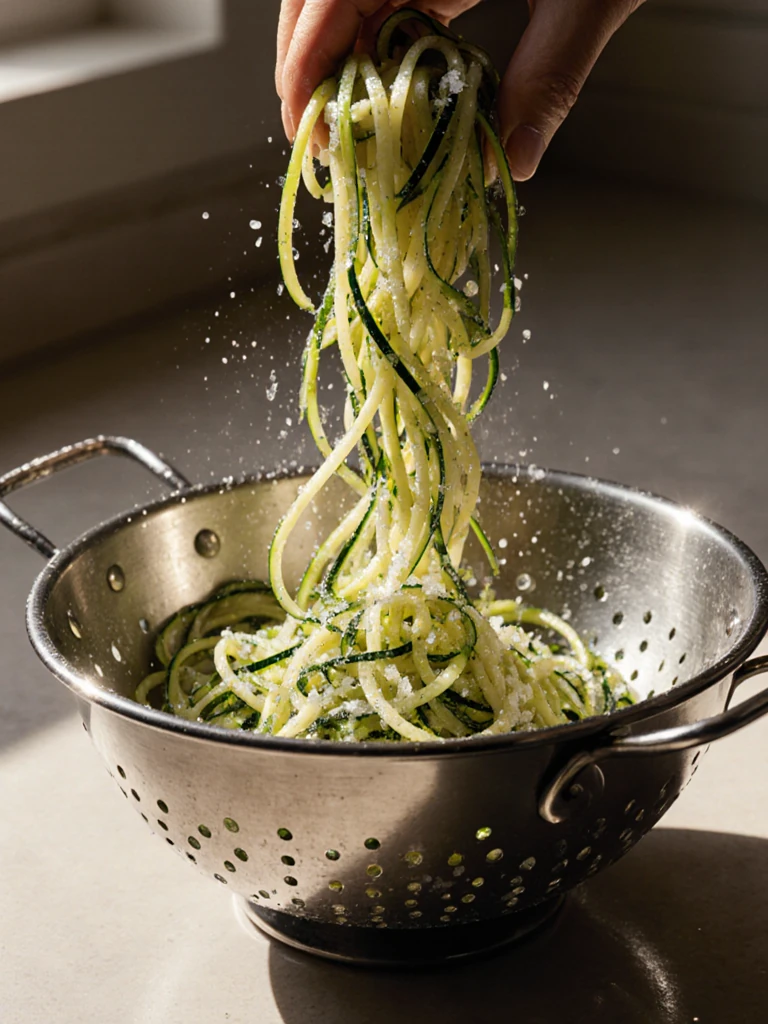
Spiralizing Zucchini Noodles: Blade Selection and Noodle Size
Use the medium spaghetti blade (3mm to 4mm diameter) for zucchini noodles with marinara. The thin angel-hair blade (2mm) produces fragile strands that collapse under sauce weight and cook through in under 30 seconds. The thick blade (6mm) produces noodles that stay raw at the center after 90 seconds of sauté and resist sauce adhesion on their smooth, wide surface.
Select zucchini in the 7-inch to 9-inch range, straight rather than curved. Curved zucchini produces short, broken strands rather than continuous spirals because the vegetable loses contact with the spiralizer blade at the curve. Zucchini wider than 2 inches produces noodles with a large seed cavity at the center that collapses during cooking and releases a concentrated burst of water directly into the pan. Trim both ends flat before attaching to the spiralizer — a clean, perpendicular cut gives the blade a stable starting surface.
A box grater's large holes produce acceptable ribbon noodles when a spiralizer is unavailable. A julienne peeler creates flat, fettuccine-width strips that hold sauce differently than round spirals but work in this recipe with a 15-second reduction in sauté time due to their thinner cross-section. A mandoline set to 3mm thickness produces the most consistent results of any manual method.
Salting and Pressing Zucchini Noodles to Remove Excess Moisture
Toss spiralized zucchini noodles with half a teaspoon of kosher salt per medium zucchini and let them rest in a colander for 15 minutes. Salt draws moisture from inside the zucchini cells through osmosis — water molecules move across the cell membrane toward the higher salt concentration outside, producing visible beads of water on the noodle surface within 5 minutes. After 15 minutes, press firmly with a clean towel to extract the water that osmosis has drawn to the surface.
The water yield from properly salted zucchini is significant: three medium zucchini release approximately 3 to 4 tablespoons of liquid during a 15-minute salting period. Without salting, that liquid releases directly into the hot pan and the finished sauce during the sauté, thinning the marinara and turning the dish watery. With salting, the noodles enter the pan already partially dehydrated and release far less liquid during the 60 to 90 seconds of cooking.
Rinse the salted noodles briefly under cold water to remove excess surface salt, then press again with a clean kitchen towel. The towel press is the step most home cooks skip — squeezing out residual surface moisture prevents the noodles from steaming in the pan rather than searing. Pat dry is insufficient here; a firm press with the towel folded double removes the surface film of moisture that separates searing from steaming at high heat.
Building the Marinara Sauce
Build the marinara in a wide, heavy pan rather than a narrow saucepan. Surface area determines evaporation rate; a wide pan reduces the sauce to a coating consistency in 15 minutes. A narrow saucepan takes 30 to 40 minutes to reach the same result because liquid evaporates only from the small surface at the top.
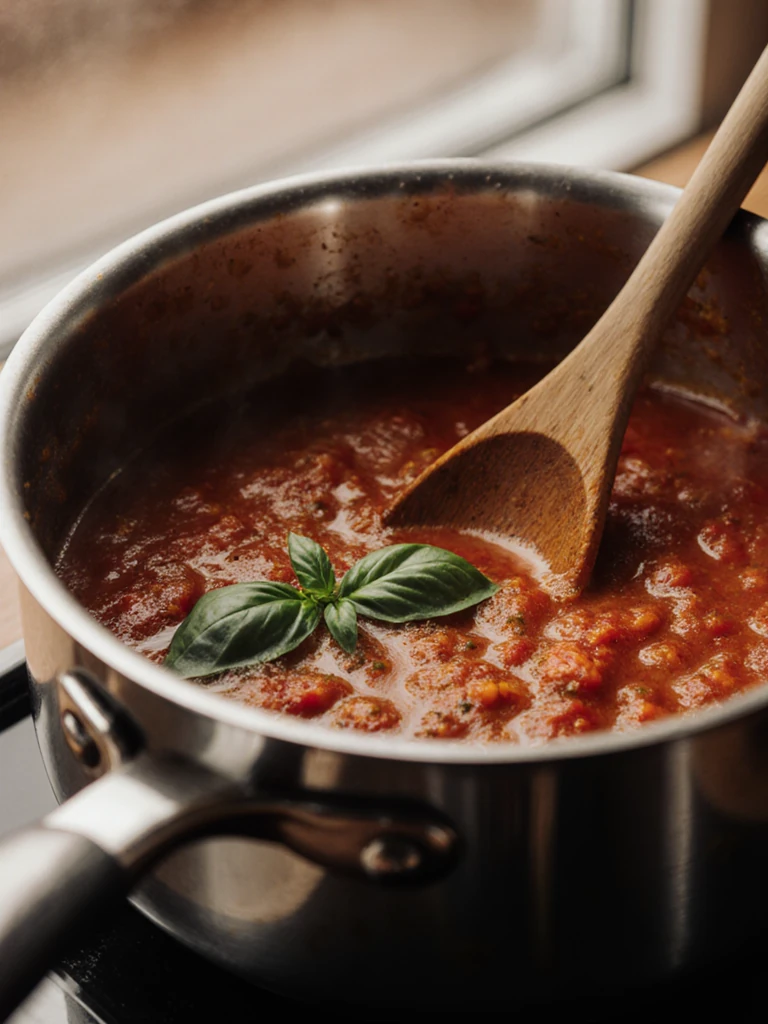
Whole peeled San Marzano tomatoes produce the best marinara for this dish. San Marzano tomatoes have a lower seed count, thicker flesh-to-liquid ratio, and a naturally sweeter, less acidic profile than Roma or standard plum tomatoes, which means the sauce requires less reduction time and no added sugar to balance acidity. Crush the whole tomatoes by hand directly into the pan — hand-crushing produces irregular chunks that dissolve at different rates during simmering, creating a textured sauce with both smooth base and small tomato pieces. A blender produces an overly homogeneous sauce that coats the noodles uniformly but lacks textural variation.
Cook two to three garlic cloves, sliced thin, in three tablespoons of olive oil over medium heat until the edges turn pale gold — 2 to 3 minutes. Add a pinch of red pepper flakes at the oil stage, before the tomatoes go in. Red pepper flakes bloomed in hot oil release their capsaicin into the fat; capsaicin is fat-soluble and distributes evenly through an oil-based sauce. Added after the tomatoes, the water content of the sauce prevents full capsaicin extraction and the heat level tastes sharp and uneven. Add the crushed tomatoes and a whole basil sprig. Simmer uncovered for 18 to 20 minutes until the sauce is noticeably thicker than desired for a finished plate — it will thin when the zucchini noodles release their residual moisture during tossing. Remove the basil sprig and season with salt.
Sautéing Zucchini Noodles: High Heat, Short Time
Sauté the pressed, dry noodles in a wide skillet over high heat for 60 to 90 seconds maximum — just long enough for the exterior to become slightly translucent while the center retains a light crunch. Below 60 seconds the noodles are cold and raw; beyond 90 seconds the cell walls break down, releasing a surge of water that immediately pools in the pan.
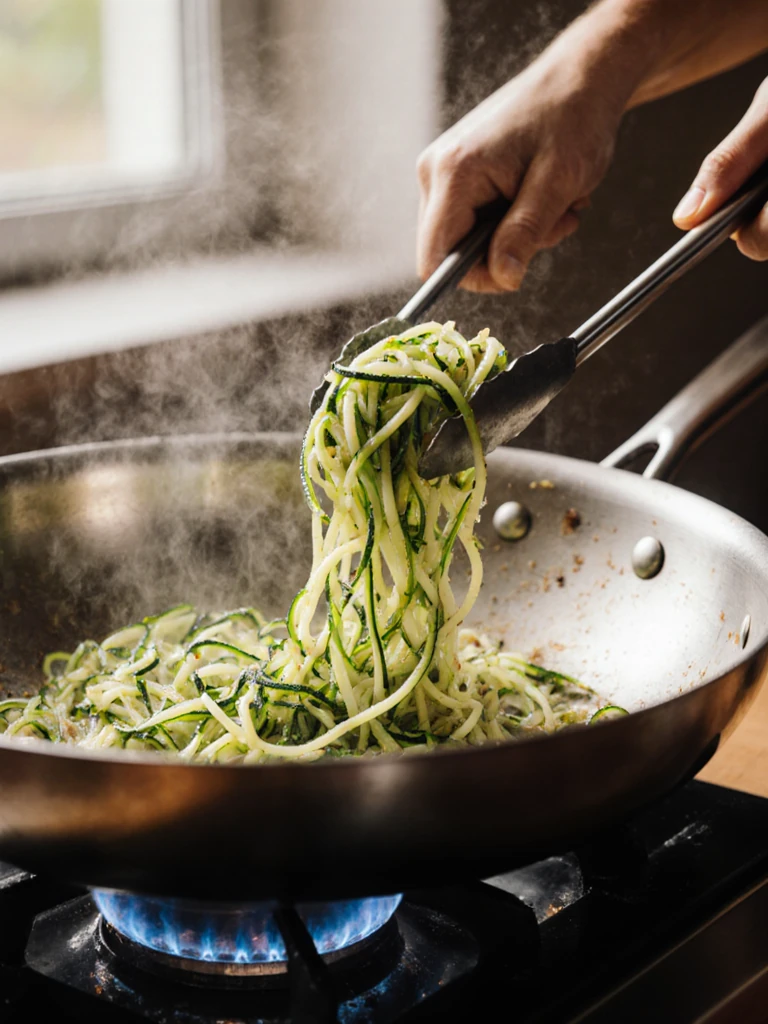
Preheat the skillet until a drop of water vaporizes in under 2 seconds before adding olive oil and noodles. A pan that is insufficiently hot creates a humid micro-environment around the noodles as their surface moisture evaporates slowly, which steams rather than sears them. Steamed zucchini noodles are soft, wet, and lack the slight bite that makes the dish satisfying. Seared noodles at high heat develop a light exterior surface change without fully cooking the interior cell structure, which delays further water release after plating. Cook in a single layer without overcrowding — crowded noodles trap steam between strands and reproduce the same steaming effect as an underheated pan. For four servings, cook in two batches.
Tossing, Plating, and Serving Zucchini Noodles with Marinara
Toss the sautéed noodles with the warm marinara off heat, plate immediately, and serve within 3 minutes of tossing. Zucchini noodles continue releasing moisture after the heat source is removed. Every minute of contact between dressed noodles and sauce dilutes the marinara further — at 5 minutes post-toss the sauce is noticeably thinner; at 10 minutes the plate has a pool of liquid at the base.
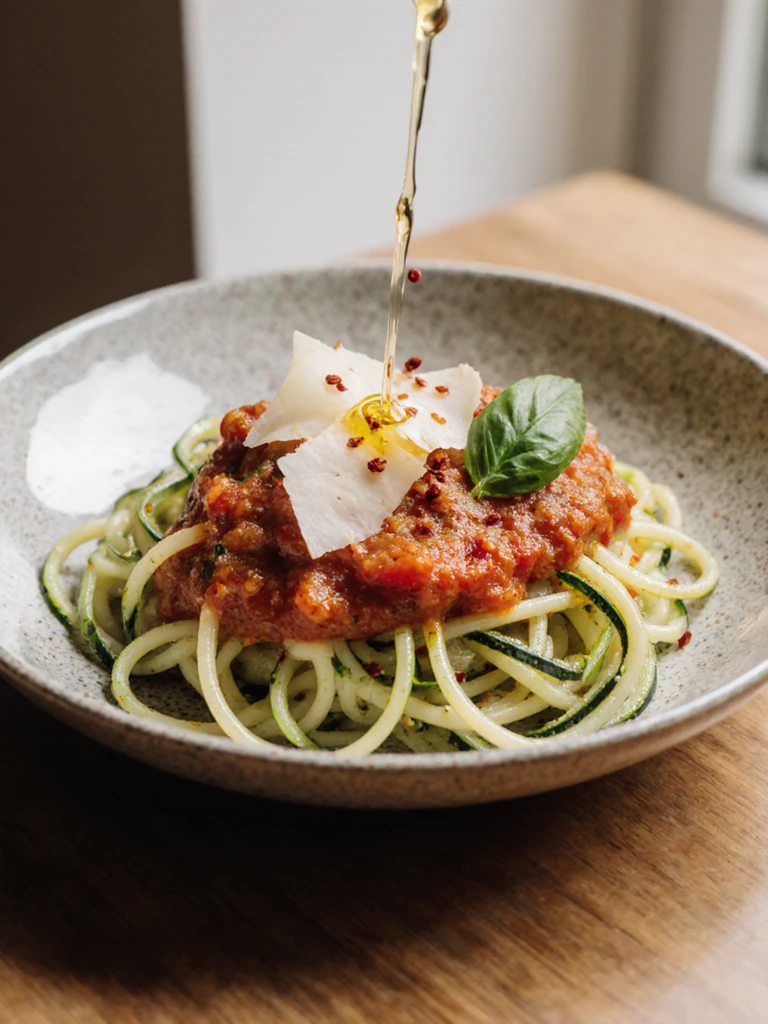
Use tongs to lift the noodles from the tossing pan rather than a spoon, allowing excess liquid to drain back before plating. A spoon transfers the pooled liquid directly to the bowl. Finish each bowl with freshly grated Parmigiano-Reggiano rather than pre-grated Parmesan. The moisture in freshly grated cheese integrates into the sauce and adds a salty, umami depth; the powdery, dry texture of pre-grated cheese sits on the surface and contributes little to the finished flavor. Add torn fresh basil leaves, a pinch of red pepper flakes, and a thin drizzle of extra-virgin olive oil. The olive oil on top is not decoration — its fat carries the basil's volatile aroma compounds to the nose with each bite, amplifying the herb's presence beyond what the leaf alone delivers. For a related vegetable-forward dish built on similar moisture-management principles, the same salting-and-pressing technique applies to the cucumber base in a grain bowl before building the layers. Find the full recipe at Recipe Diaries.
The Recipe
Zucchini Noodles with Marinara Sauce
Ingredients
For the zucchini noodles
For the marinara sauce
For serving
Instructions
- 1
Spiralize the zucchini using the medium spaghetti blade (3mm to 4mm). Place the noodles in a colander set over a bowl.
- 2
Toss the noodles with 1 teaspoon of kosher salt. Let rest for 15 minutes. Visible water will bead on the noodle surface.
- 3
After 15 minutes, rinse the noodles briefly under cold water. Transfer to a clean kitchen towel and press firmly in several spots to extract surface moisture. Set aside.
- 4
Make the marinara: Crush the whole San Marzano tomatoes by hand directly into a bowl, breaking them into irregular pieces. Set aside.
- 5
Heat 3 tablespoons of olive oil in a wide, heavy pan over medium heat. Add the sliced garlic and red pepper flakes. Cook for 2 to 3 minutes, stirring occasionally, until the garlic edges turn pale gold.
- 6
Add the crushed tomatoes and basil sprig. Stir to combine. Simmer uncovered over medium-low heat for 18 to 20 minutes, stirring occasionally, until the sauce is noticeably thicker than the desired finished consistency. Remove the basil sprig. Season with salt.
- 7
Sauté the noodles in two batches: Heat a wide skillet over high heat until a water drop vaporizes in under 2 seconds. Add half a tablespoon of olive oil. Add half the noodles in a single layer.
- 8
Cook for 60 to 90 seconds, tossing with tongs once at the 45-second mark. The noodles should be slightly translucent at the exterior with a light crunch remaining at the center. Transfer to a colander and repeat with the second batch.
- 9
Combine noodles and warm marinara sauce off heat. Toss with tongs to coat, lifting the noodles to drain any excess liquid back into the pan.
- 10
Divide among four bowls immediately, using tongs to lift and drain each portion. Top with freshly grated Parmigiano-Reggiano, torn basil leaves, a pinch of red pepper flakes, and a drizzle of extra-virgin olive oil. Serve within 3 minutes.
Nutrition Facts
Per serving
210 Calories
Moderate energy per serving
Macronutrients
* % Daily Value based on a 2,000 calorie diet
Tips & Notes
The 90-second sauté window is firm. Set a timer. Beyond 90 seconds the cell walls break down and release a surge of water that cannot be recovered. If the noodles look underdone at 90 seconds, trust the timer — they will continue softening from residual heat after plating. Reduce the finished marinara to a slightly thicker consistency than desired. The noodles release residual moisture into the sauce during the 60 to 90 seconds of tossing and plating. A sauce that looks perfectly sauced in the pan will be noticeably thinner in the bowl. Overcorrecting by reducing further is easier than rescuing a watery finished dish. Cook in batches without exception. A single layer of noodles in a wide skillet sears correctly. Two layers of noodles steam the bottom layer and produce uneven cooking. For four servings, two batches of two zucchini each is the correct approach. For a raw version, skip the salting and sautéing steps entirely. Serve the spiralized noodles cold directly from the spiralizer with warm marinara spooned over the top. Cold noodles with hot sauce produce a lightly warmed middle ground that many people prefer. The noodles will still release water into the sauce over time — serve within 5 minutes for best texture.
Frequently Asked Questions
Zucchini is 94% water by weight and releases liquid throughout cooking and after plating. Salt the noodles for 15 minutes before cooking, press firmly with a towel, sauté over high heat for 60 to 90 seconds only, and serve immediately after tossing with sauce.
Enjoyed this recipe?


