Tuna Pasta Salad
Tuna Pasta Salad
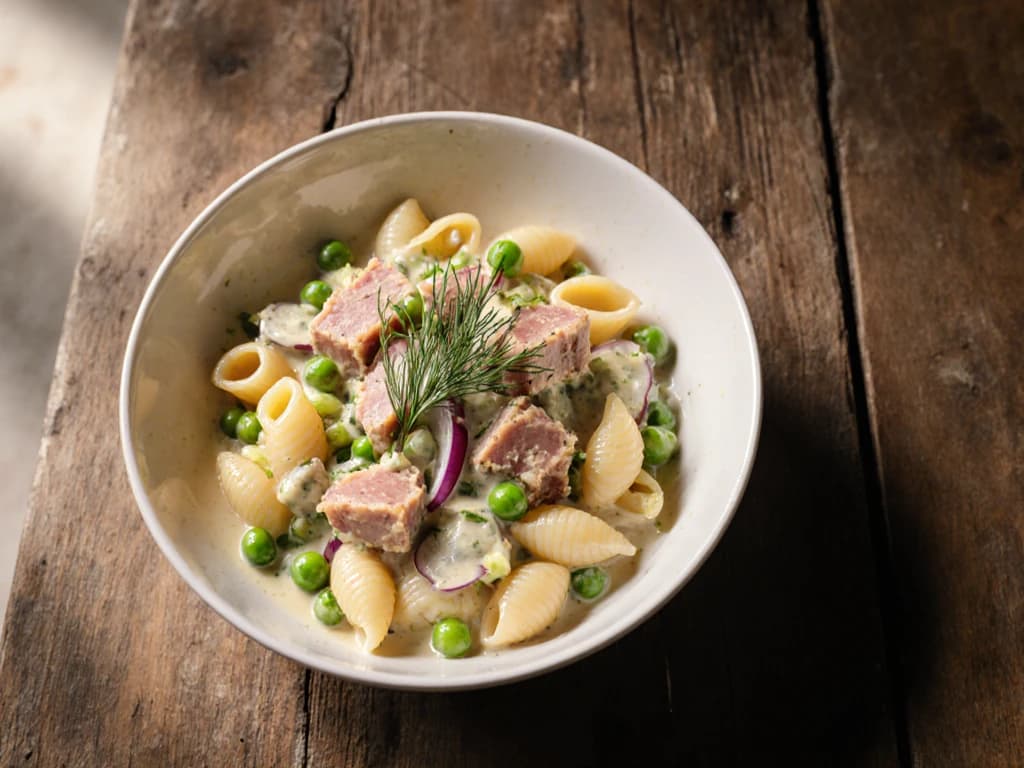
Tuna pasta salad combines shell pasta, oil-packed tuna, sweet peas, and crisp celery in a creamy dill dressing built on a mayo-Greek yogurt base. Cooking the peas directly in the pasta water for the final 2 minutes seasons them and shortens total prep by 8 minutes. Ready in 25 minutes and better after 30 minutes of chilling, it keeps well for 4 days making it the most practical high-protein lunch in the make-ahead rotation.
- 1
Reserving 1 tablespoon of oil-packed tuna soaking oil and whisking it into the mayo base transfers fat-soluble flavour compounds from the fish into the dressing, adding depth that water-packed tuna and plain olive oil cannot replicate.
- 2
Adding frozen peas to the boiling pasta for the final 2 minutes seasons them with the salted pasta water and uses their cold centres to drop the drained pasta temperature faster, cutting cooling time from 15 minutes to 8.
- 3
Folding tuna into the dressing before adding the pasta breaks the fish into even, dressing-coated flakes rather than large chunks, distributing tuna flavour throughout every forkful instead of concentrating it in a few bites.
Tuna pasta salad is the most protein-efficient cold pasta salad in the collection: two cans of oil-packed tuna at roughly 25g of protein each, combined with shell pasta and sweet peas, delivers over 28g of protein per serving before a single add-on. Oil-packed tuna contributes more than fish. The soaking oil, once drained and reserved, carries fat-soluble flavour compounds from the tuna directly into the dressing, deepening the creamy base in a way that water-packed tuna and plain olive oil cannot replicate. A half-and-half mayonnaise-to-Greek-yogurt dressing keeps richness in check, while Dijon mustard, fresh lemon juice, and fresh dill sharpen every forkful into something bright and satisfying.
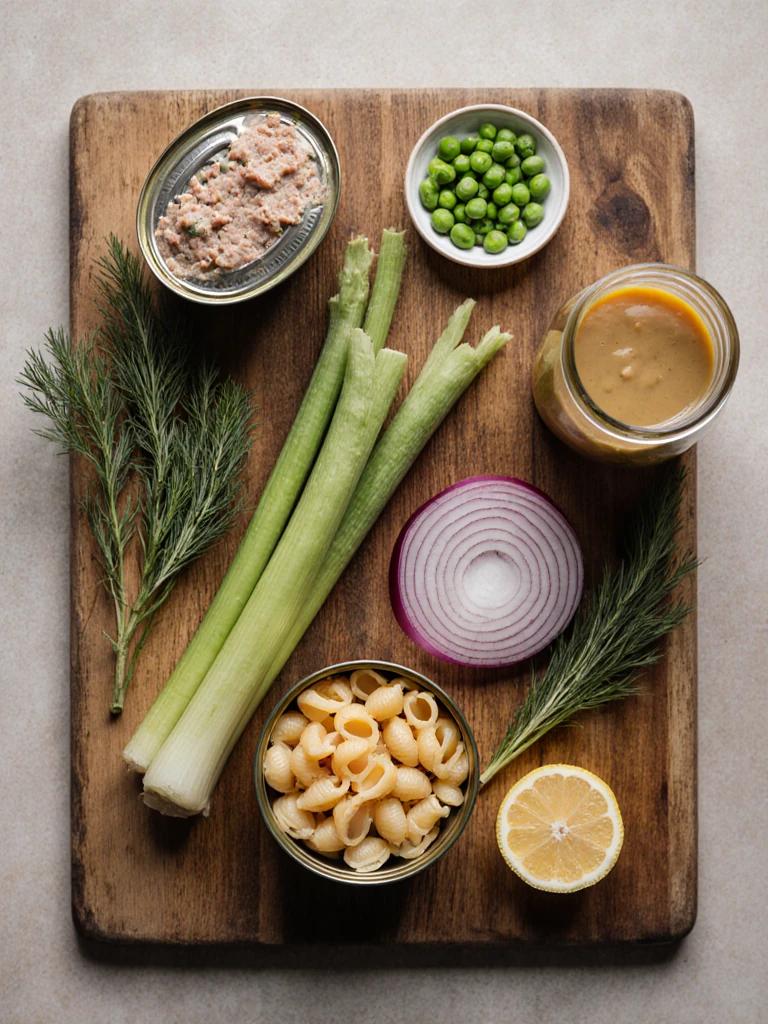
Why Oil-Packed Tuna Makes a Better Pasta Salad
Oil-packed tuna contains fat-soluble flavour compounds, including omega-3-rich fish oils and fat-carried amino acids, that transfer directly into the dressing when 1 tablespoon of the reserved soaking oil is whisked into the mayo base, producing depth that water-packed tuna cannot provide.
Water-packed tuna is convenient and lower in calories, but the canning brine is discarded entirely, taking its dissolved flavour with it. With oil-packed tuna, draining the can over the dressing bowl captures the soaking oil as a functional ingredient. One tablespoon of the reserved tuna oil, whisked into the mayonnaise and Greek yogurt before any other dressing ingredient is added, pre-emulsifies the fat into the creamy base and coats the pasta more uniformly than a dressing mixed from cold, separate components. Drain the tuna over the bowl rather than the sink: this single step recovers roughly 1.5 tablespoons of flavoured oil per 160g can. If water-packed tuna is the only option, replace the reserved tuna oil with 1 tablespoon of extra-virgin olive oil and add an extra quarter teaspoon of Dijon mustard to compensate for the lost richness.
The Pea-in-Pasta-Water Technique
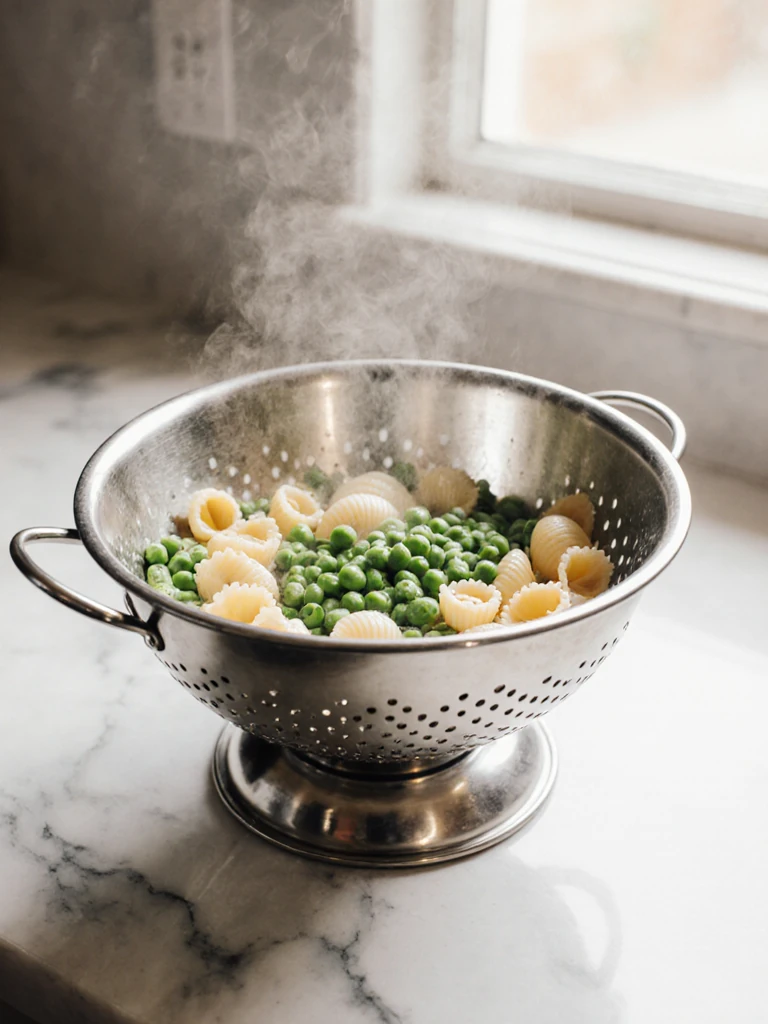
Adding frozen peas directly to the boiling pasta for the final 2 minutes of cooking seasons them with the salt already in the pasta water, removes the separate thawing step, and allows the cold peas to drop the drained pasta temperature by approximately 5°C at the colander, shortening the total cooling time before dressing.
Most tuna pasta salad recipes call for thawing frozen peas in a separate bowl of cold water, a step that takes 8 to 10 minutes and produces underseasoned peas. Adding them to the boiling pasta water in the final 2 minutes achieves three things at once: the salted water seasons the peas uniformly, the brief cooking removes the raw starchiness from the pea skin, and the cold centre of each pea acts as a thermal mass that cools the pasta faster when drained together. Cook shell pasta for the full package time minus 2 minutes, add the peas, cook for the final 2 minutes, then drain. The combined mass cools to room temperature on a baking tray in 8 minutes rather than the 15 minutes a pasta-only drain requires.
Assembling and Seasoning the Salad
Folding the tuna into the dressing first, before adding the pasta, breaks the fish into even flakes and coats each piece individually, preventing the large chunks that result from adding tuna to the pasta bowl and then stirring.
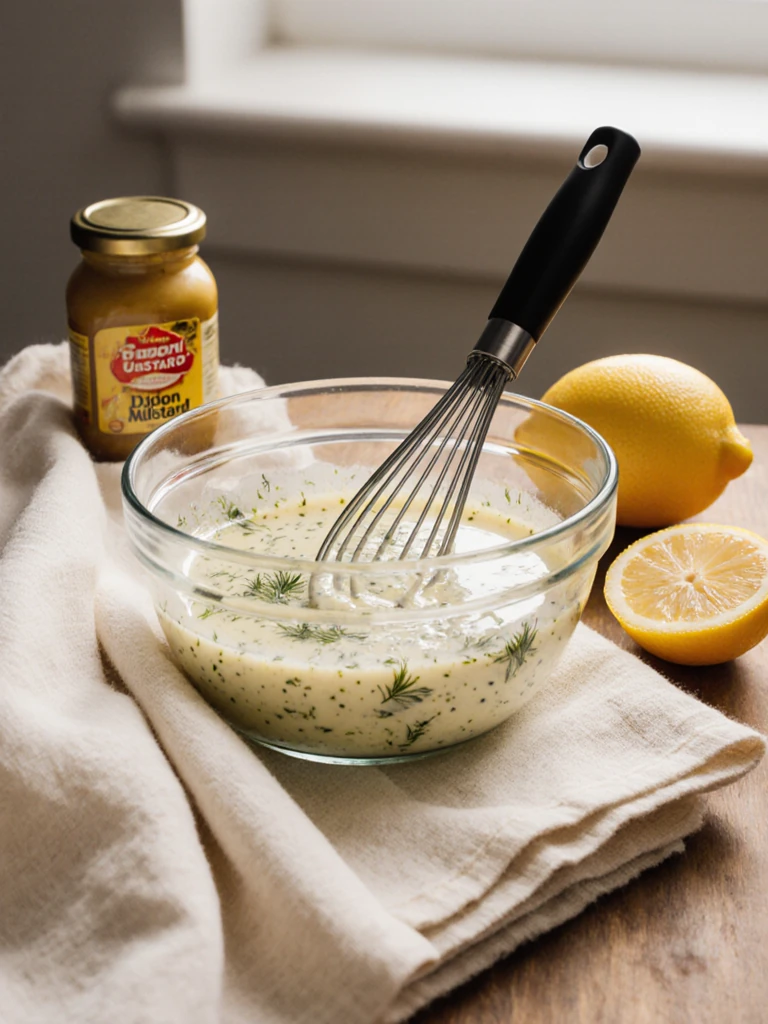
Whisk the reserved tuna oil into the mayonnaise and Greek yogurt until smooth, then add the lemon juice, Dijon mustard, garlic powder, dried dill, salt, and pepper. Add the drained tuna to the dressing bowl and fold through with a fork to break it into small, even flakes coated in dressing. Transfer the cooled pasta and peas to the bowl, add the diced celery and thinly sliced red onion, and fold through until evenly combined. Taste for salt before chilling: the tuna and dressing absorb seasoning during refrigeration, so the salad should taste slightly over-seasoned at this stage. Cover and refrigerate for at least 30 minutes. Before serving, fold through 1 tablespoon of reserved dressing if the salad appears dry, then garnish with fresh dill fronds and a squeeze of lemon.
Serving Tuna Pasta Salad
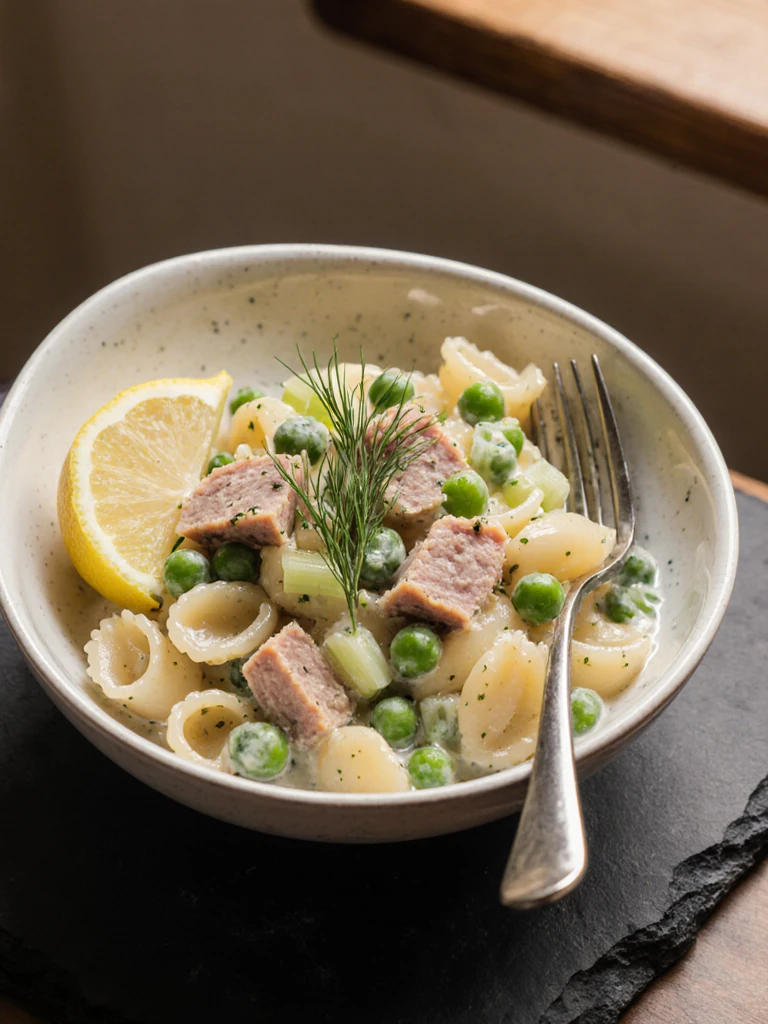
Serve cold or at cool room temperature within 2 hours of removing from the refrigerator. Cold temperatures mute the lemon and dill in the dressing, so a 10-minute rest on the counter before plating makes the flavour noticeably brighter.
Serve as a standalone lunch in bowls, as a side alongside grilled fish, corn on the cob, or a green salad, or packed into individual containers for 4 days of weekday lunches. For a crowd of 12, the recipe doubles cleanly: prepare the dressing in a large bowl and fold the tuna in separately before combining with the pasta batch. Discard any portion of the salad left at room temperature for more than 2 hours due to the mayonnaise and tuna combination. Browse more high-protein pasta salad ideas in Recipe Dairy's salad collection.
The Recipe
Tuna Pasta Salad
Ingredients
For the creamy dill dressing
For the salad
Instructions
- 1
Drain both cans of tuna over a bowl, reserving 1 tbsp of the soaking oil, then set the tuna aside.
- 2
Whisk the reserved tuna oil into the mayonnaise and Greek yogurt until smooth, then add lemon juice, lemon zest, Dijon mustard, garlic powder, dried dill, salt, and pepper.
- 3
Add drained tuna to the dressing and fold through with a fork until the fish is in small, even flakes coated in dressing.
- 4
Bring a large pot of water to a boil, add 1 tbsp kosher salt, and cook shell pasta for the package time minus 2 minutes.
- 5
Add frozen peas to the boiling pasta and cook for the final 2 minutes, then drain and spread on a baking tray to cool for 8 minutes.
- 6
Combine cooled pasta and peas with the tuna dressing, diced celery, and red onion, then fold through until evenly coated.
- 7
Taste for salt, then cover and refrigerate for at least 30 minutes.
- 8
Before serving, fold through 1 tbsp of extra dressing if the salad appears dry, then garnish with fresh dill fronds and lemon wedges.
Nutrition Facts
Per serving
365 Calories
Moderate energy per serving
Macronutrients
* % Daily Value based on a 2,000 calorie diet
Tips & Notes
Taste the dressing before chilling and make it noticeably sharper and saltier than you want the finished salad to taste. Pasta and tuna both absorb salt and acid during the 30-minute rest, and a correctly seasoned dressing will taste flat once chilled. Reserve 2 tablespoons of dressing in a small jar in the fridge. Stir it into the salad before serving leftovers on days 2 through 4 to restore creaminess as the pasta continues to absorb the dressing overnight. Make-ahead: Assemble the full salad up to 24 hours in advance. Keep the fresh dill separate and add it just before serving to preserve the grassy herb flavour that dissipates when dill sits in an acidic dressing. Celery substitute: Replace diced celery with diced Persian cucumber for a milder, more refreshing crunch. Add the cucumber just before serving to prevent it releasing water into the dressing.
Frequently Asked Questions
Yes. Assemble the full salad and refrigerate overnight. Reserve 2 tablespoons of dressing separately and stir it in just before serving to restore creaminess, as the pasta absorbs the dressing overnight.
Enjoyed this recipe?


